 PawStyle Daily
Puppy Training Tips
Crate Time Limits for a Healthy Daily Routine
Every crate question lands on the same number, and the number is the wrong question. No source gives a single hours-per-day limit, and the honest answer is that the crate is a tool for short periods, not a kennel for the workday. This page covers why long confinement is not healthy, the distress signs that mean a pause and a vet call, and the day a dog actually lives around the crate.
By PawStyle Daily · Updated 19 November 2026
Good to know: no magic number · the crate is for short periods · distress signs mean a vet call · for informational purposes, consult your vet.
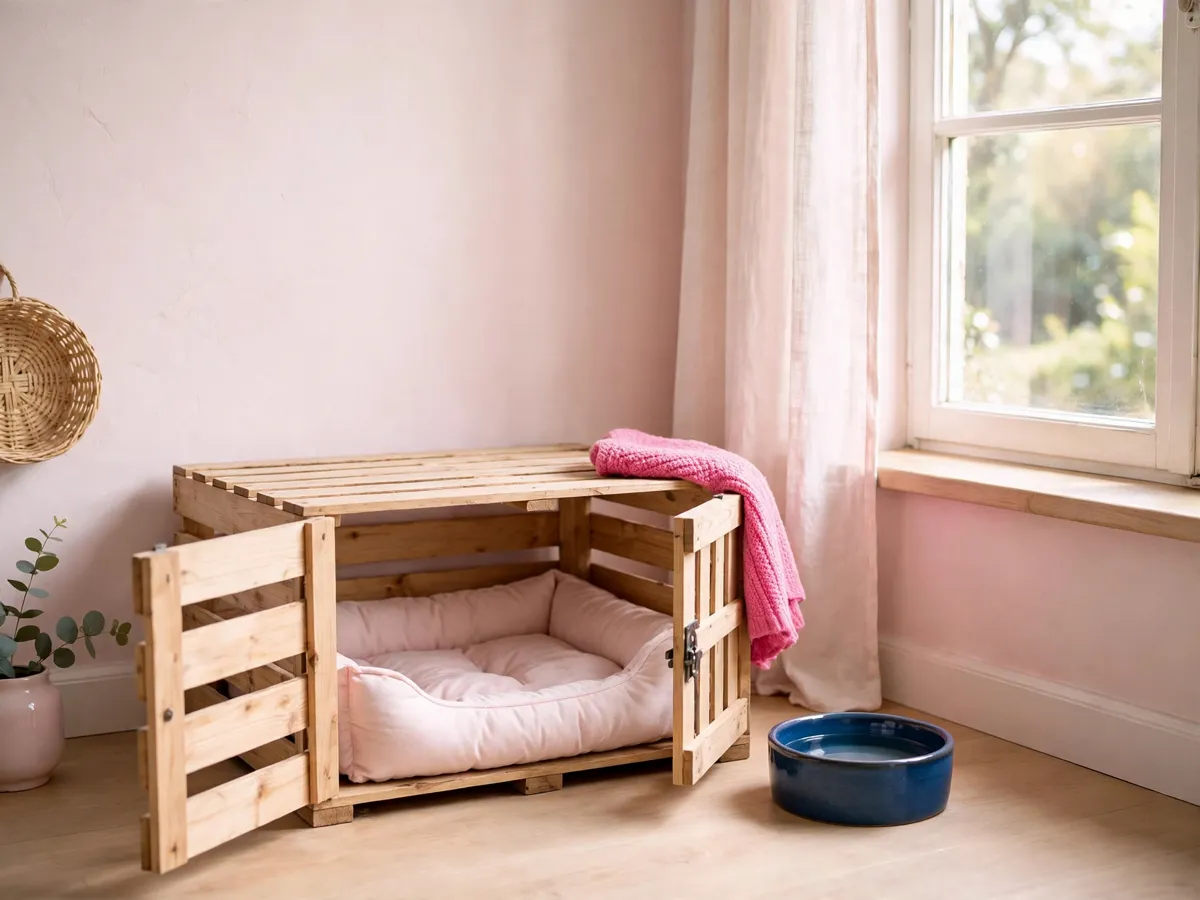
Why the number is the wrong question
The search for a single hours-per-day number is the search for a rule that does the thinking for the household, and no source gives one. The crate is a tool, and a tool earns its place by the job it does, not by a timer on the wall. The question that earns an answer is not "how long" but "what is the crate for today, and is the dog the one who says yes."
The reason the number does not exist is that a dog is not a single dog. A puppy on the first week, a settled adult, a dog with a full bladder, and a dog that just ran a mile are four different dogs, and the same minutes in the crate read differently for each. A number that covers all four is a number that covers none of them, and the source that gives one is a source that has not met the dog.
The honest framing is that the crate is a management tool for short periods, and the day is built around breaks, play and time with the family. The number is not the answer, and the daily rhythm is. The rest of this page is the detail behind that framing: what confinement is, what distress looks like, and what a day around the crate actually is.
Why long confinement is not healthy
The starting sentence is the one the whole page rests on. Extended periods of confinement are not healthy for animals, so the crate is a management tool for short periods.
The sentence does two things at once, and both are the point. It names the crate as a tool, not a lifestyle, and it names the length as the thing that decides whether the tool is the right one that day. A short period in the crate is the hour the dog cannot yet be trusted alone, and a long stretch is the hours the dog is stored rather than raised. The first is the crate earning its place, and the second is the crate losing it.
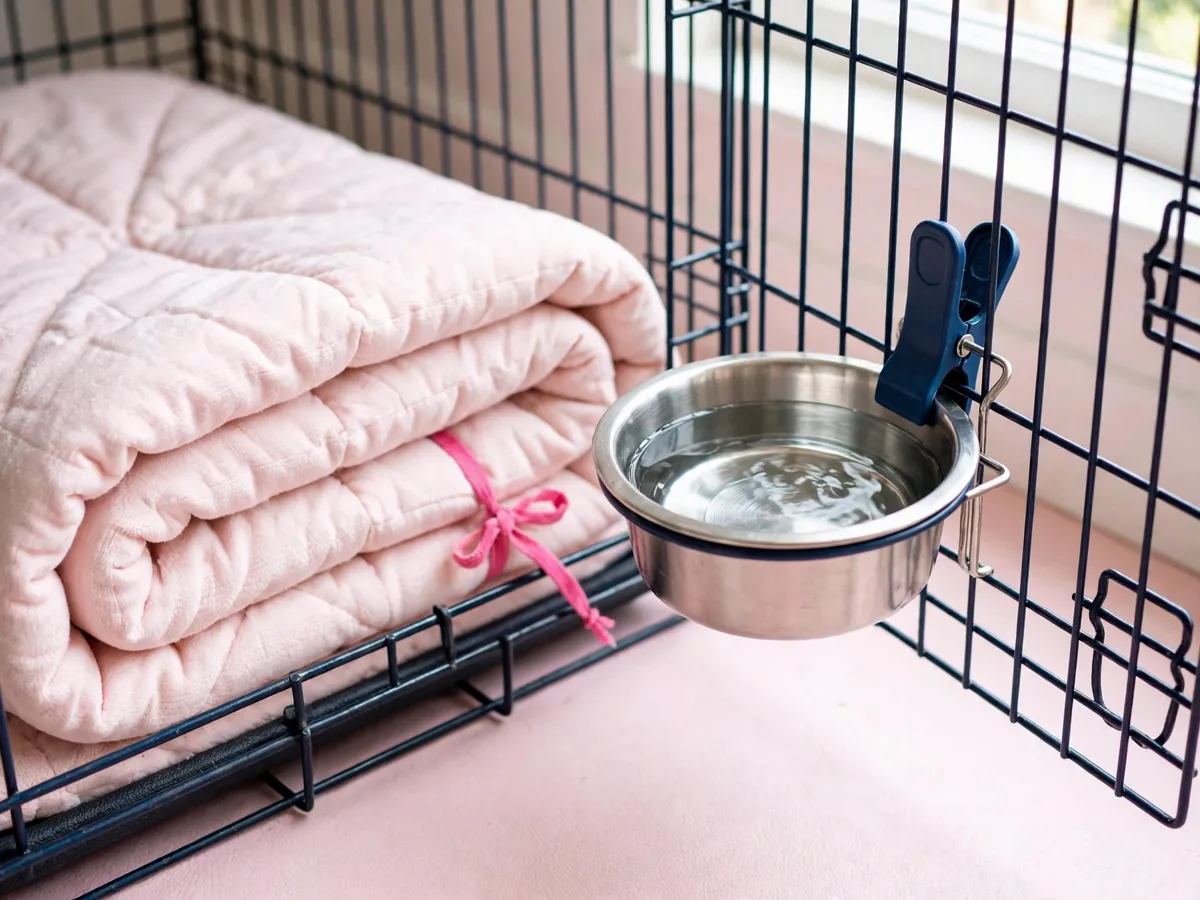
The reason the length matters is that a dog in a crate is a dog that cannot drink, cannot stretch, cannot turn a circle, and cannot ask to go out. A short period covers the gap between those needs, and a long stretch ignores them. The crate is the one room in the flat with no choices attached, and a day built around the crate is a day that keeps that room short.
The practical reading is that the crate covers the gaps a dog cannot yet fill on their own: the hour the family cooks, the delivery at the door, the short outing the dog cannot join. Outside of those gaps the dog is out, and the door is open. The crate training first week page covers how the crate is introduced, and this page covers how long it stays closed once it is.
The distress signs that mean a pause
The signs are the part of the crate that is not a negotiation, and they are the part most people mistake for stubbornness. A distressed dog that salivates, vocalizes persistently, tries to escape or will not settle should be checked by a veterinarian before crate training continues.
Read that sentence again slowly, because the second half is the half that costs the dog. Drool on the mat, a bark that will not break off, paws scrabbling at the wire, and a dog that stands in the corner instead of lying down are not a training problem. They are a question, and the answer belongs to a vet, not to a longer session.
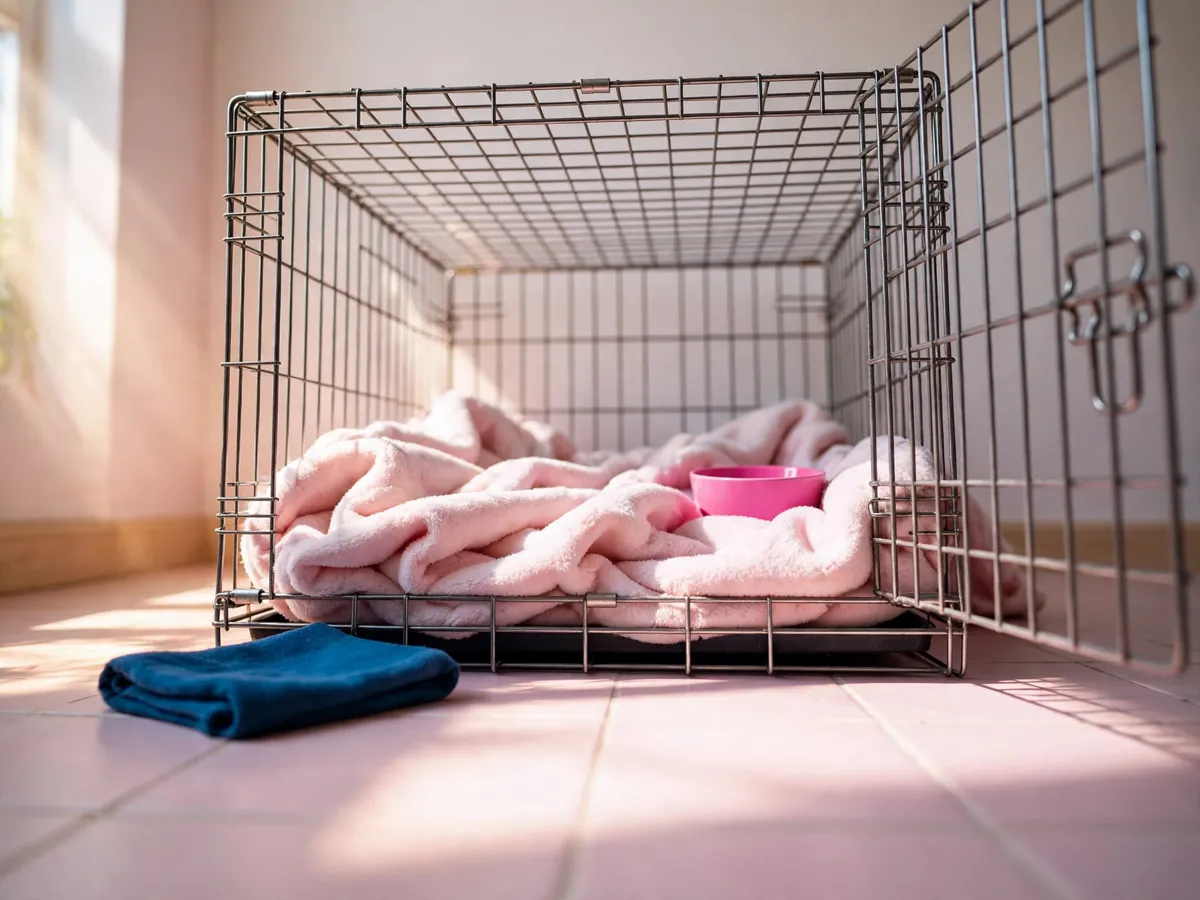
The difference between fussing and distress is the shape the noise takes. A few whines that fade are a negotiation about the door, and a negotiation is a thing the plan can work with. A bark that climbs instead of fading, panting that does not settle, and a dog that throws themselves at the wire are the signs that stop the session. The first response is the door open and the dog out, and the second is the phone call to the vet before the next session starts.
The reason the signs mean a vet is that distress is not stubbornness, and a dog that shows those signs is a dog the crate is wrong for that day. The vet reads the signs in context, and the context is the dog in front of them, not the training plan on the page. A session that ends on distress is a session that ends, and the next one waits for the vet's read.
The day built around the crate
The day a dog lives around the crate is a day the crate is one room among many, not the room the dog lives in. The morning starts with the dog out: a walk, a meal, a stretch on the rug. The crate is the place the dog naps while the household moves, and the door is open whenever the dog is not in it by choice.
The gaps the crate fills are the short ones. The hour the family cooks, the delivery at the door, the short outing the dog cannot join: those are the periods the crate covers, and the rest of the day the dog is out. A water bowl near the crate, a mat inside it, and a chew that only appears behind the door are the three pieces that turn a short stay into a calm one.
The potty training with the crate page pairs the crate with the outdoor trips, and the puppy schedule by age page covers the wider day the crate sits inside. The crate is one tool in the routine, and the routine is the thing that keeps the crate short.
The honest summary is that crate time limits are not a number on a page. The crate is a management tool for short periods, long confinement is not healthy, and the distress signs mean a pause and a vet call. The day is built around the crate, not inside it, and the dog is the one who says when a short period has gone long.
The crate earns its place on the days it covers a gap, and loses it on the days it fills the whole day. A household that reaches for the crate once or twice is a household the crate serves, and a household that reaches for it all day is a household that needs a different answer. The tool is only as good as the day around it.
Questions we get about crate time limits
How long is too long in a crate?
No source gives a single hours-per-day number. The crate is a management tool for short periods, and the day is built around breaks, play and time with the family, not one long stretch.
What distress signs mean I should stop crate training?
A dog that salivates, vocalizes persistently, tries to escape or will not settle needs a veterinarian check before crate training continues. Those signs are not a verdict, and the vet reads them in context.
Can I crate my dog overnight?
Overnight is a different question from daytime confinement, and the answer depends on the dog. The crate earns its place as a short-period tool, and the daily rhythm decides whether an overnight stay fits.

The crate starter kit
What we use for crate days
A flat crate mat, a clipped water bowl, and a chew that only appears behind the door. The three pieces that turn a short stay into a calm one.
See what we use →As an Amazon Associate we earn from qualifying purchases.
Save these on Pinterest
Pin the daily rhythm and the distress signs for the next crate day, and keep the Puppy Training collection for the first-week plan and the potty schedule that pair with this page.
For informational purposes, consult your vet.