 PawStyle Daily
Pet Loss Memorial & Rainbow Bridge
How to Create Lasting Memories With Your Pet
The time to start gathering memories with a pet is while the pet is here, not after. The photos people wish they had taken earlier are the ordinary ones: the dog asleep in a square of sun on the kitchen floor, the cat stretched along the back of the couch, the walk that went the long way around. None of those moments ask for a camera setup or a posed session. They ask for a phone, a habit, and the decision to start now rather than wait for a day that feels more worth marking. This page is about that decision and the rituals that follow from it: photo habits, sound clips, small objects worth keeping, and the traditions a household can hold onto. For the later pieces, a keepsake journal is the companion page, and this one does not borrow its tone.
By PawStyle Daily · Updated 20 November 2026
Good to know: shoot at eye level, a phone burst catches the face, a collar tag is worth keeping, and the pace you keep beats the pace you plan.
Why ordinary moments are the ones you keep
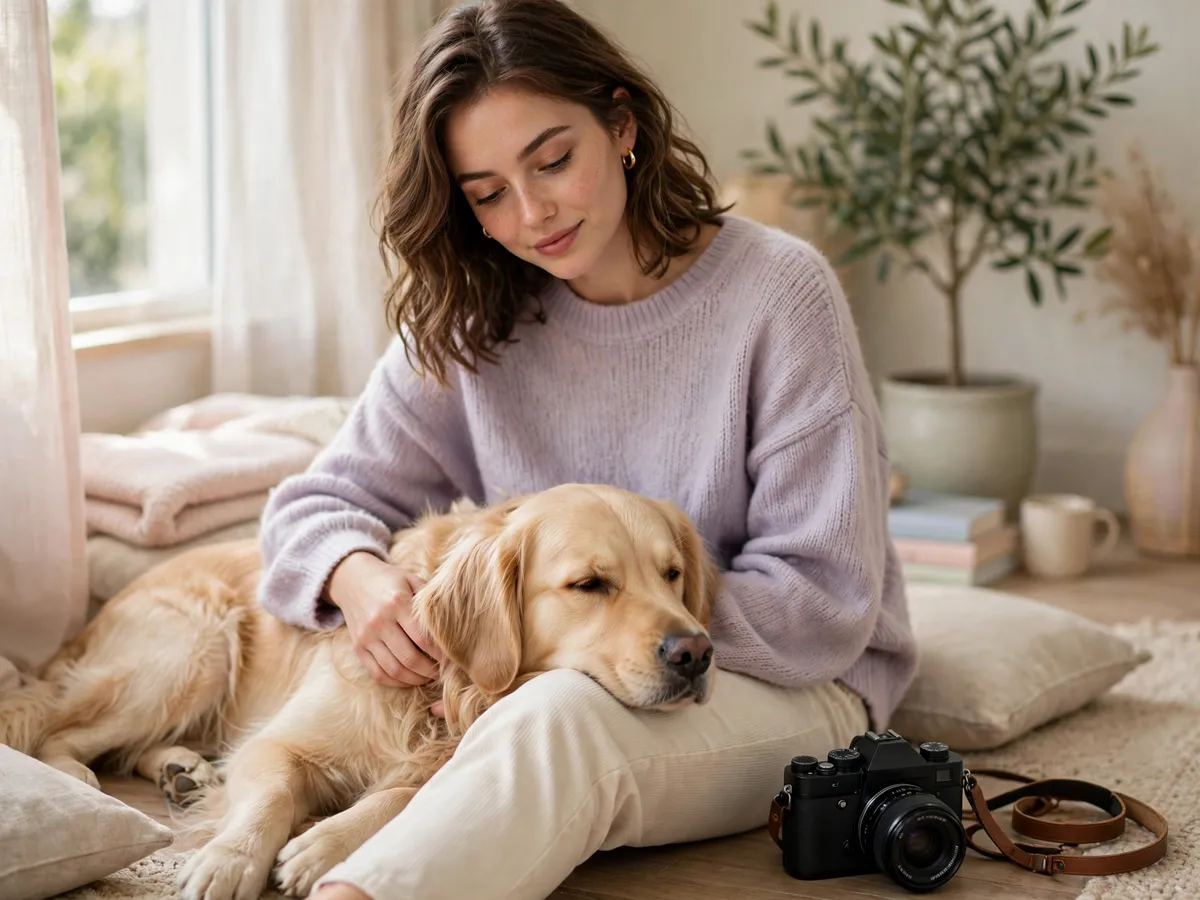
The memory a household holds onto is rarely the one they staged. It is the one that happened on its own: the dog resting its head on a lap during a movie, the cat batting at a dust mote in the afternoon light, the walk that took the long way because the weather held. Those moments pass without a camera because they feel too small to record, and the thing that makes them worth recording is exactly that they felt ordinary at the time.
Starting now is the whole point. A photo taken this week, of nothing in particular, is the photo that matters in the end. A sound clip of a snore or a purr recorded on a phone is the clip that becomes the one a household plays again. The decision to begin is the only hard part, and the rest of this page is the set of habits that make it easy: when to take the photo, what to record, what to keep, and how often to do it without turning it into a chore that drops off in the first stretch.
Photo rituals for ordinary days
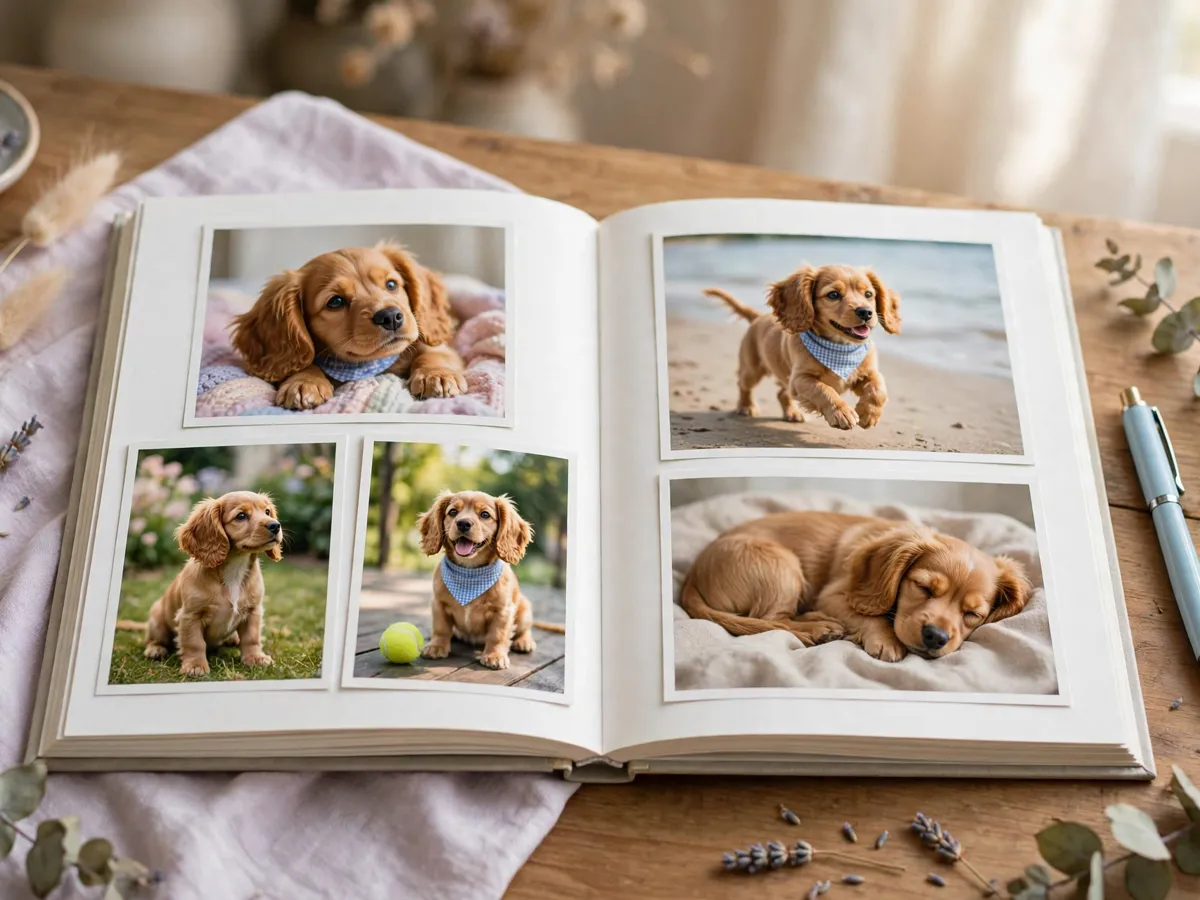
The working habit is a phone at eye level during the moments that already happen. A dog asleep in a square of sun, a cat on the back of the couch, a meal at the usual hour, a walk along the usual route. None of those ask for posing, and posing is the thing that flattens a photo: the pet looks at the camera instead of doing what it was doing, and the moment that made the picture worth taking is gone. Shooting at eye level, from the side or the front, catches the face the way a person in the room sees it.
A phone burst is the tool for a moving pet. Hold the shutter and take a run of frames while the dog shakes off after a swim or the cat leaps at a toy. One frame in the burst catches the face at the right angle, and the rest are thrown away. Printing the frame matters as much as taking it. A photo on a phone is a photo in a gallery that nobody opens, and a print on a shelf or a page in an album is a photo that gets seen. Print one a week, date the back, and the album builds itself.
The light matters more than the phone. A bright room with the window behind the photographer puts the light on the pet rather than behind it, and a frame taken in that light reads clearly even on a phone camera. A frame taken against the window is a silhouette, and silhouettes are the shots people delete. The working rule is the same one a portrait photographer uses: light in front of the subject, not behind.
The sounds worth recording
Sound is the sense people forget to capture, and it is the one that disappears first. The sound of a dog snoring on the rug, a cat purring against a leg, the particular way a paw hits the kitchen floor on the way to the bowl. These are the sounds a household stops hearing because they hear them all the time, and they are the ones a household would give anything to hear again once they are gone. A phone voice memo is the tool, and it takes the same amount of time as a photo.
Record the sounds that repeat and the ones that are specific. The repeating sounds, the snore and the purr and the bark at the door, are the background track of the house. The specific ones, the way the dog whines when the leash comes off the hook or the sound the cat makes when the can opens, are the ones tied to a routine that a household lives inside every day. Both are worth a clip. Name the file with the date and what it is, and a folder of sound clips becomes the thing a household plays through when they want to hear the house the way it sounded.
Small objects to keep
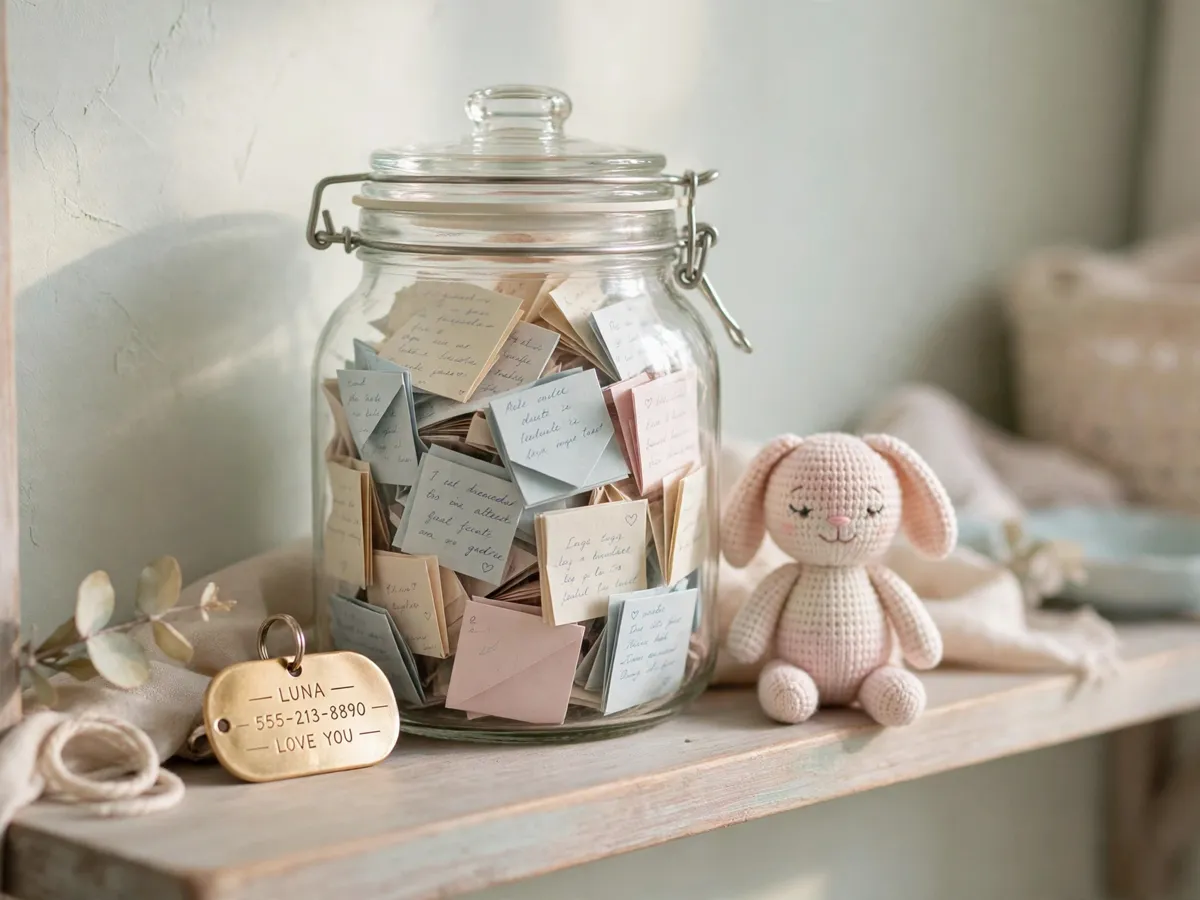
The objects a pet touches every day are the ones that carry the most weight later, and the ones a household throws away because they look worn. A collar tag with the name scratched into it, a favorite toy with the stuffing gone, a first card from the clinic, a strand of fur from the brush. Each of those is a piece of the animal that the animal left behind, and each of them fits in a box the size of a hand.
The jar is the simplest container. A glass jar on a shelf holds the tag, the toy, the card, and a few written notes, and it sits where a person can see it without opening a drawer. One box labeled by year is the working approach for a household that gathers more: the tag and the toy in one box, the photos and the notes in another, and the year on the label so the contents are easy to find. The point is the box, not the system: a box beats a drawer of loose things because a box is opened and a drawer is not.
The written note is the piece that ties the objects to a moment. A card tucked in the jar with a date and a line about the day, the walk, the nap, the thing the pet did that made the household laugh, turns the tag and the toy into a record rather than a collection. The note does not need to be long. It needs to say what the photo does not: what the day felt like, and what the pet was like inside it.
Traditions you can keep up
A ritual is a habit with a name. The photo on the first day of each month, the note on the anniversary of the adoption, the walk along the route the pet likes best on a weekend morning. These are the traditions a household can keep up, and they are the ones that build the record without asking anyone to sit down and write a memoir. The pace is the thing that decides whether the ritual survives, and a pace a household can hold is better than a pace that sounds ambitious and drops off.
One photo a week and a note a month is the pace that works. A photo a week catches the pet across the seasons, the coat change, the growth, the way the face shifts. A note a month catches the things the photo does not: the habit the pet picked up, the habit it dropped, the day it did something new. A daily plan sounds like more, and it is, but a daily plan is the one that drops off in the first stretch when life gets busy. The pace you keep beats the pace you plan, and a weekly photo kept for years is a deeper record than a daily one kept for a stretch.
The frame on the wall and the page in the album are the pieces that turn the ritual into something the household lives with rather than something it stores. For the frame, the DIY frame keepsakes page walks the build, and this page does not repeat it. The frame holds the photo that earned the wall, and the album holds the rest. Both are worth making while the pet is here, because the frame made now is the frame that hangs through the years a household has with the pet, not just the ones after.
Memory keeping questions
How do I capture memories without posing the pet?
Shoot at eye level during ordinary moments: a nap in a square of sun, a food bowl, a walk. A phone burst catches the face more truly than a staged session.
What small objects are worth keeping?
A collar tag, a favorite toy, a first card from the clinic, a strand of fur from the brush. One box labeled by year beats a drawer of loose things.
Should the ritual be daily or occasional?
Pick the pace you will actually keep. One photo a week and a note a month survive longer than a daily plan that drops off in the first stretch.
Save this memory keeping guide
Pin it before the next walk, and keep the photo and sound habits handy while the pet is here. The Pet Loss Memorial collection holds the keepsake journal, the frame guides, and the garden projects that sit beside this one.
For informational purposes only.