 PawStyle Daily
Pet Loss Memorial & Rainbow Bridge
DIY Pet Memorial Frame & Keepsake Ideas
The most honest pet memorial frame is the one you make yourself, on an afternoon when the house is quiet and the glue stick is already in the drawer. This page walks through six keepsakes you can build from what you own: a dog shadow box for the collar and tag, a painted garden stone, a matted photo, a clay paw print, a letter and a memory jar. Nothing here needs a purchase, a power tool or a steady hand. A gentle gift if you need it.
By PawStyle Daily · Updated 17 November 2026
For informational purposes only — comfort, not medical or grief-therapy advice · Everything made from what you already own · No prices, no urgency.
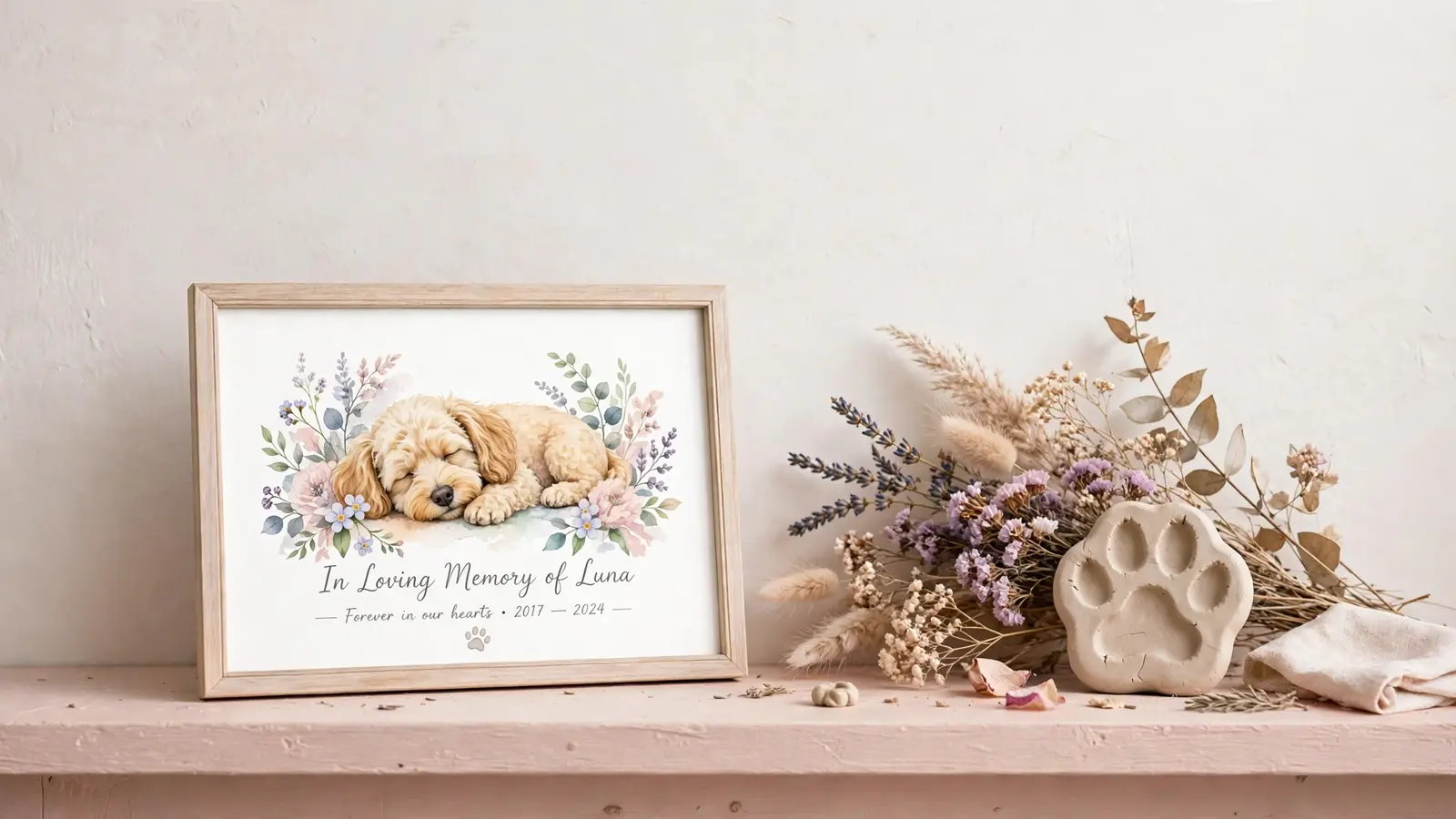
Six keepsakes, one quiet afternoon
Memorializing a pet can include scattering ashes in a meaningful place, planting a tree or flowers, keeping an urn with a photo and collar, making a scrapbook, or writing a letter to the pet. The keepsakes on this page are the home-made corner of that list, and nothing on it is required. Pick the one that sounds like them, skip the rest, and let the order be yours.
Every idea below follows the same shape: gather from the house, make for a little while, then place it somewhere you will actually see. If an afternoon is too much, one keepsake is a complete visit.
The six keepsakes at a glance
| Keepsake | Made from | Where it lives after |
|---|---|---|
| Shadow box | A box with a lid, paper, glue, the collar and tag | Shelf, mantel or the top of a bookcase |
| Garden stone | A flat stone or paver, paints from the drawer | By the door they used to watch from |
| Matted photo | A photo, card from the recycling, any frame you own | The wall, or a desk you pass daily |
| Clay paw print | Air-dry clay or salt dough | The keepsake box, framed when you are ready |
| Letter keepsake | Paper and a pen | Folded inside the shadow box |
| Memory jar | A jar from the pantry and scraps of paper | Kitchen shelf; one slip on heavy days |
Everything starts from something already in the house, so the only cost is the afternoon itself.
Start with the one that feels easiest. The jar usually wins, and the shadow box is the one people return to.
The shadow box: collar, tag, one small photo
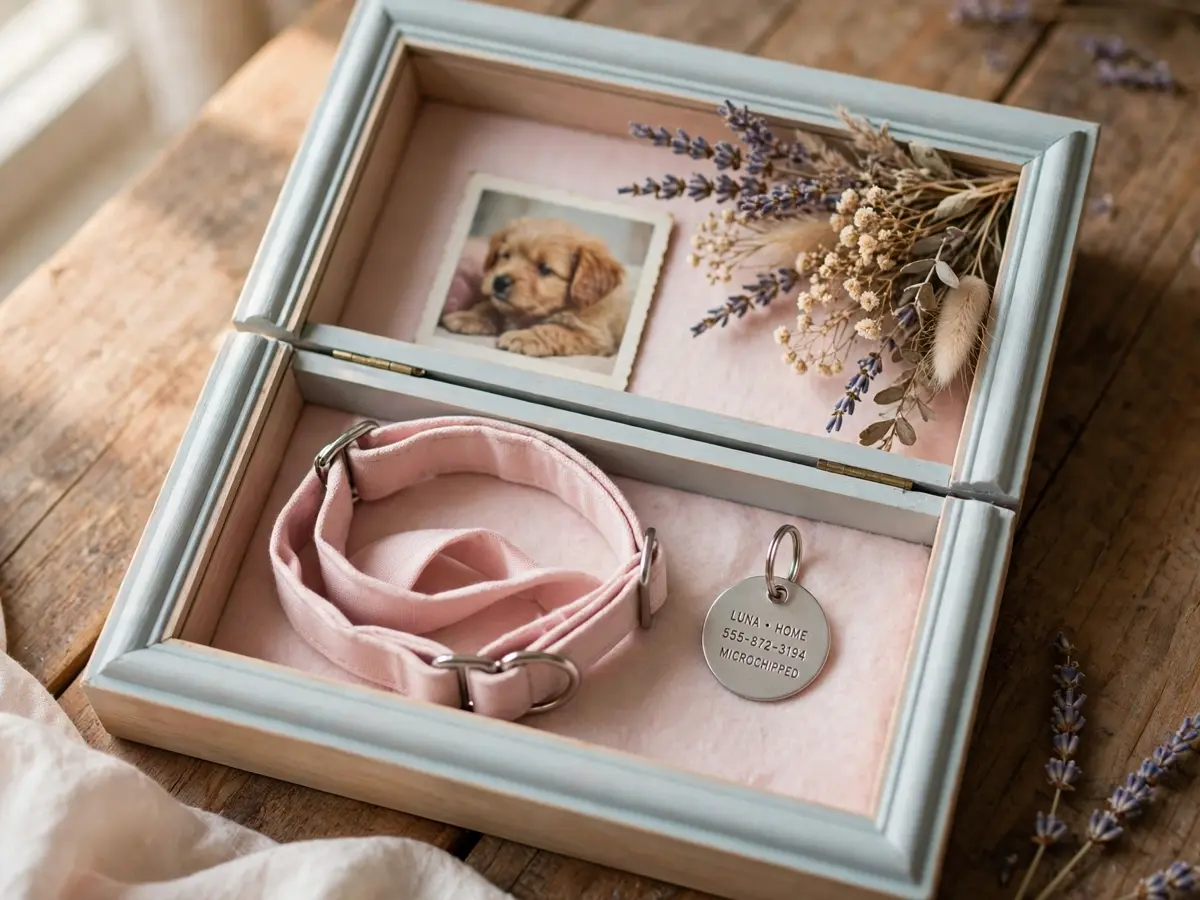
A dog shadow box holds the everyday objects that suddenly have no everyday job: the collar, the tag, the spare leash loop. It is the keepsake people describe as the hardest and then the most treasured, because it puts the real things where the morning light lands.
- Choose the box. Any box with a lid works, and a clear lid is a bonus, not a requirement. Line the inside back with a sheet of soft paper in a color that reads calm to you.
- Lay a strip of paper or fabric across the base, then curl the collar loosely on top so it keeps the shape it had around their neck rather than lying flat and stiff.
- Anchor each piece from behind with a small loop of tape: the collar, the tag, and one small photo of the two of you. Nothing needs to fill the box; the space around the objects is part of the design.
- Write a label on the backing paper: their name, and the years you shared. Pencil is fine. You can always ink it on a steadier day.
Tip: hang or stand the box where light lands but not direct sun — sun fades photos and painted paper alike. A shelf out of the beam keeps everything truer for longer.
The painted garden stone
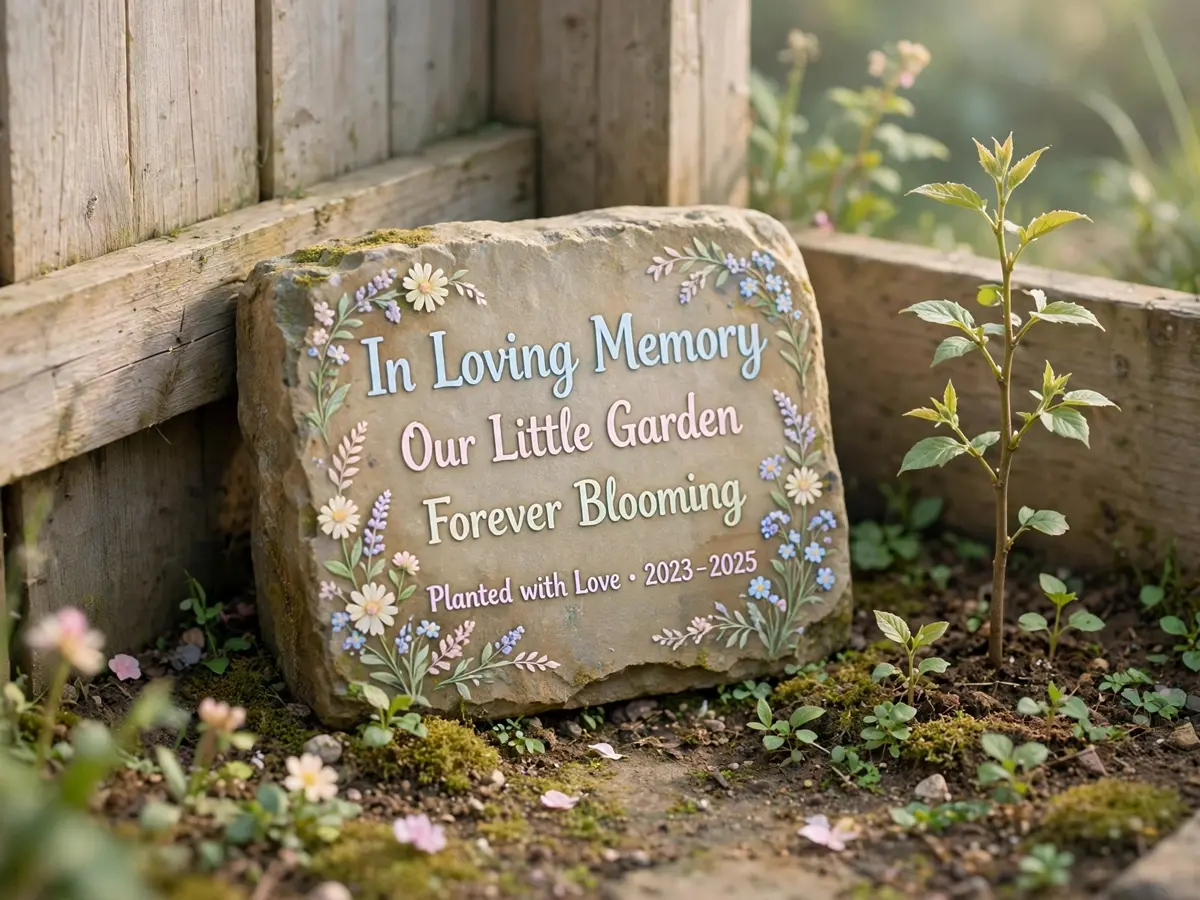
A painted stone gives the garden a place to say their name, and it is the friendliest keepsake to make with children or on a wobbly day. It asks for a flat stone and whatever paints the craft drawer already holds.
- Find or keep a flat stone or paver, and let it dry fully after a rinse. Paint refuses to hold on a damp surface, and patience here saves the whole project.
- Paint their name across the middle with outdoor acrylics or a paint pen, in letters big enough to read from the path. Wobbly letters are allowed; the stone has seen worse weather than your handwriting.
- Add one small detail that was theirs: a heart, a sun, the shape of a favorite toy, or a small border in the color of their collar. Write the month and year in a corner if dates feel right to you.
- Let it dry overnight, then place it where they used to be: by the door they watched from, at the head of a favorite walk, or under the window where the cat sat.
Tip: if rain is coming, the porch edge is kinder than the open yard. No sealant needed — a stone kept from the worst weather holds its paint for seasons.
The matted photo frame, from a cereal box
A mat turns any photo into a pet memorial frame, and a mat is just card with a window cut in it. The recycling bin usually has one ready.
- Choose the photo where they look most like themselves, and have it printed at any size that fits a frame you already own. The frame you have is the right frame.
- Cut a sheet of card slightly larger than the photo, then cut an angled window a touch smaller than the photo itself, so the edges of the print sit behind the card and stay flat.
- Write a single line on the mat, under the window, in pencil or fine pen: their name, or one caption line that sounds like them. Small text on a mat reads as intentional.
- Assemble photo behind mat, mat into frame, and hang it at the height of your eyes. If two prints came out of the printer, the second goes flat into the keepsake box for a winter day.
Tip: a mat that leaves breathing room around the photo looks calmer than a tight one, and a crooked cut hides behind the frame edge anyway.
The clay paw print, in short
The full steps live on the rainbow bridge keepsake page, so here is only the shape of it: press the clay flat on wax paper, make the print, let it dry overnight, and write their name and the date on the back in pencil. If the clay is not in the house, salt dough stands in — the rainbow page carries those steps too.
The print does not have to be framed. Plenty live for months in the keepsake box beside the collar, and that is a complete home for it.
The letter keepsake
Write the letter you never got to say out loud: the ordinary things first, the walks, the greetings at the door, the sound the house made when they were in it. A letter can run one paragraph or a page of fragments, and unfinished is fine.
Fold it and stand it inside the shadow box, or slip it behind the mat of the photo frame. If blank-page pressure is the problem, the free printable journal opens every page with a prompt line, so the first words are already on the paper waiting for you.
Tip: date the letter. A letter from the first month reads differently than one from a year on, and both are worth keeping.
The memory jar and the scrapbook
The memory jar is the lowest-effort keepsake on this page and the one that keeps giving. Keep a jar from the pantry on the kitchen shelf with a pen beside it, and drop in slips of paper: one memory per slip, written in the moment it surfaces. On a heavy day, pull one slip. That is the whole ritual.
The scrapbook is the jar’s bigger sibling: photos, the tag from their first toy, a swatch of the blanket fabric, ticket stubs from the café that let dogs sit outside. A glue stick and a cheap notebook from the drawer are the entire supply list, and pages can wait half-filled for as long as they need.
If the keepsake is heading out the door as a gift instead of staying on your shelf, the pet memorial gifts guide covers how to offer it gently, with no strings attached.
Everything comes from the house
The full supply list across all six keepsakes, almost certainly already in a drawer near you:
- Any box with a lid, for the shadow box and the keepsake box
- Soft paper, card from the recycling, a glue stick
- Pens and pencils, plus paints or a paint pen if the drawer has them
- One printed photo you love, and a frame you already own
- A jar with a lid, and scraps of paper for memory slips
- The collar, the tag, and any small object that was theirs
That is it. No special paper, no kit, no purchase. If the clay or the dough is missing, the stone, the frame, the letter and the jar carry the afternoon on their own.
Good to know: six keepsakes · everything from home · one quiet afternoon · for informational purposes only.
Questions people ask before making a memorial keepsake
What if I cannot face making anything yet?
Then today is not the day, and that is allowed. The collar can rest in a drawer, the photo can stay in the camera roll, and the glue stick can stay capped. A keepsake made in a rush rarely lands, and the box will wait for you without an expiry date.
Do I need a real shadow box frame?
No. Any box with a lid works: a wooden tea box, a shoebox covered in a sheet of soft paper, or a craft shadow box if one is already sitting in your closet. The collar does not care what holds it. It cares that you opened the box at all.
Which photo works best in a memorial frame?
The one where they look most like themselves, not the most polished one. A blurry shot from a walk, a photo where they are half out of frame, the one where the zoom caught them mid-yawn: print it small and let the softness stay. Imperfect prints often carry more.
Can I make these keepsakes with children?
Yes, and the stone is the friendliest start: a name, a heart, some fingerprints in the paint. Let the child choose the colors and keep your expectations soft. The conversation about the loss itself deserves its own page and its own pace.
How do I look after a painted garden stone?
A damp cloth when it looks dusty, and a spot under the porch roof when the weather turns. No sealant is required; a stone kept from the worst of the rain holds its paint for seasons. Bring it indoors for the winter if the porch freezes.
Is it strange to keep the collar in a box instead of displaying it?
Not at all. Plenty of people keep the collar folded in a drawer for months before it is ready to be seen. The box can stay plain brown paper for as long as it needs. Nothing about grief runs on a display schedule, and the keepsake is not a performance.
What do I do with keepsakes once they are made?
One box on one shelf is the whole system: the shadow box, the spare prints, the letter and the memory jar together, so nothing gets lost and nothing needs dusting in five different rooms. Open it when you want to. Close it when you are done.
Gentle notes
- Make one keepsake, or none — skipping is a choice, not a failure
- Nothing here needs to be bought; the drawer already has it
- Wobbly letters and blurry photos are part of the honesty
- Private grief is valid; the shelf does not need visitors
- For comfort only — a persistent sadness that blocks daily life deserves real support
Save for the quiet afternoon
Pin this for the day the drawer calls, or send it quietly to someone who needs it. The Stories collection holds the lighter pages too, for the days that need them.