 PawStyle Daily
Cute Pet Wallpaper 4K
Watercolor Pet Portraits: From Photo to Painted Art
Watercolor is the medium that says "my pet" rather than "a painting of a pet". The soft edge of a wet wash catches the way a household actually remembers an animal - the blur of a tail going past the doorway, the pale fur along a muzzle, the one dark patch that never quite matched the rest. It asks for less equipment than any other painting medium and forgives more, which is why the first portrait most people attempt by hand is usually a pet in watercolor. This page walks the whole route: the reference photo the painting starts from, the layers that build depth without mud, the brushwork that reads as fur, and the framing that suits a small wall.
By PawStyle Daily · Updated 20 November 2026
Side light and a clear face in the reference · lightest wash first, darkest last · every layer dries before the next · leave the white where the fur catches light · thin oak and a pale mat for a small wall.
Why watercolor flatters a pet
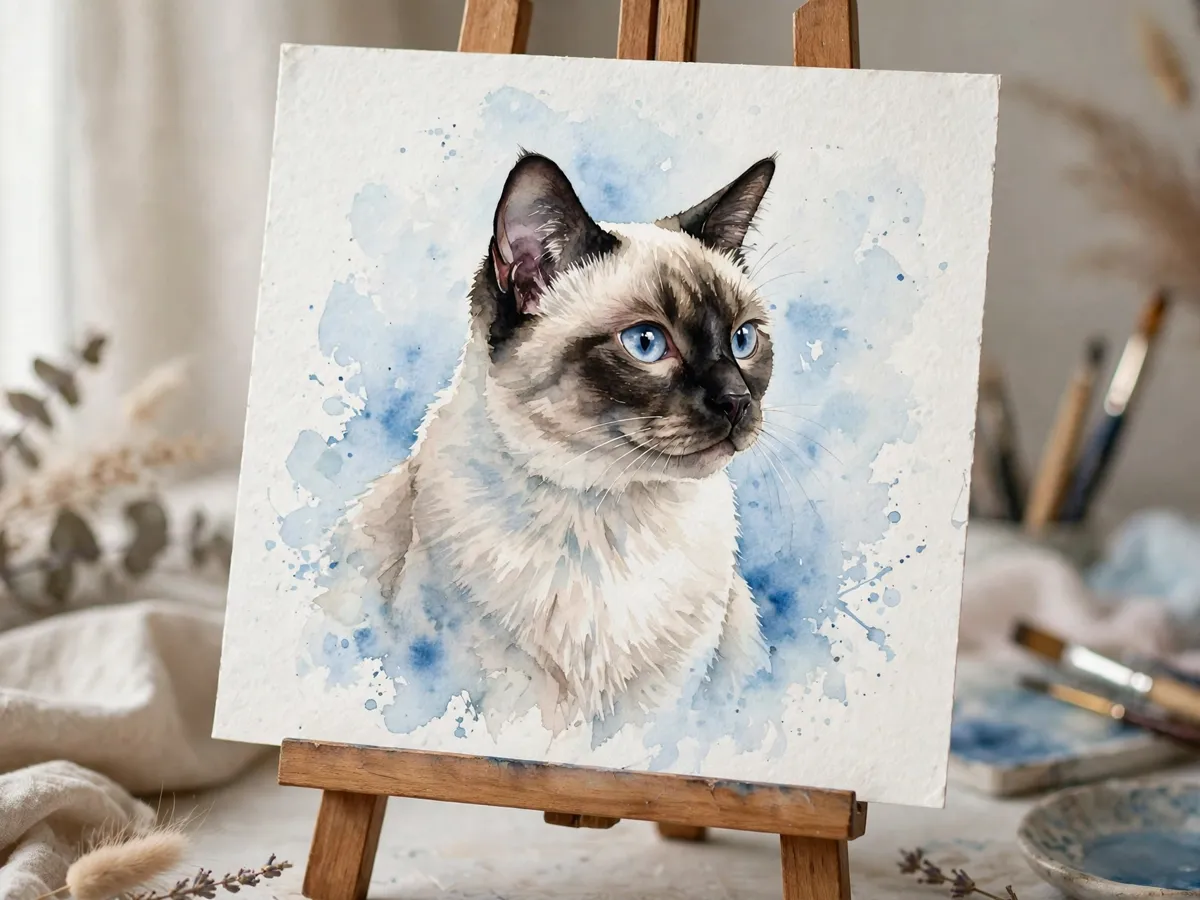
The medium works with the subject rather than against it. Fur is already soft at its edges, already a mass of fine hairs the eye reads as one tone from across the room, and a wet wash lays down exactly that: a shape with a breathing border. Oil and acrylic demand a crisp silhouette that a cat's coat never has, while watercolor lets the outline dissolve into the background where the light does the same thing at home.
The transparency is the second gift. Pigment sits on paper rather than over it, so the white of the sheet stays the brightest thing in the picture - and a pet's coat is full of bright things: the highlight on a nose, the pale strip along an ear, the glint in an eye. Painters who work in watercolor leave that white alone instead of mixing it in, and the reason shows up immediately in a portrait that looks lit rather than coloured.
Two neighbouring routes sit beside the hand-painted one on this site. The commissioning a pet portrait guide covers hiring a human artist for the heirloom version, and the paint by number portrait kits walkthrough covers the traced-outline route for households who want the finished canvas without the blank first stroke. The watercolor page is the middle: your hand, your pet, and a sheet of paper that costs less than a coffee.
The reference photo the painting starts from
Watercolor reads fur direction, and fur direction only shows in the right light. The reference that paints well is the one shot near a window with the light arriving from the side: the coat falls into lit and shaded bands, the muzzle turns clearly, and the ears go half-translucent. A flash flattens all of that into one shiny plane, and a midday sun cuts shadows so hard the painting comes out striped. The overcast morning on the couch is the whole photo session, and it costs nothing to reshoot.
The face wants most of the frame. A portrait that includes the whole animal asks the painter to hold proportion, posture and coat in one sheet, and the first attempt usually loses the likeness somewhere in the body. Crop the reference to the head and shoulders, keep both eyes inside, and let the chest fade out of the picture: the likeness lives in the eyes, the ear set and the marking above the nose, and those three carry a portrait on their own.
Mark the odd things before the brush touches paper. The notched ear, the white patch shaped like a leaf, the lower eye that sits a hair out of line - the details a household notices first are the details that make a painting recognisable. Note them on the reference photo in pencil, or circle them on the printed copy taped beside the board, and the painting keeps them instead of smoothing them away. Generic pets come from painters who never looked closely enough to find the odd thing at all.
Layering washes for depth
The order is the technique: lightest first, darkest last, and every layer dry before the next. Watercolor builds by adding transparent sheets of colour, so a pale underlay carries the warmth of the coat and the darker passes on top carve the shadows. Paint two layers wet into wet and the pigments run together at the edges - the muddy result households blame on the paper or the paint is nearly always a layer that went on damp. The wait is not a pause in the craft; the wait is the craft.
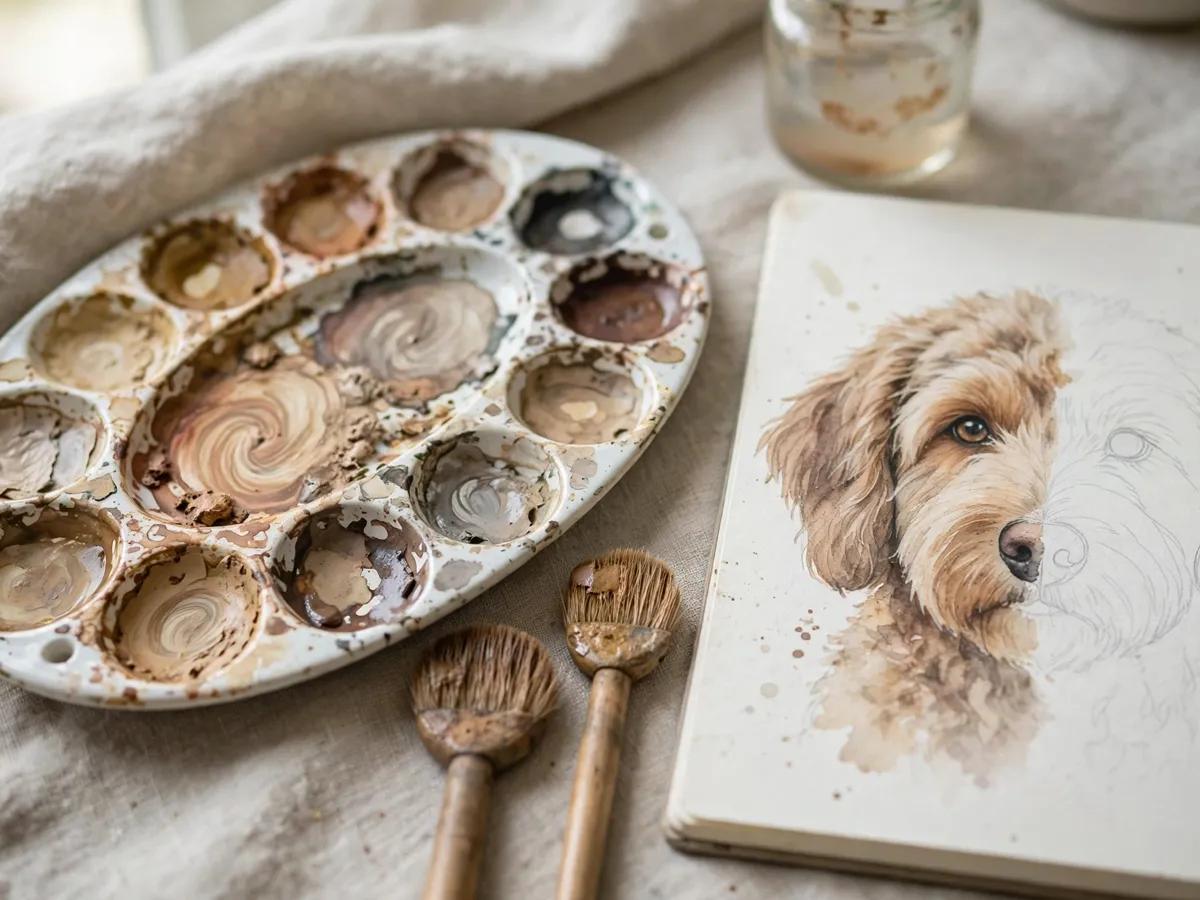
Mix the coat colours before the first stroke, on the palette and not on the paper. A swatch strip beside the painting - the pale underlay, the mid tone, the shadow, the darkest accent - gives the painter a reference to match against when the sheet dries lighter than it looked wet. Every watercolor dries paler, and the strip is the reason a dry painting still matches the pet on the couch.
The background goes in its own wash, apart from the subject. A single flat field behind the shoulders is the classic choice and the one that keeps the face the star; a soft graded wash, dark at the top and pale at the bottom, adds the studio feel of the regal frames this site covers elsewhere. Either way the wash stops at the fur line rather than crossing it, and the fur line stays crisp because the paper there was dry when the background arrived.
Brushwork that reads as fur
Fur is strokes, not fills. Once the pale underlay has dried, the loaded brush draws short marks that follow the direction the hair grows: down the muzzle, back along the cheek, outward from the eye. The marks lift at the end rather than stopping flat, and a lifted end is what makes a coat look soft instead of painted solid. A round brush pointed to its tip does the marks; the flat brush is for the washes underneath them.
Leave the white. The brightest hairs are the paper showing through, and a painter who covers them with mixed white loses the whole trick watercolor exists for. Plan the highlights before the shadow layer arrives - the ridge of the muzzle, the brow above each eye, the strip down a cat's chest - and steer the dark washes around them. Reserved white reads as light on fur; painted white reads as paint.
The eyes and the nose finish the portrait, and they finish it last. A small amount of the darkest colour, one confident mark per eye with a tiny untouched glint inside, does more for likeness than any amount of coat work. The nose gets the same treatment: damp paper, one drop of pigment that spreads into the soft rounded shape it should have. Do these when the brush is clean and the light is good, because they are the two spots a viewer looks at first, from across the room.
Framing options that suit a small wall
Watercolor wants a mat, and the reason is physical as much as visual. The sheet is thin and the paint sits on the surface, so glass touching the paper marks the pigment over time; a mat holds the glass off the painting at the paper's edge. A pale mat - cream, blush, the off-white the site leans on elsewhere - also gives the small washes room to breathe, which is what makes a portrait look considered rather than cramped.
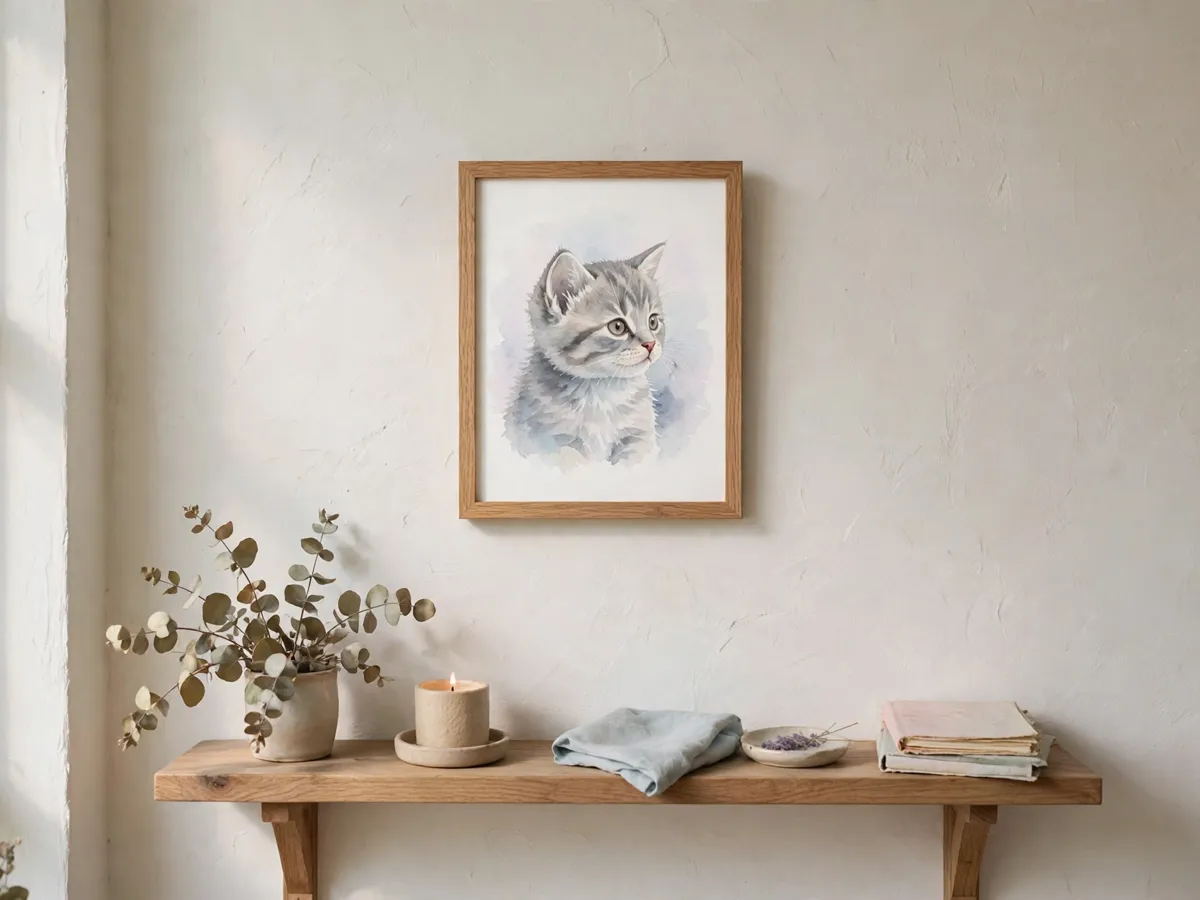
Small walls get small frames, and the painting shrinks to match rather than the other way around. A quarter sheet cropped to the head, framed at a modest size above a shelf or a bedside table, carries more than the same portrait stretched across a gallery wall: watercolor is a close medium, meant for the distance of a chair. The thin oak frame this site pairs with its blush palette keeps the emphasis on the washes rather than the moulding.
Let the painting dry fully before the glass goes on, and keep it out of direct sun afterwards. Watercolor is light-fast in the pigments most hobby palettes carry, but a south-facing wall fades any painting over years, and the shelf across the room keeps the portrait at the distance it was drawn for. A photograph of the framed piece goes to the family chat the same day - the scan travels faster than the art, and the original arrives later as the second telling of the same story.
Questions about watercolor pet portraits
What kind of photo paints best in watercolor?
One sharp photo in natural side light with the face filling most of the frame. Fur direction reads clearly, which is what the washes follow.
How many wash layers does fur need?
Three or four thin layers, lightest first. Each layer dries before the next so the fur keeps its edges instead of turning muddy.
What size paper suits a first pet portrait?
A quarter sheet. Small paper forgives loose brushwork and still holds the face detail that makes the portrait recognizable.
Save these on Pinterest
Pin the wash order for the next painting session, or send the reference-photo rules to a friend whose first portrait came out muddy. The Pet Art & Wallpaper collection holds the commission walkthrough, the paint by number kit guide, the multi-pet layout ideas, and the watercolor print pairings for gallery walls - so the hand-painted original has somewhere to live beside everything else on the wall.
For informational purposes only.