 PawStyle Daily
Cute Pet Wallpaper 4K
How to Commission a Pet Portrait (Step by Step)
A commissioned pet portrait is the rare purchase that arrives with someone else's hours inside it - the hours spent on the ears, the coat, the one expression that only your pet makes. The finished frame is only as good as the steps before it: the photos you send, the artist you pick, the brief you write, and the delivery terms you agree on before any money moves. This page walks those steps in order, so the portrait on the wall looks like the pet on the couch.
By PawStyle Daily · Updated 20 November 2026
Reference photos in natural light · read the portfolio for your species and style · write the brief before the queue · agree the delivery terms first.
What a commission actually is
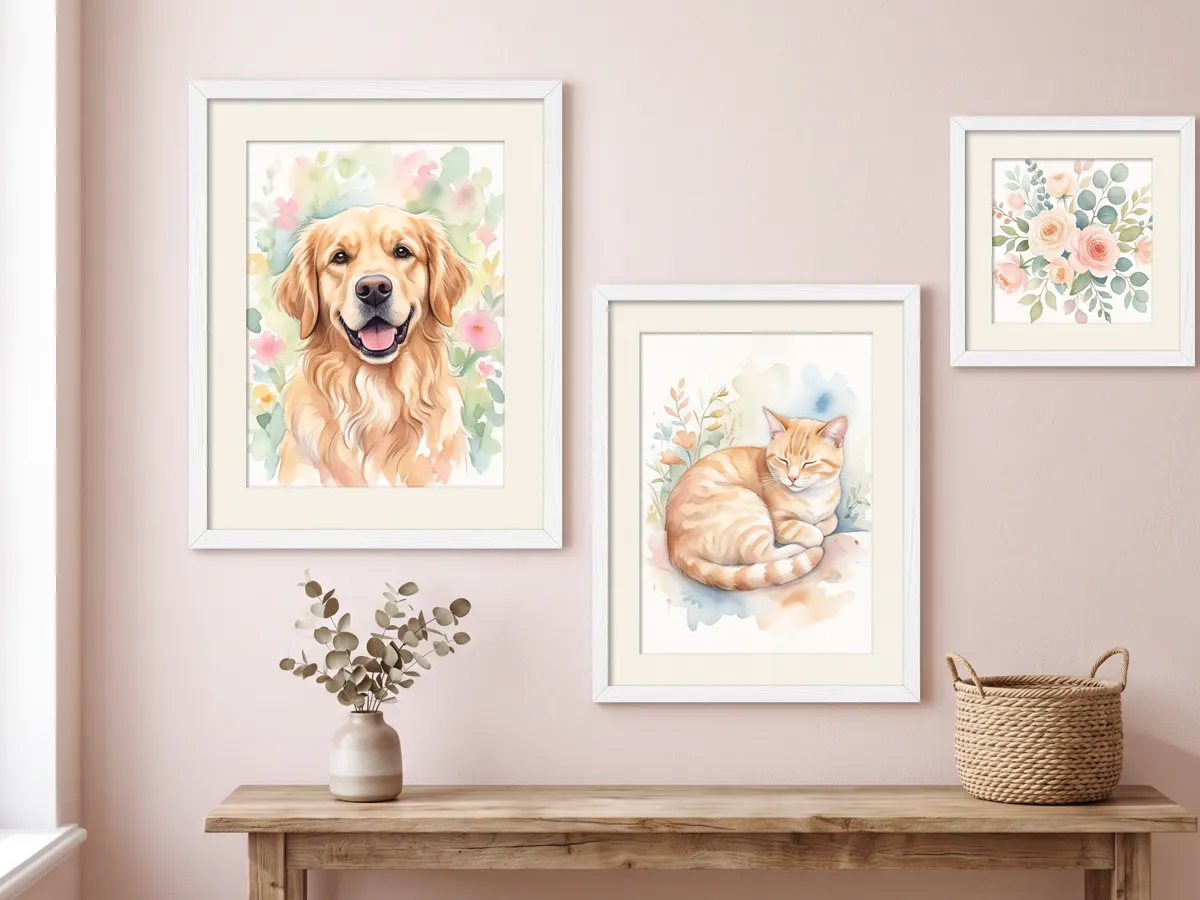
A commission is a made-to-order piece: you pay an artist to render your pet from your photos, in a style you pick, at a size you agree on. It is not a print from a shop and not a filter on a photo. The artist's portfolio shows the style; your photos supply the subject; the brief connects the two. Every step on this page exists because the piece is custom - a mistake in the photos or the brief lands on the wall three months later.
The two questions that decide everything come before the search: what style, and what the frame is for. Watercolor and soft pastel suits a nursery wall and a gift; oil-textured and formal suits a memorial shelf and a family room. The use decides the size, the size decides the price band, and the style decides which artists are even worth reading. Households that skip this step browse portfolios endlessly without recognizing a match, because they cannot say what they are looking for yet.
Two routes sit beside the classic commission on this site. The custom AI portrait gifts page covers the generated route - faster, cheaper, and a good fit when the budget is small. The DIY portrait from a photo page covers the hands-on route for people who want the process itself. This page is about hiring a human artist, start to finish.
The photos the artist needs
The reference set is three photos minimum: a side profile, a straight-on face, and one candid that catches the pet's usual expression. The profile gives the artist the muzzle line and the ear set; the face shot gives the eye shape and the markings; the candid gives the personality, which is the part families say they wanted all along. Artists ask for these three because one photo alone forces guessing, and a guess on the ears reads wrong from across the room.
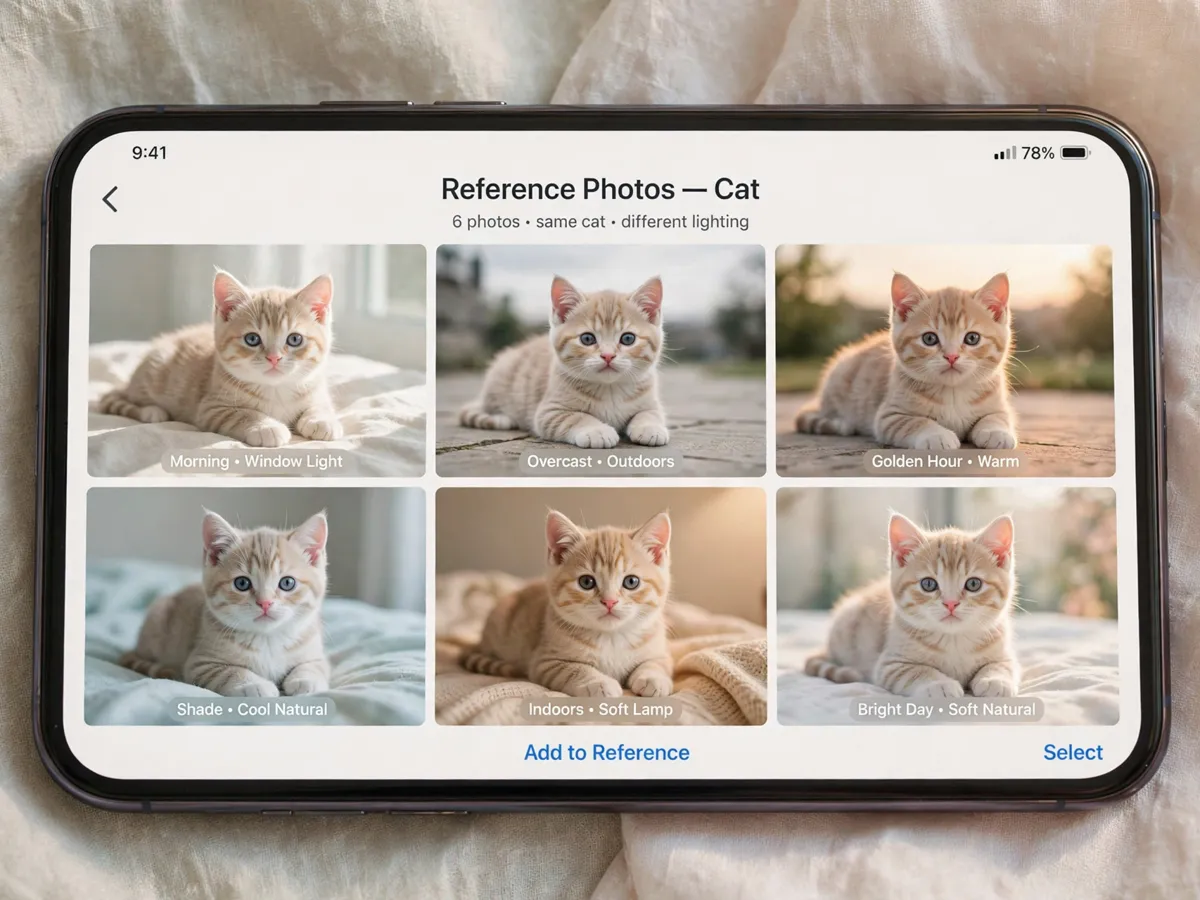
Natural light is the rule that separates usable references from wasted ones. A flash flattens coat colour and throws hard shadows across the face; a window on an overcast day renders fur, markings and eye colour the way the household actually sees them. The best reference session is the one nobody notices: pet on the couch near the window, phone at the pet's eye level, twenty shots of which five are sharp. Eye level matters more than the camera does - shots from above distort the head, and distortion travels straight into the portrait.
Send the originals, not the compressed ones. Messaging apps shrink detail the artist needs - whisker edges, the exact pattern of a tabby's forehead, the rim colour around a cat's eyes. A file the size of the phone's native shot carries all of it, and most artists spell out the upload method in their commission form. Extra photos never hurt: the artist chooses from the set, and the set that includes the sneeze, the zoomies blur and the formal sit gives them the whole personality to draw from.
How to read a portfolio before paying
The portfolio answers one question: has this artist drawn your species, in your style, recently? A painter with gorgeous dogs and no cats is a risk on a cat commission - ear structure, eye set and fur direction are learned skills, and the learned species shows in the first glance. Scroll for the same species and the same medium, and count the finished pieces rather than the studies. Ten finished cat watercolors beat fifty dog sketches for a cat frame.
The commission notes are the second read. Artists who post client notes - "commission for the Millers, 2026" - are showing real finished work, not stock studies. The notes also reveal turnaround: how many pieces the artist ships in a month, and whether the queue runs short or long. Comments from past clients about revisions and delivery round out the picture; an artist with zero client history in the portfolio is an artist whose process nobody has documented yet.
The terms page is the last stop, and it tells you before you ask. Price bands, deposit percentage, revision count, queue length and the rights line - whether you may reproduce the image for prints or gifts - all live there on honest artists. A terms page that answers nothing is a conversation starter, and the conversation belongs before the deposit, not after. The deposit itself is normal practice; the red flag is an artist who cannot say what happens if the piece never ships.
Writing the brief that gets the portrait you pictured
The brief is one page, and it has five parts: the pose, the style, the size, the background, and the one detail that must not be missed. The pose comes from the reference set - the candid sit, the profile with the chin up. The style names the portfolio piece you loved. The size is in inches or centimetres, decided before the queue. The background is anything from plain blush to the pet's own corner of the living room.
The must-not-miss detail is the line that makes families feel seen in the finished piece: the notched ear, the white patch shaped like a heart, the collar with the bell, the one eye that sits slightly lower. Artists build their reputation on catching these, and the brief that names the detail gives the artist permission to hunt for it in the references. The brief that skips it gets a lovely generic portrait of a cat that looks like every cat.
Say the hard things early. If the portrait is a memorial piece, say so - artists handle references, pace and notes differently when the pet is gone, and the work carries more care for it. If the frame has to fit a specific wall, send the measurements. If the budget has a ceiling, state it; most artists will say what fits inside it rather than lose the commission. Everything in the brief costs nothing before the queue, and everything left out costs the revision round after it.
Timelines, shipping and the final frame
A commission runs on two clocks: the queue and the working window. The queue is the line of commissions ahead of yours - two weeks at a new artist, three months at a busy one - and the working window is the time the piece itself takes once it starts. Both numbers live in the artist's terms, and the combined date is the one to write on the calendar when the piece matters for an occasion. A December gift starts in September, and the queue math is the reason.
Progress photos are part of the deal on most commissions: a sketch check-in, sometimes a colour stage. The checkpoints are where the brief earns its keep - a wrong ear notch caught at the sketch stage costs an hour, caught after the varnish costs a re-paint. Answer the check-in emails the day they arrive; the artist's clock waits on the household's silence, and the quietest way to slow a commission is to not reply.
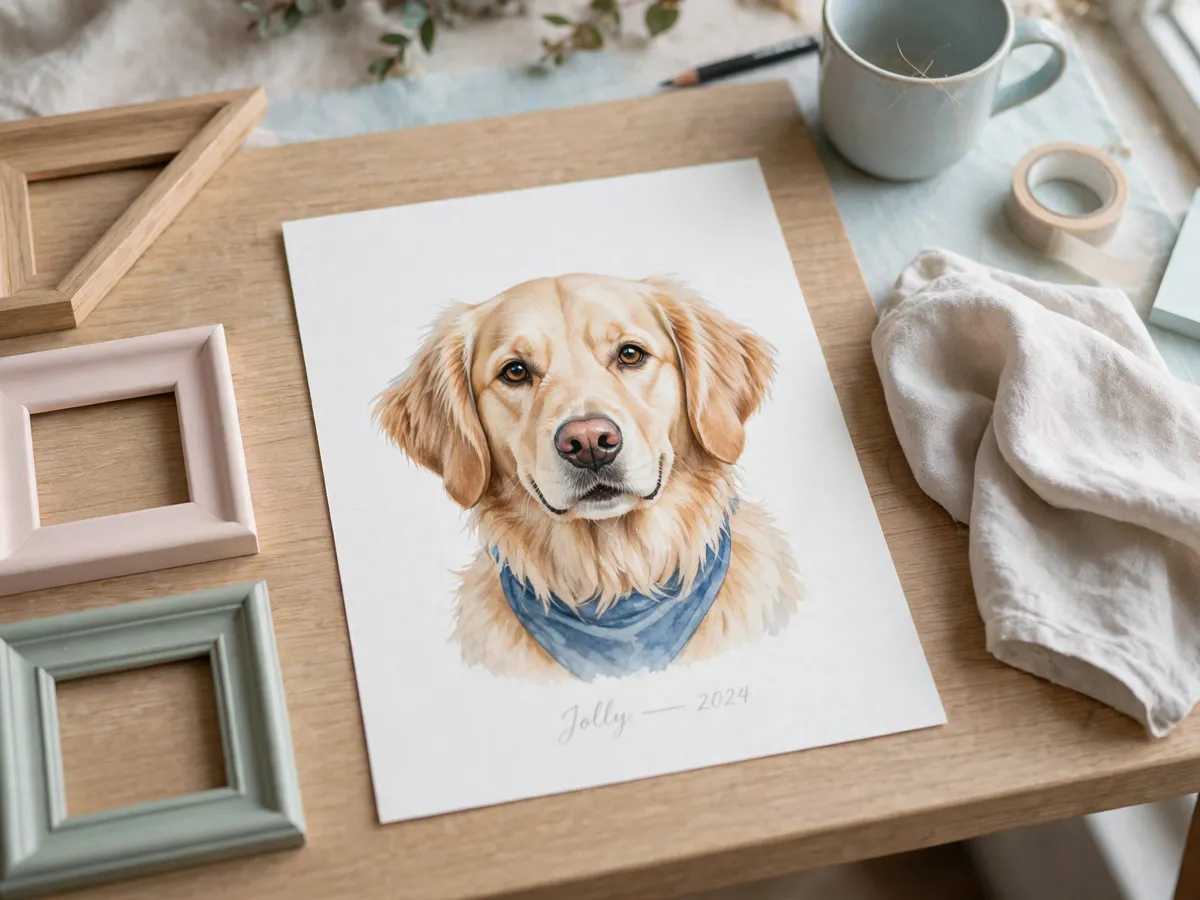
Shipping and framing are the last two decisions. Original paintings travel insured and flat or rolled, and the frame belongs to the town shop rather than the artist - glass, mat and mount in the house style, fitted once the piece arrives. Prints ship in tubes and frame the same week. Unpack on a soft cloth, check the corners before the courier leaves for insured pieces, and photograph any damage before signing. The portrait that survives the trip intact is the one that hangs for decades, and the trip is the last step where anything can still go wrong.
Questions about pet portrait commissions
What photos should I send an artist?
Sharp photos from the side, the front, and one that catches the pet's usual expression. Natural light beats a flash for coat colour.
How long does a commissioned portrait take?
Most artists quote a queue plus a working window, and the range shows up in their terms before you pay anything.
How do I know an artist is worth hiring?
Read the portfolio for the same species and style you want, then check how many finished commissions they show with client notes.
Save these on Pinterest
Pin the commission guide before the next artist queue opens, or send it to a friend planning a memorial frame. The Pet Art & Wallpaper collection holds the AI portrait gift route, the DIY from-photo walkthrough, and the watercolor print ideas that pair with a finished commission, so the whole wall plans from one place.
For informational purposes only.