 PawStyle Daily
Cute Pet Wallpaper 4K
Paint by Number Pet Portrait: Kit to Finished Art
A paint by number pet portrait is the rare craft project where the result genuinely looks like the artist's own work - because it is theirs, one numbered region at a time. The kit prints the outline and the numbers; the painter supplies the patience and the brush. This page walks the whole route: picking a kit that matches the skill on hand, prepping the photo a custom kit runs from, the brush techniques that make fur read as fur, and the finishing steps that turn a canvas into framed art. No experience required, and no studio needed beyond a table and a lamp.
By PawStyle Daily · Updated 20 November 2026
Match the kit to the skill · a clean photo makes a clean template · light colours first, dark last · seal before you frame.
Why the numbered route works for pet portraits
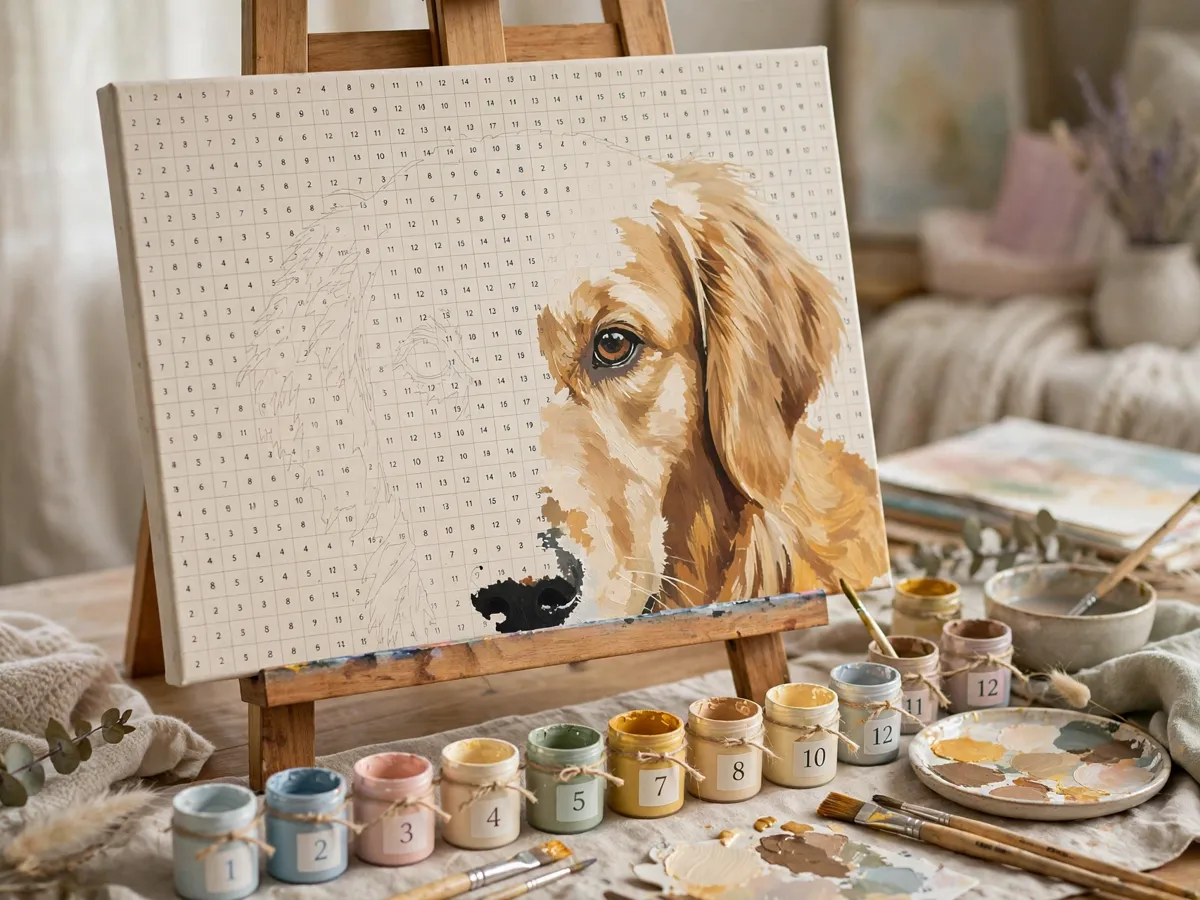
A pet portrait is the hardest subject to paint freehand, and the easiest to paint numbered. The likeness is the whole point - the exact tilt of the ear, the patch over the left eye, the shape of the muzzle - and freehand painters without training miss likeness. The kit carries the likeness for you: the outline is traced from a real photo, so the shapes arrive correct. The painter's job shrinks to filling regions evenly, and the finished canvas still reads as the dog on the couch.
The format also fits real life. There is no class schedule, no supplies shopping beyond what ships in the box, and no risk floor - the numbers forgive loose brushwork, and the regions are small enough that a session ends in minutes with visible progress. Several evenings of an hour each, spread across a month, lands a finished portrait. The slow shape of the project is a feature: it grows alongside the season, arrives framed around a birthday, and the making of it becomes part of the gift.
Two neighbouring routes sit beside this one on the site. The custom AI portrait gifts page covers the generated route for households who want the image without the evenings. The commissioning a pet portrait guide covers hiring a human artist for the heirloom version. The numbered kit is the middle path: the likeness of a traced photo, the hands-on craft of a commission, at the price of a dinner out.
Picking a kit that matches your skill
The complexity dial is the region count, and it is the first thing to read on any kit listing. A beginner kit keeps regions large and few - the face blocked in broad shapes, the background in wide fields of one colour. Intermediate kits split the fur into dozens of small tonal patches, and advanced kits number hundreds of regions down to the whisker roots. The honest question is not "can I paint" but "how many evenings do I have": a hundred-region canvas is a month of easy sessions, and a three-hundred-region canvas is a quarter.
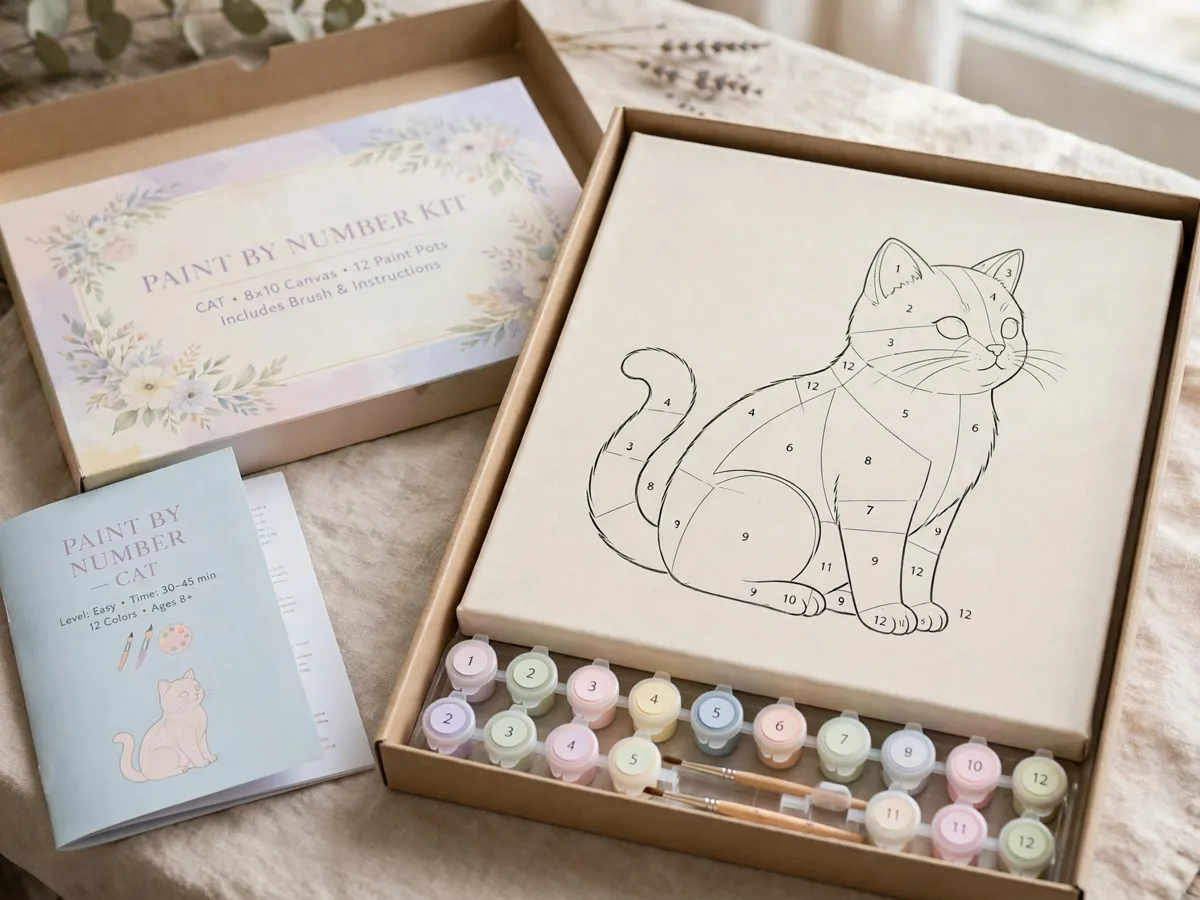
Stock kits versus custom kits is the second decision. Stock kits paint a modeled dog from the seller's library - fast, cheap, and the likeness is approximate. Custom kits run the numbered template from your own photo: you upload, the service traces the outline, mixes the palette from the actual coat colours, and ships the canvas with matching pots. For a portrait of a specific pet, the custom route is the whole point, and the upload quality decides how good the template comes out.
The kit contents deserve a check before the first session. A complete box holds the stretched canvas or flat sheet, the numbered pots, one flat brush and one liner, a sheet of the colour key, and hooks or a mounting strip. Missing liners and thin pots are the common gaps; a small extra set of brushes and a tube of white paint close them for less than the shipping on a replacement box. Acrylic pots dry out over a long project, so the sealed-tray habit from the paint section below is worth learning on day one.
Prepping the photo the kit runs from
A custom template is only as clean as its source photo, and the cleaning happens before the upload. The best frame is the one where the face fills most of the picture: sharp focus on the eyes, the whole head inside the frame, and the body leading out of it. Background clutter is the enemy - every leaf of the garden, every chair leg becomes a numbered region - so the photo gets chosen against a plain wall, or the clutter gets cropped away before upload. One clear subject, one plain background, and the template comes out paintable.
Light is the second filter. The window-lit photo - soft, even, no flash - keeps the coat colours true, and the tracing reads the tonal patches correctly from it. A flash flattens the fur into one shiny plane and the template loses the gradients that make a portrait look alive. Harsh midday sun cuts shadows hard across the muzzle. The overcast-day photo by a window is the reference shot the whole kit depends on, and it costs nothing to reshoot the pet on the next grey morning.
The upload pass is quick and worth doing twice. Most custom services show a preview of the traced template before printing, and the preview is where the household edits: merge the speckle regions the tracer found in the background, drop the stray object near the ear, keep the face regions rich. The second look catches the whisker zones that came out as confetti. A clean preview upload prints a canvas that paints smoothly; a skipped preview prints a canvas that fights back.
Brush techniques that make fur read as fur
The order of work is the first technique: light colours first, dark last, background before subject. Acrylic covers reliably when dark sits over light, and the reverse makes every region a fight for opacity. The big background fields go first - they are the warm-up, and the even strokes there set the hand for the face. The eyes and the nose come last, when the brush is loaded clean and the lamp is bright. Number order is a guide, not a law; tonal order beats printed order on any canvas.
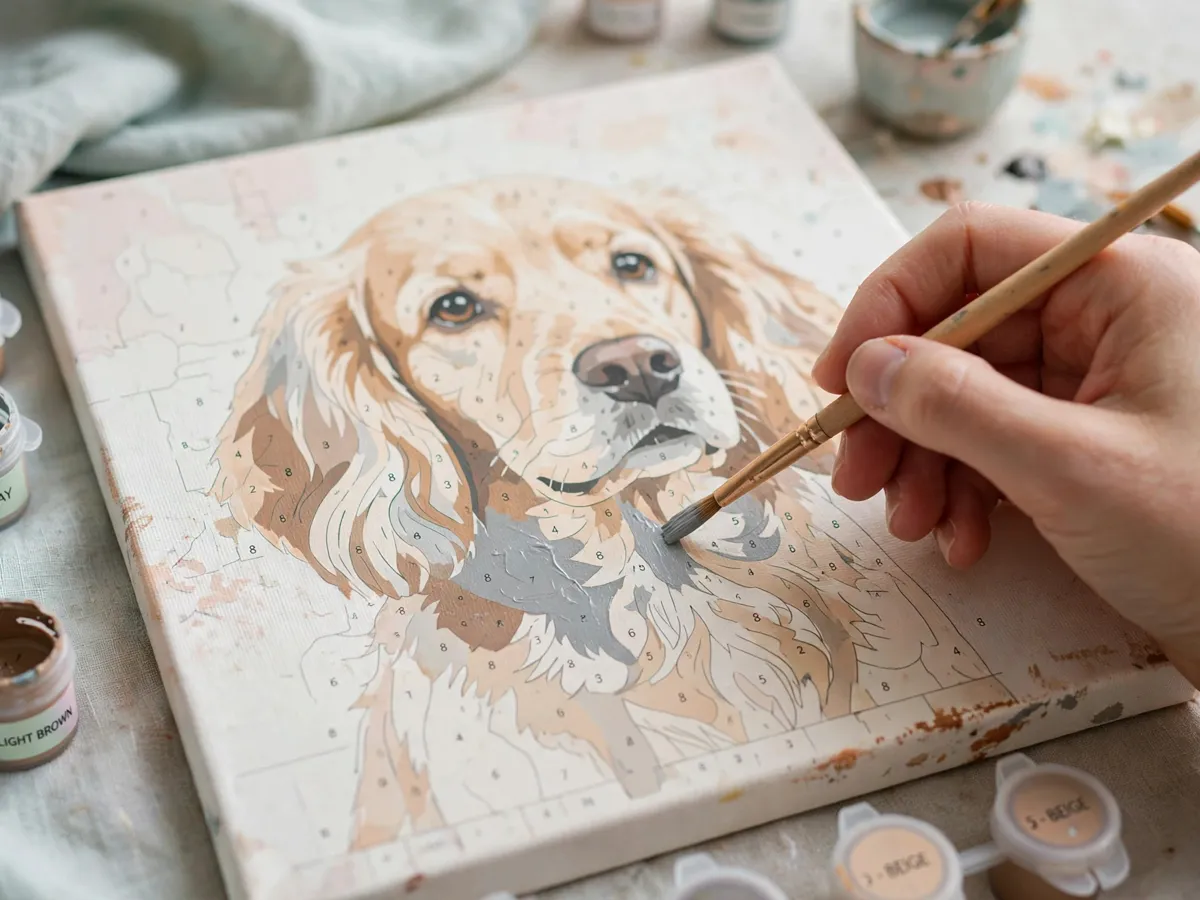
Fur is painted in strokes, not fills. Inside a numbered region, the brush follows the direction the hair grows - down the muzzle, back along the cheek, outward from the eye - and the strokes end before the outline line rather than on top of it. Two thin passes beat one thick one: the first pass covers the region loosely, the second fills the gaps once the first has dried. Thick paint bleeds under the printed outline and muddies the edges, and the edges are what make a portrait look sharp from across the room.
The pot discipline keeps colours honest. Pots get opened one at a time, resealed between regions, and the liner brush gets wiped on a cloth before it ever touches the next colour - grey-furred dogs show every contamination the palette carries. A damp palette tray holds the mixed pots workable across sessions, and the rag-and-water cup beside it ends each stroke clean. The habits sound fussy; on a month-long canvas they are the difference between a portrait and a patchwork.
From last stroke to hung art
The canvas needs a full dry before anything touches it - a stretch of standing time, longer in a damp room. Thin acrylic layers dry fast to the touch and slow to the core, and sealing a soft film traps wrinkles in the varnish. The check is the corner: press a fingertip on an inconspicuous edge, and if it feels cool, the paint underneath is still off-gassing water. Wait for the warm matte feel, then seal.
The sealant is a soft brush coat or a spray pass, one even layer, and it does two jobs: it locks the paint against sun and handling, and it evens the sheen so the patched regions read as one surface. Matte sealant keeps the look painterly; satin brings out the coat colours the way a photo does. The signature line - the pet's name and the year in the liner brush, bottom corner - goes on before the seal, in the darkest paint the kit carries.
Framing follows the room, not the canvas. A stretched canvas hangs as-is or in a deep tray frame that floats it off the wall; a flat sheet gets mounted on board behind glass with a pale mat, and the blush-and-gold combination this site runs elsewhere suits a numbered portrait exactly. The photograph of the finished piece goes to the family chat before the frame shop, because the scan travels faster than the art - and the framed original arrives later as the second telling of the same story.
Questions about paint by number pet portraits
What photo works best for a paint by number kit?
A sharp, well-lit photo where the face fills most of the frame. Fewer background details mean fewer tiny numbered regions.
How long does a pet portrait kit take to finish?
Most painters spread it over several evenings. The large background areas go fast; the face detail is the slow part.
Do I need painting experience to start?
No. The numbers tell you where each color goes, and the printed outline keeps shapes in place even if your brushwork is loose.
Save these on Pinterest
Pin the kit guide before the next craft season, or send it to a friend asking what to make with their dog photo. The Pet Art & Wallpaper collection holds the commission walkthrough, the AI gift route, and the regal portrait styling ideas that frame the same canvas differently, so the finished piece has somewhere to live.
For informational purposes only.