 PawStyle Daily
Cute Pet Wallpaper 4K
Regal Pet Portraits: Medieval and Renaissance Styles
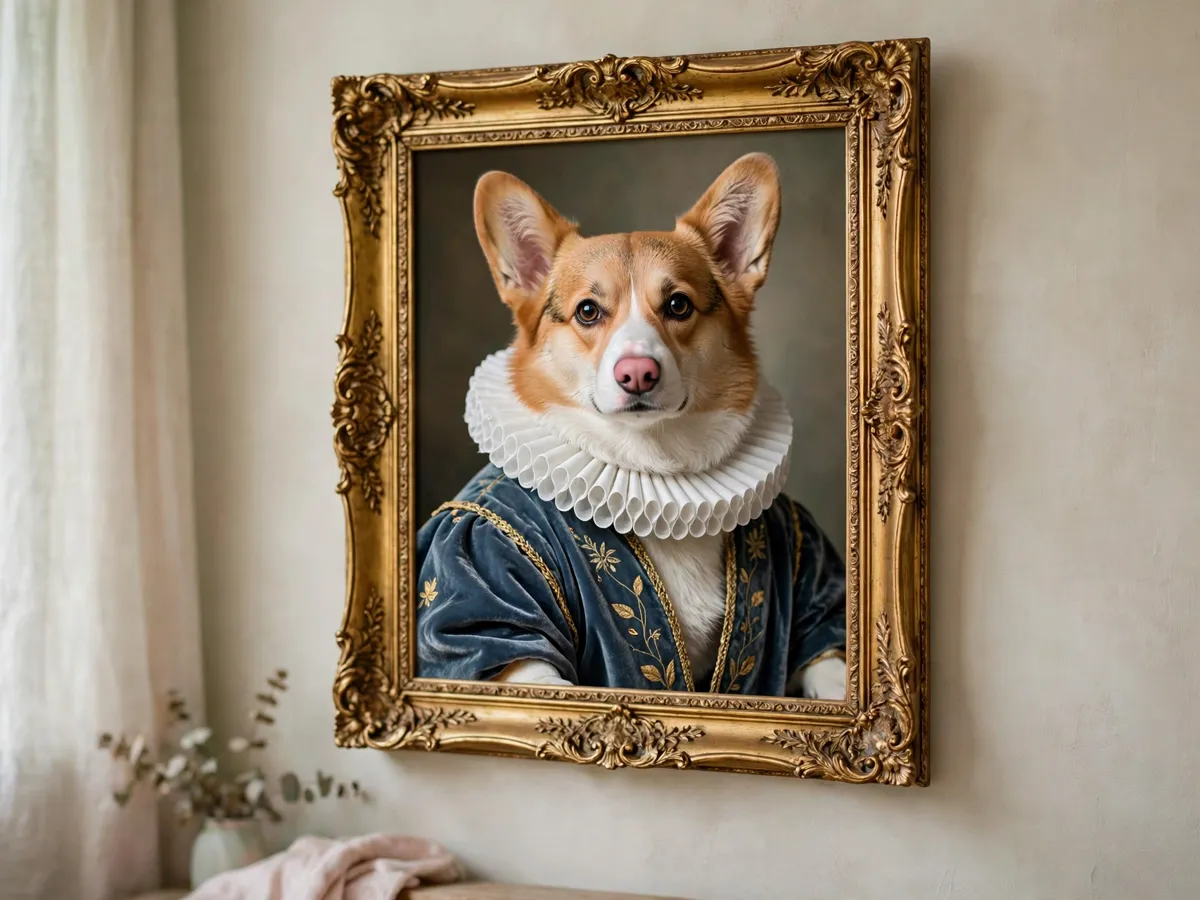
A regal pet portrait borrows centuries of formal portraiture and points all of it at a corgi. The gilded collar, the heavy velvet robe, the grave expression that has never signed a treaty - the joke and the tribute share one frame, and that is why the style outlives every trend that passes through the feed. Getting it right comes down to three decisions: which era, which single piece of costume, and which background for the wall it will hang on. This page walks the medieval and renaissance looks side by side, the garment choices that carry the royal read, and the brief that hands the whole idea to an artist or a generator.
By PawStyle Daily · Updated 20 November 2026
One era per frame · one hero garment, never a full wardrobe · gold ground for medieval, warm depth for renaissance · name the era, the garment and the light in the brief.
Why the royal look keeps its throne
The genre works because of contrast. A pet's face is ordinary in the best way - the tilted head, the unimpressed stare, the ears that heard a treat bag across the room - and the styling around it is extraordinary. Put the ordinary face inside a gilded collar and a painted throne and the frame says, quietly, "this is my dog, and she rules." That single sentence is the whole emotional payload of the regal portrait, and it reads the same from a phone screen or across a living room.
Formal portraiture was engineered to dignify sitters, and the engineering still works. The strict pose, the single light source, the dark ground behind the shoulders - conventions that made queens look immovable make a chihuahua look immovable too. A grumpy-faced breed gains solemnity; a fluffy coat gains texture a studio photographer would chase with lamps. The conventions do the heavy lifting regardless of how many legs the sitter has, which is why the style flatters almost every pet rather than only the photogenic ones.
Two neighbouring pages sit at the other ends of this spectrum. The funny AI dog images page owns the loud, meme-bound frames that live for a week in a group chat, and the DIY portrait from a photo walkthrough covers making the frame by hand. This page owns the styling itself - the era, the garment, the ground - whichever route ends up printing the portrait.
Medieval flatness versus renaissance depth
The medieval look is flat and symbolic, and its signature is gold. The sitter faces front or holds a strict profile, the background is a gold ground or a plain unlit field, and proportion bends toward what matters: the head sits large, the eyes read clear, and nobody pretends the pet stands in a room. Space is not the point - presence is. A medieval-style frame reads as an icon, solemn on purpose, with the wink living in who the icon depicts.
The renaissance look is the opposite lesson: depth, drapery and warm light. The sitter occupies a studio space, a curtain pulled aside to one shoulder, hills or a castle window dim behind, and a single light falling across the face from the side. The coat is rendered strand by strand and the velvet gets weight in its folds. A renaissance-style frame reads as a painting that belongs in a corridor with marble floors, and it rewards the viewer who steps close enough to find the brush marks.
Choosing between them starts with the subject and ends with the room. Flat gold suits distinctive markings - a bi-colour cat's patches or a frenchie's mask stand out clean against the gilded field, with nothing competing behind them. Depth suits texture: long coats, plumed tails, ruffs of fur that the side light can catch. Then the wall decides the rest. Gold and burgundy are loud and make a statement over a blush interior; the warm umber-and-olive of a renaissance studio settles into plants-and-wood rooms without a fight.
A third family sits between the two and deserves naming: the dark-doublet formality that later court portraits carried - the black coat, the lace collar, the nearly black background with one lit hand. It is the sober middle option when gold feels too bright for the hallway and painted hills feel too soft for the study. Households that want the pet to look like a serious nineteenth-century novelist rather than a monarch usually land here, and every rule on this page still applies to it.
One hero piece, never a full wardrobe
The ruff collar is the most efficient hero piece in the genre. One ring of starched white around the neck frames the face, announces the period in a single glance, and hides nothing of the expression - which is the actual portrait. It suits cats especially, whose bodies disappear under draped fabric and whose faces do all the work anyway. A ruff over a plain ground is a finished composition; nothing else is required.
The velvet robe is the second hero piece, and the richer one. The fabric drapes over the shoulders with one paw left free, and the render or the painter gives it weight in the folds - heavy cloth, deep colour, the ermine-style pale trim along the edge doing the "royal" reading from across the room. The colour carries the mood: burgundy and forest green for the classic court look, indigo for something cooler, blush pink when the household wants the regalia softened into its pastel world.
The crown question settles with the one-piece rule. Crowns, jewelled collars, a scepter held in teeth - each addition reads on its own, but stacked they dilute the face, and the face is the entire point of a portrait. One hero piece carries the look; a full outfit plus a hat plus props turns the frame busy and pushes the pet toward costume party rather than court. The test is the thumbnail: squint at the frame small on a phone, and if the gag is what you see first instead of the face, subtract a piece.
Colour pairing is the free upgrade. Fawn fur glows against burgundy; a black cat needs a lighter ground or a pale collar or the silhouette vanishes into the robe. The oldest trick in formal portraiture applies unchanged to pets: repeat the pet's eye colour somewhere in the costume or the background - the green-eyed tabby on olive velvet - and the frame suddenly looks planned by a court painter, because that is exactly what court painters did.
Gold ground, dark studio, or castle window
The background decides the era as loudly as the costume does, and it fills half the frame. The short menu: flat gold leaf for the medieval icon look; mottled ochre for a hand-painted older feel; deep umber or charcoal for the studio; a pulled curtain for the theatrical reveal; and the window or castle band behind for renaissance depth. Each one changes what the portrait claims to be - an icon, an oil study, a formal commission - before the viewer reads the pet at all.
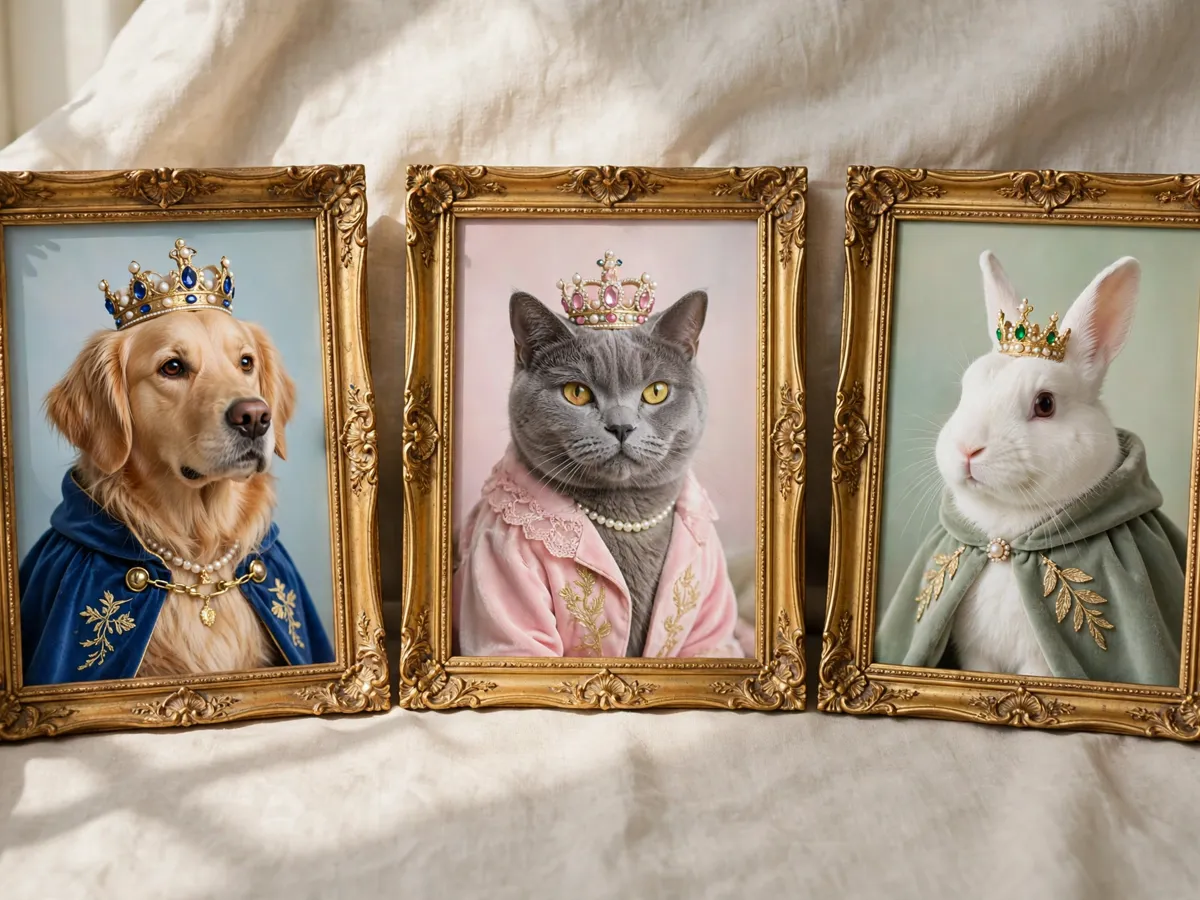
Match the ground to the wall, not to the pet. A gold-and-burgundy frame set into a blush-and-light-wood room sings because the palette repeats somewhere nearby - the cushion, the print, the rug edge. The same frame dropped into a cool grey minimal wall fights it. Umber and olive are the easy residents of plants-and-brass interiors. The regal frame is already loud, so the room should answer it with one echoed colour rather than silence.
For a gallery of regal frames, the set rule from the photo above is one variable at a time. Vary the costume and hold the ground across the trio, or hold the garment family and vary the ground - never both at once. Three portraits in three eras with three backgrounds read as a yard sale; three pets in matching velvet on one gold field read as a dynasty, and a dynasty is the post that earns the wall, the grid and the saves.
Handing the look to an artist or a generator
The brief has four named parts, and every one of them is a sentence: the era, the garment, the light, and the pose. Everything else - the ground colour, the frame, the signature line - follows from those four. A commission artist who receives the four parts in writing starts with zero guessing; a generator who receives them in one prompt line produces the court instead of a photo wearing a sticker. The same rule works at both ends of the process, because both are answering the question "which painting is this pretending to be?"

For a human artist, send the reference set first - the commission walkthrough on this site covers what makes a usable photo - then name the period from a real painting the household loves, one line on the garment, one line on the must-not-miss detail: the notched ear, the heart-shaped chest patch, the collar with the bell. Agree the ground colour before the sketch stage, not after the varnish, and the whole royal conversation happens while changes are still cheap.
For a generator, the painted-finish words do the persuading: oil painting, visible brushwork, aged varnish, gilded ground, named era, named garment, and the light described in the same sentence as the subject. Keep one render world per session and keep the gag out - the regal look is not a meme look, and a prompt that reaches for both lands in neither. A generator frame still gets the quick limb check before it prints, because a throne makes bad anatomy louder, not quieter.
The final test belongs to the thumbnail. Shrink the finished frame to phone size and look once. If it reads as formal - the face first, the era second, the costume as framing - the brief worked. If it reads as a pet in a hat, the light and the ground lost the commission, and both live in the brief where they can still be fixed for the price of one more pass.
Questions about regal pet portraits
What is the difference between medieval and renaissance pet portraits?
Medieval styles lean flat and symbolic with gold backgrounds; renaissance styles add depth, drapery and warm studio light.
How much costume is too much for one portrait?
One hero piece carries the look. A ruff collar or a robe reads clearly; a full outfit plus a hat plus props turns busy.
Can an AI generator produce a convincing royal portrait?
Yes, when the prompt names the era, the garment and the light. A painted finish description keeps the result from looking like a photo sticker.
Save these on Pinterest
Pin the era comparison for the next frame on the wall, or send the one-hero-piece rule to a friend whose royal pets all wear three costumes at once. The Pet Art & Wallpaper collection holds the commission walkthrough, the AI gift route, the paint by number kit guide, and the pastel wallpaper packs that share this palette - so the court portrait and the room it hangs in plan from one place.
For informational purposes only.