 PawStyle Daily
Cute Pet Wallpaper 4K
Funny AI Dog Images That Still Look Aesthetic
A funny AI dog image can go two ways: the loud meme that scrolls past in a second, or the soft pastel frame that earns a spot on a lock screen and stays there for months. The difference is not the joke - it is the finish. The prompt angle that lands the gag, the palette that keeps the frame calm, and the export sizes that keep it crisp on every screen are the three craft pieces this page walks. None of them need a drawing tablet; all of them fit in one line of prompt text.
By PawStyle Daily · Updated 20 November 2026
One gag per frame · pastel palette words reused every prompt · square masters cropped late · native export per screen.
The gap between funny and strange
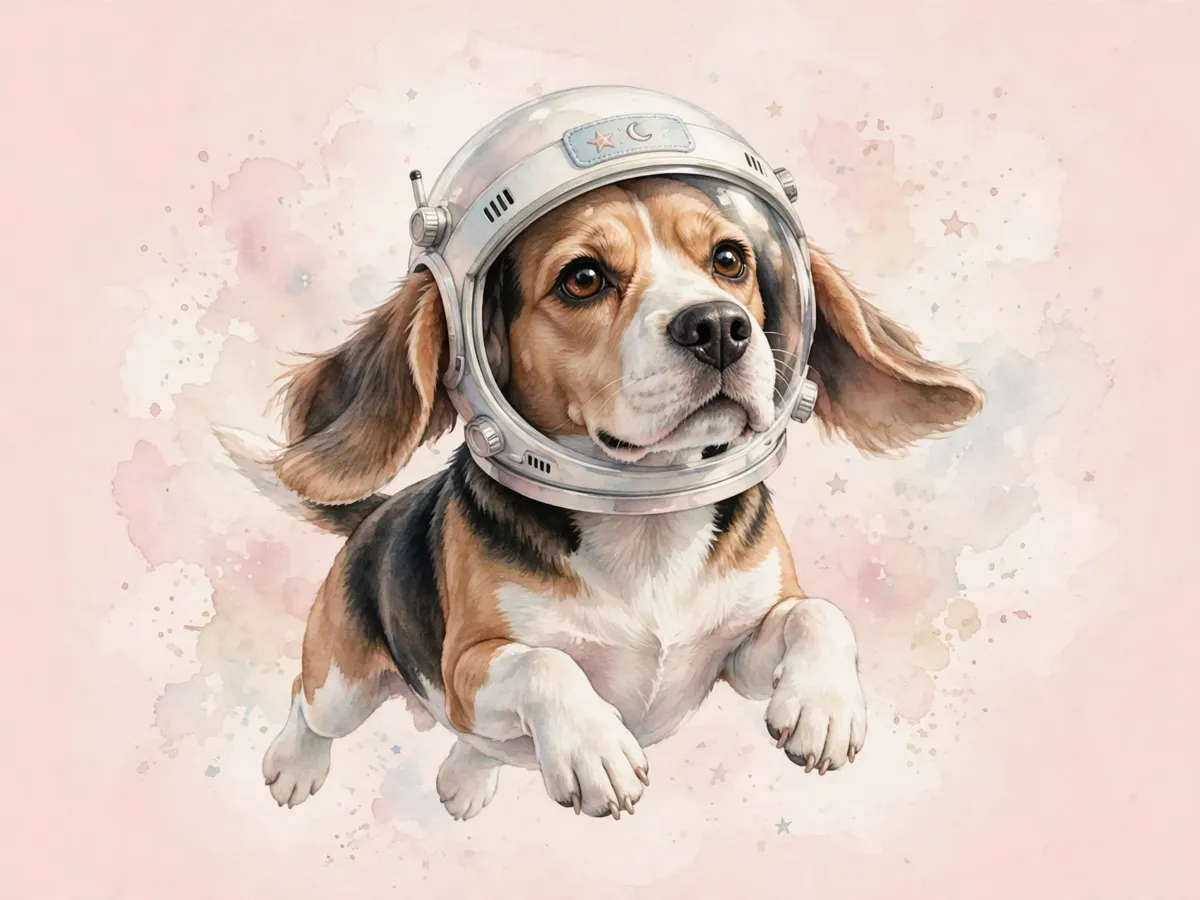
Every generator can put a hat on a dog. The frames that look strange are the ones where the generator added three hats, a cape, a laser sword and a background of fireworks - the joke drowns in its own props, and the dog stops looking like a dog. The frames that stay funny keep one gag and let the dog's ordinary expression carry it. A beagle in a tiny astronaut helmet is funny because the beagle is still a beagle: the ears, the soulful eyes, the completely unimpressed face inside an absurd situation.
The aesthetic part is the second half, and it lives in the palette and the light. A loud frame screams for attention in the feed and gets ignored on a home screen; a soft frame with a blush background and gentle watercolor edges works in both places. The household that wants images it can actually live with - on a wallpaper, in a gallery wall, printed on a card - prompts for the calm finish on purpose, not by accident. The pieces that follow are the on-purpose version of the same three moves the good generators make: one gag, one palette, one clean export.
The full prompt walkthrough lives on the funny dog portraits with AI page, and the frames that come from real cameras rather than generators live on the cute funny dog wallpapers page. This page owns the middle ground: generated images with a finish soft enough to keep.
The prompt angles that land the joke
The costume angle is the first, and it is the most reliable. One garment, named plainly - astronaut helmet, chef apron, tiny raincoat - and the generator spends its effort on the dog rather than the wardrobe. The prompt line that works reads like "beagle wearing a tiny astronaut helmet, unimpressed expression" rather than a paragraph of accessories. The expression words do the heavy lifting: unimpressed, sleepy, intensely focused, and the joke lands in the face instead of the outfit.
The scale angle is the second, and it plays with size rather than clothing. A Great Dane curled into a teacup, a chihuahua shadowing a wolf, a corgi as the captain of a very serious ship - the mismatch is the gag, and the generator renders it cleanly when the prompt names the two sizes plainly. The job angle is the third: the dog mid-task as a profession - librarian, barista, judge - and the prop is whatever the job holds, nothing more. The portrait angle is the fourth, and the most aesthetic of the set: Renaissance collar, watercolor edges, one soft background, and the dog looking exactly like a dog who has never heard of Renaissance collars.
The shared rule across all four angles is subtraction. Every prop added to the prompt is a prop subtracted from the dog's face, and the face is where both the joke and the aesthetic live. The test is quick: read the prompt back and count the gags. One gag passes. Two gags get cut to one. Three gags become the strange kind of funny, and strange frames rarely survive the wallpaper test later on.
The seed habit is the last angle piece, and it is free. When a prompt lands the gag, the household keeps the exact line and regenerates around it - same words, new breed, same words, new pose - and the variations come out consistent because the prompt is the constant. Sessions that rewrite every line from scratch get ten unrelated frames; sessions that iterate one winning line get a family. The family is what a grid, an album or a print set needs, and the family starts as one prompt worth keeping.
The pastel palettes that keep frames calm
The palette is the piece that separates the aesthetic frame from the meme frame, and it fits in four words of prompt. Blush background, soft natural light, pastel tones, watercolor edges - the same short block reused in every prompt of a session is what makes ten generations look like one collection instead of ten strangers. The generator has no memory between frames; the palette words are the memory, pasted into each line.
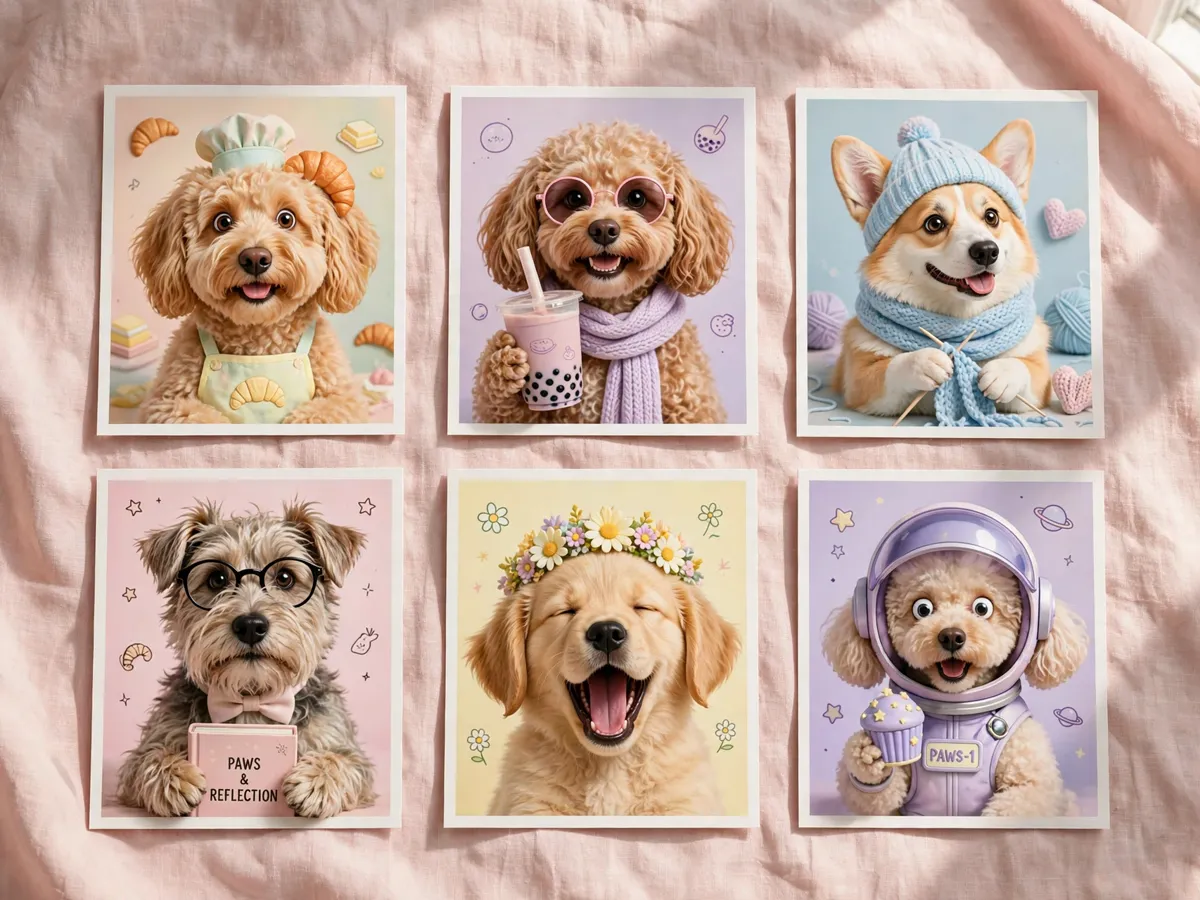
Three palettes carry most of the aesthetic work. The blush set - pink background, cream fur highlights, navy accent - matches the house style of this whole site and prints well. The sage set - muted green, warm grey, soft white - suits the sleepy and zen frames, the dogs mid-nap. The sky set - powder blue, pale sand, white - suits the outdoor gags, the astronaut floats and the beach shakes. One set per session, named in every prompt, and the grid assembles itself.
The lens words matter as much as the color words. A portrait lens length with soft natural light asks the generator for the portrait look - the shallow background blur, the face in focus - and it keeps the watercolor frames from drifting into cartoon flatness. Mixed prompts that ask for watercolor and photorealism in the same line usually land somewhere muddy; the clean sessions pick one render world per batch and stay inside it.
Export sizes for every screen
The master is the piece most sessions skip, and skipping it costs every later step. Generators return a square or a wide frame at whatever size the model defaults to, and cropping that file down later throws away pixels the screen wanted. The clean workflow generates the master at the largest size the tool offers, then crops per screen - never the other way around. A square master gives both the vertical phone crop and the wide desktop crop room to work; a pre-cropped file gives neither.
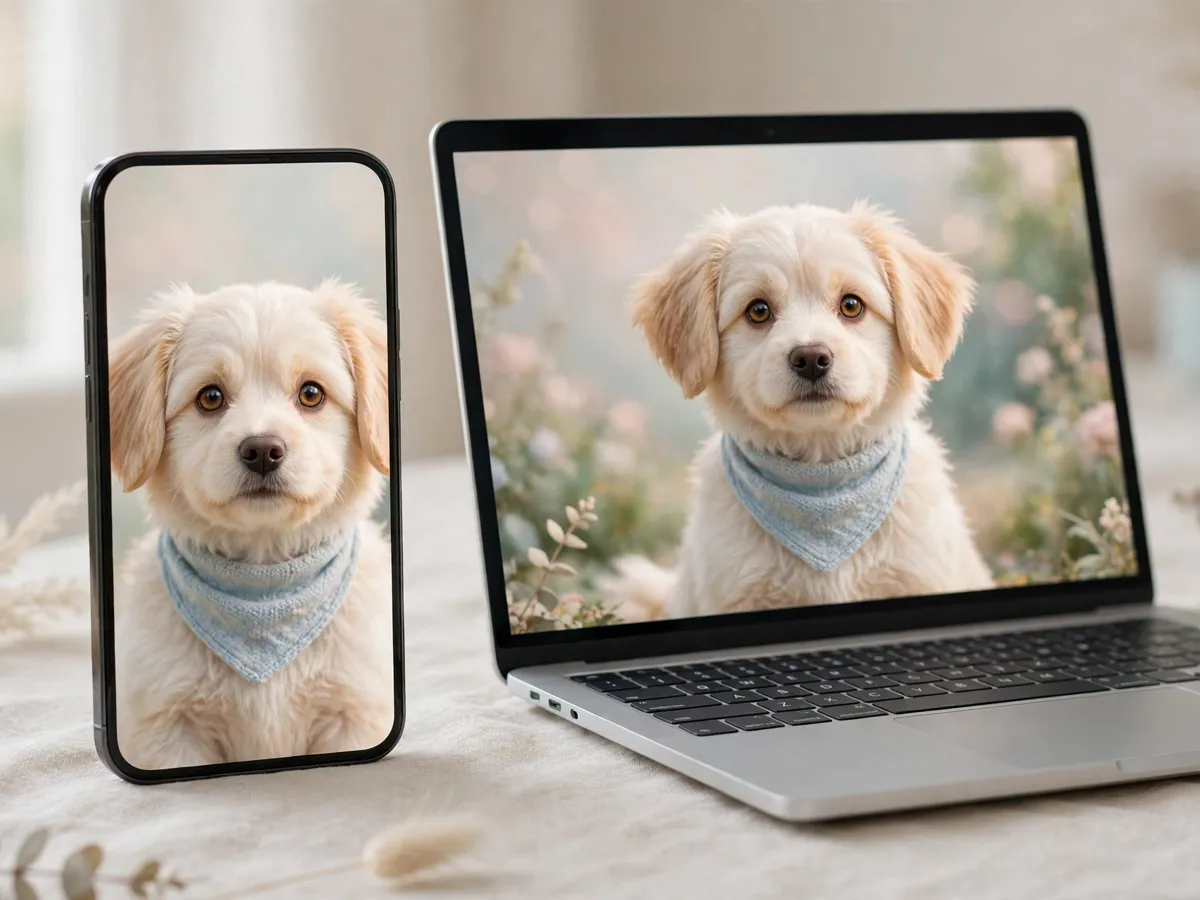
The per-screen rule is native resolution, the same rule every wallpaper page on this site follows. The phone gets a vertical crop at its native size, the laptop gets a wide crop at its own, and the tablet sits between them with a square-friendly frame that needs almost no crop at all. Exporting one file for every screen is how crisp frames turn into soft ones; the three exports take a minute and keep the joke sharp everywhere.
The crop position is the last craft move. The face goes in the upper third of the vertical crop, clear of the clock and the icon rows, and the gag - the helmet, the apron, the teacup - sits just under it where the thumb rests. The wide crop centers the whole frame in the band the dock cannot eat. Cropping with the interface in mind is the difference between a wallpaper and a photo someone sets once and replaces by Friday.
From gallery to group chat to grid
The finished set travels better than any single frame. Six images in one palette, posted as one grid, read as a planned collection - the kind of post that earns saves rather than scrolls. The group chat gets the per-screen crops, because a friend who receives the vertical file sets it immediately, and the frame that gets set is the frame that gets remembered.
The print is the third destination, and the pastel frames carry it best. A blush-background beagle in a tiny helmet looks at home on a matte print in a thin frame, and the same file that hung on a wall can anchor a coloring page or a card design later. The aesthetic finish is what makes the frame survive leaving the screen: loud meme files die at the printer, and calm ones move rooms.
The rotation keeps the set working at home. One frame per screen per season, swapped from the palette folders, and the generated dogs do their daily work as wallpaper rather than sitting unread in a downloads folder. The sessions that produce the best rotations are the sessions that prompted for them: one gag, one palette, one clean export, and a folder that fills slowly with frames worth keeping.
Questions about funny AI dog images
What makes an AI dog image funny instead of just strange?
One clear gag carried by an ordinary dog expression. A hat, a pose or a prop reads as funny; too many props at once reads as noise.
How do I keep a set of AI images looking like one collection?
Reuse the same palette words and the same lens description in every prompt. Matching backgrounds make a grid feel planned.
What size should I export for a phone wallpaper?
Export at the phone's native resolution in a vertical crop. A square master cropped late keeps the face where the icons will not cover it.
Save these on Pinterest
Pin the prompt angles for the next generation session, or send the palette block to a friend whose AI dogs all look like strangers. The Pet Art & Wallpaper collection holds the full portrait walkthrough, the real-photo wallpaper packs, and the coloring pages that print from the same pastel set, so the whole aesthetic lives in one place.
For informational purposes only.