 PawStyle Daily
Cute Pet Wallpaper 4K
Peel and Stick Dog Wallpaper: Wall Mural Guide
Dog wallpaper for a real wall lives in the gap between a framed print and a painted mural. The print sits politely on a nail; the painted mural owns the room and rarely comes back. Peel and stick wallpaper lands in between: a full wall surface that turns a plain room into a dog room, applied in an afternoon and removed without a sanding session. The medium asks for one honest set of skills - picking the right pattern for the wall, preparing the surface so the edges stay down, and hanging the panels so the seams read as one image. This page walks the picking, the prep, the hanging, and the renter's path back out.
By PawStyle Daily · Updated 20 November 2026
Mural or repeat pattern | wash, dry, smooth before the first panel | line up the repeat, not the edge | peel at a low angle coming down | test one square on a textured wall first.
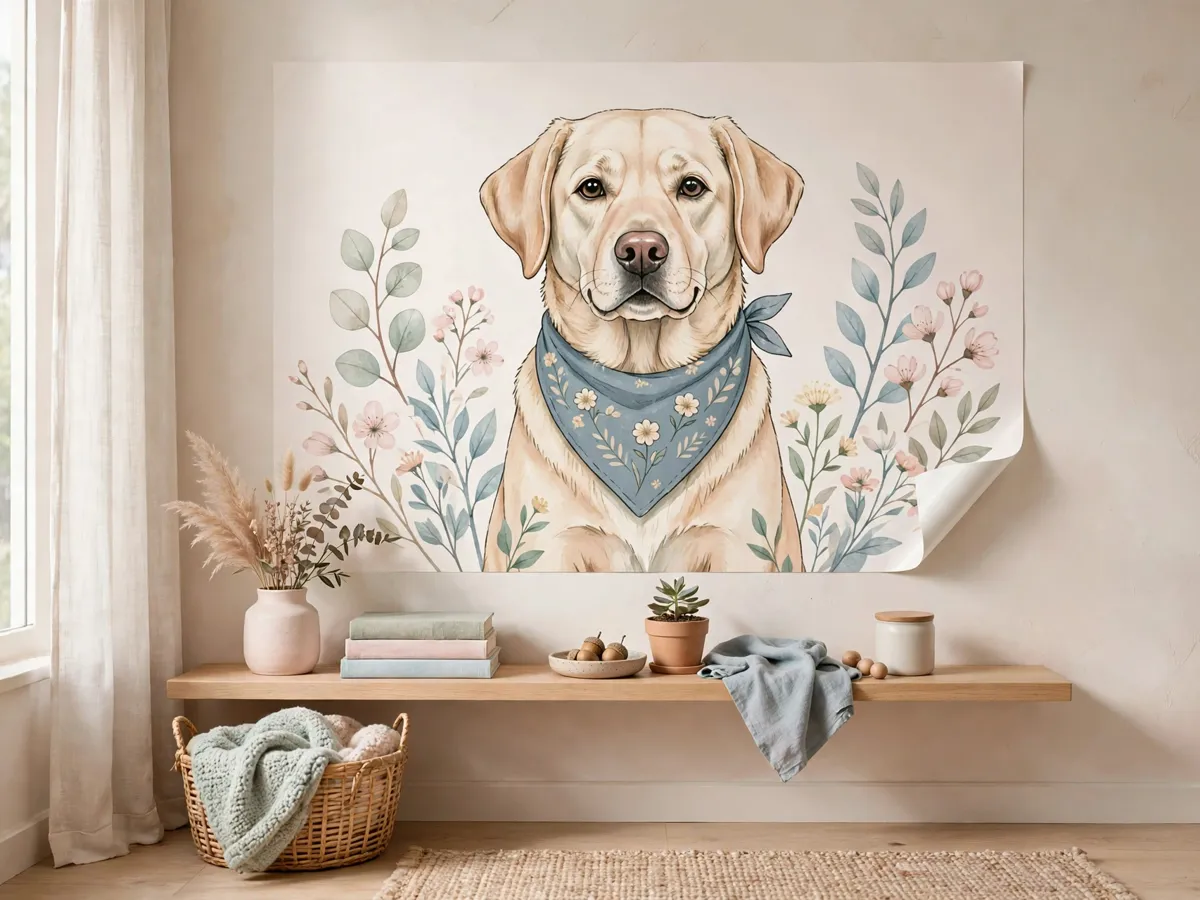
A wall that says dog without a paintbrush
The appeal is simple and the execution is forgiving. A framed dog print hangs above a shelf and asks nothing of the wall around it; a peel and stick dog wall turns the wall itself into the artwork, and the shelf, the chair and the lamp all become props inside the scene. The change reads instantly - a plain bedroom wall becomes a dog room in the same afternoon the panels go up, and the household photographs the corner differently from the moment the backing peels off.
The medium's second gift is the exit. Traditional wallpaper commits the wall for years and leaves a paste-and-scrape job behind when taste moves on; peel and stick comes down in long strips, and a renter who picked a removable product takes the wall back to its original paint without a repair bill. That reversibility is what makes the dog wall a reasonable decision for a lease, a dorm, or a first apartment - places where a painted mural would be a gamble and a framed print would be too small for the ambition.
The phone wallpaper lane on this site gives the daily, pocket version of the same affection - the dog wallpapers for phones walkthrough covers the lock-screen pick and its breed variants. This page owns the wall: the full surface version, applied by hand, that turns a room rather than a screen.
Mural panels or repeating pattern
The two formats arrive on the same adhesive paper and behave differently on the wall. A mural is one large dog image - a portrait, a breed study, a single illustrated scene - split into numbered panels that assemble left to right into one picture. The effect is a wall painting: one focal dog, one composition, the room arranged around the artwork. A repeating pattern spreads a smaller motif across the whole surface - paw prints, tiny dog silhouettes, a line drawing that tiles - and the effect is textile: texture and theme rather than a single subject.
The choice follows the wall's job. A single accent wall behind a low shelf wants the mural, because the shelf and its objects sit in front of one composed image and the arrangement reads as a styled vignette. A wall that runs the length of the room - a hallway, the wall above wainscoting, the band above a sofa back - wants the repeat, because a single image stretched across that distance distorts and a small motif carries the length without a focal point the furniture fights.
The scale of the motif is the last variable, and it is a room decision. A large repeat on a small wall overwhelms the space; a tiny repeat on a large wall reads as busy and the eye cannot settle. The rule of thumb that holds across rooms: the motif on a repeat pattern should sit roughly between the size of a hand and the size of a dinner plate, large enough to read as a dog shape from across the room and small enough that several of them fit on the visible wall. Murals sidestep the question entirely - the image is composed at the scale it was drawn.
Wall prep that holds the edges
More peel and stick panels fail at the edge than at the center, and the edge fails because of the wall underneath it. The backing adhesive is strong on a clean, flat surface and indifferent on everything else, so the prep work decides whether the corners stay down for months or curl on the second night. The sequence is short and it does not skip: wash the wall, let it dry fully, and smooth off any loose flakes or bumps that will telegraph through the paper.
The two wall types that cause the most edge failures are textured walls and freshly painted ones. A heavy orange-peel or knockdown texture gives the adhesive less flat surface to grip, and the panel bridges the peaks instead of seating into them. Fresh paint - anything applied in the last few weeks - has not finished its own drying cycle, and the adhesive bonds to the paint film rather than the stable wall beneath it, which means the panel takes paint with it on the way down. Both conditions answer to the same test: apply one small square in an out-of-the-way spot, leave it a day, and pull it off. If it holds and comes off clean, the wall is ready.
The wall should be at room temperature when the panels go up. A cold exterior wall in winter stiffens the adhesive and the paper, and a hot wall in direct summer sun softens the adhesive before the panel seats. The household picks a mild day, closes the window that blows on the wall, and works when the surface is neither cold nor sun-baked - the same conditions the paper was manufactured and stored in, which is what it remembers.
Hanging panels so the seams read as one
The hanging skill is alignment, and the alignment rule is simple to state and patient to execute: line up the image, not the edge. Every panel carries a few extra millimeters of overlap designed to sit under the next panel, and the household that butts the factory edges together lines up the paper but breaks the picture. The overlap exists so the image matches across the seam, and matching the image is what makes the wall read as one continuous surface.
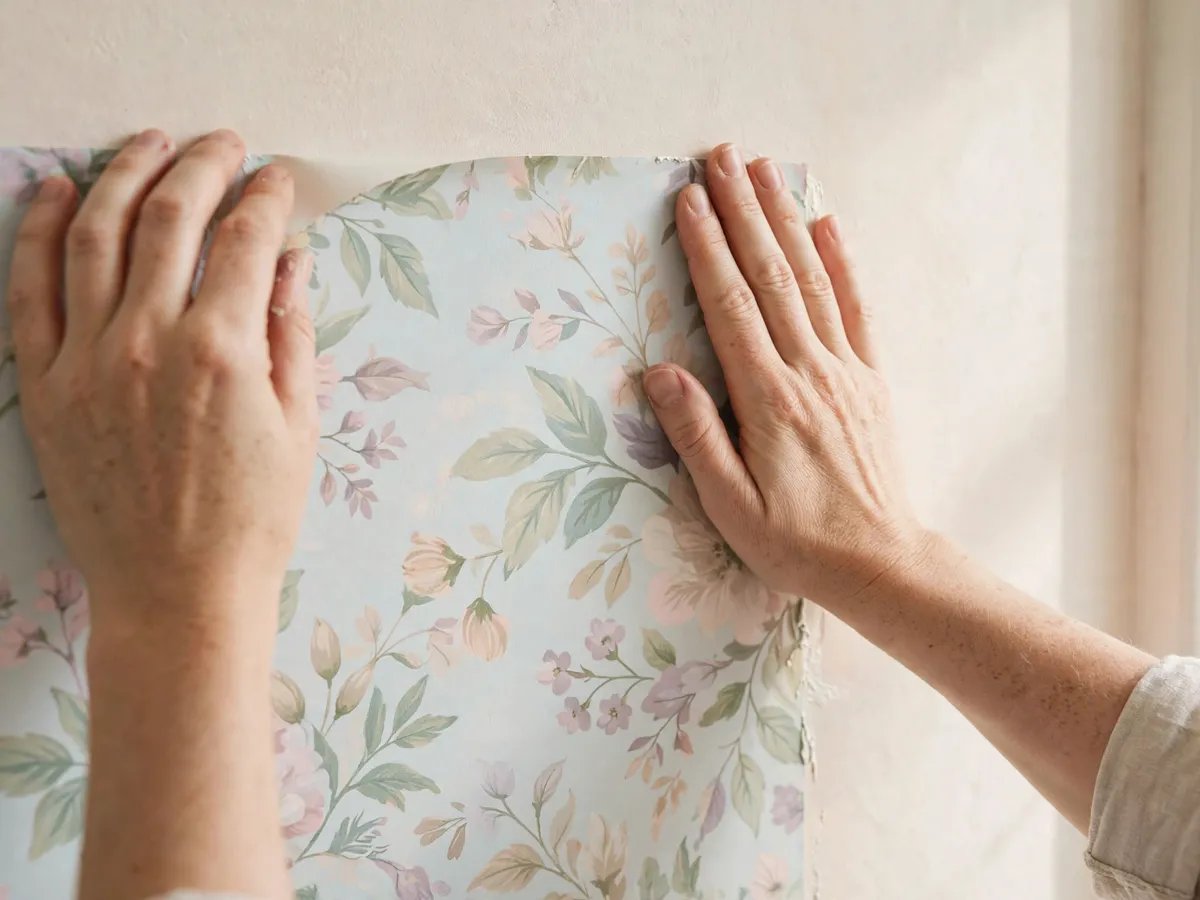
The first panel is the whole job's foundation, and it goes up plumb. A level line marked in pencil at the top of the wall - or a laser level for a longer wall - gives the first panel its vertical truth, and every panel after it leans on that truth. A first panel hung by eye, slightly off vertical, tilts the whole wall by the last panel, and the error shows at the ceiling and the baseboard where the paper meets a straight line it no longer follows.
Smooth from the center outward, every panel, with a flat edge or a soft squeegee. The motion pushes air out from under the adhesive rather than trapping it in bubbles, and it seats the overlap under the neighbor so the seam lies flat. A helper holds the unpeeled portion of the panel away from the wall while the lead hand works downward - the paper that touches the wall early sticks where it lands, and a panel that touches out of alignment has to come back off and go up again. Two people hang a mural in a third the time one person does, and with half the re-dos.
Removable picks and the renter's exit
Not every peel and stick product is removable, and the distinction lives in the listing, not the marketing. The products built for renters carry the word removable or repositionable and use a lower-tack adhesive that releases from mature paint. The products built for permanence use a stronger adhesive and carry neither word, and they behave closer to traditional wallpaper at removal. The household that reads the listing for the exact word - not the photos, not the mood, the word - gets the exit it expects.
Removal is the mirror of installation, run in reverse and with warmth. A hair dryer on a low setting warms the panel from one corner, the adhesive softens, and a slow peel at a low angle - back on itself rather than straight out from the wall - brings the panel down in long strips. Rushing the peel snaps the paper and leaves fragments; patience brings the whole sheet in one piece, and the wall underneath is the wall that was there before. Any residue left behind wipes off with a damp cloth, and the wall is ready for the next tenant's choice.
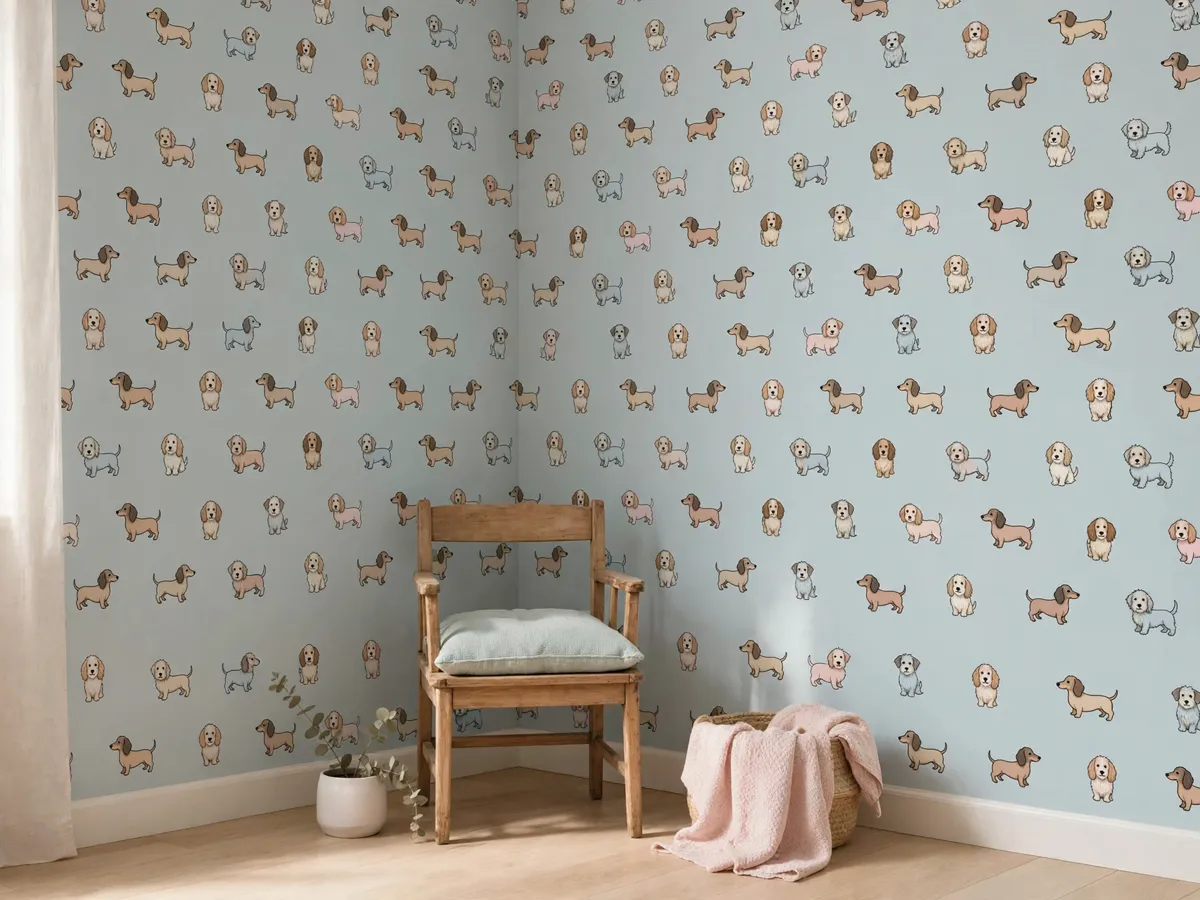
The renter's wall projects pair up naturally - a dog wallpaper on one wall and a no drill window perch on the window that lights it, both chosen for their exit strategy. The household that builds a pet room inside a lease does it with objects that leave no trace, and the wallpaper and the perch are two halves of the same plan: a room that looks permanent and comes apart in an afternoon when the lease ends.
Questions about peel and stick dog wallpaper
Is peel and stick wallpaper the same as a mural?
A mural is one large image split into panels; peel and stick repeats a smaller pattern across the wall. Both arrive on adhesive backed paper.
What wall prep makes the edges stay down?
Wash the wall, let it dry fully, and smooth off any flakes. A textured wall or a freshly painted one holds a panel poorly, so test one small square first.
Will it lift paint when a renter takes it down?
Most removable picks come off mature paint in one slow pull. Warm the panel with a hair dryer, peel at a low angle, and any residue wipes off damp.
Save these on Pinterest
Pin the prep sequence before the next panel order, or send the low-angle peel trick to a friend moving out of a dog-wallpaper apartment. The Pet Art & Wallpaper collection holds the phone wallpaper packs, the watercolor and paint by number routes for the framed version, and the multi-pet portrait ideas for the wall beside it - so the dog wall has company in every format the room can hold.
For informational purposes only.