 PawStyle Daily
Dog Food & Treats
Homemade Dog Treats for Delicate Tummies: 5 Gentle Recipes
Some dogs handle every treat on the shelf. Others have a tummy that sends the bowl back, and the homemade route is the way to know exactly what went into the biscuit. This page has five recipes built on the gentlest base ingredients, the label rules that apply to every batch, and the portion reality that keeps the treat jar honest.
By PawStyle Daily · Updated 19 November 2026
Good to know: rice flour and pumpkin bases, a label on every jar, and a portion that belongs to the individual dog. For informational purposes, consult your vet.
Why homemade treats work for delicate tummies
A dog with a delicate tummy is not a broken dog. It is a dog whose digestive system reads certain ingredients as a problem, and the shelf treat aisle is a guessing game of long ingredient panels with names that do not tell you much. The homemade route removes the guesswork: you write the ingredient list, you choose the base flour, you decide the fat, and you control the portion from the first biscuit to the last.
The five recipes on this page share a structure. Each one starts from a single-ingredient base, adds one binding element, and stops there. No long panels, no mystery fillers, and no ingredients that read like a chemistry exam. The recipes are the starting point; the dog's own response is the test. If a recipe sits well, it goes into the rotation. If it does not, the next recipe is a single swap away.
The recipes also pair with the rest of the dog food shelf. The no peanut butter treat recipes page covers the peanut-free side of the jar, and the sweet potato treat recipes page has the root-vegetable batches that round out the rotation.
The label rule: what every batch carries
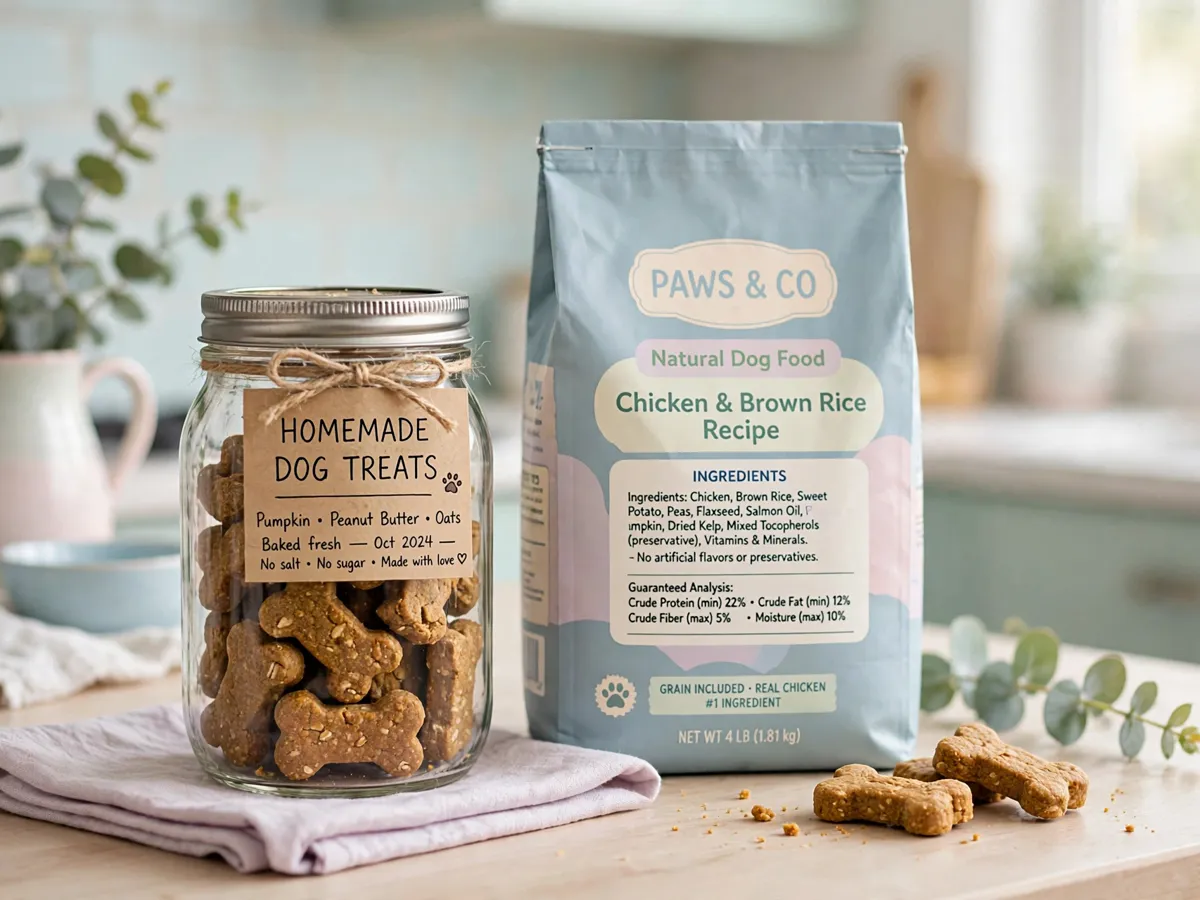
A pet food label has to carry the product name, the net quantity, the maker's name and place of business, and the ingredients from most to least by weight. That rule applies to the bag on the shelf and to the jar on your counter. The homemade label is a piece of tape and a marker: the recipe name, the date, and the ingredients in order of weight. The flour is first because it is the largest amount, the binding element is second, and any add-in is third.
The label is not bureaucracy. It is the record that tells you what the dog ate on the day a tummy upset started, and it is the record you hand the vet if the dog ever needs one. A jar without a label is a jar that loses its history after the first batch. The label is the difference between a homemade treat and a homemade guess.
The label also carries the net quantity, which is the weight of the batch. The weight matters for the portion math in the section below: the batch weight divided by the number of biscuits is the number that tells you how much one biscuit weighs.
Five gentle recipes for the rotation
The recipes below are ordered from the gentlest base to the one that adds the most variety. Start with the first recipe, watch the dog for a day, and move to the second only when the first sits well. A dog with a delicate tummy does better with a small set of known recipes than with a new flavor every week.
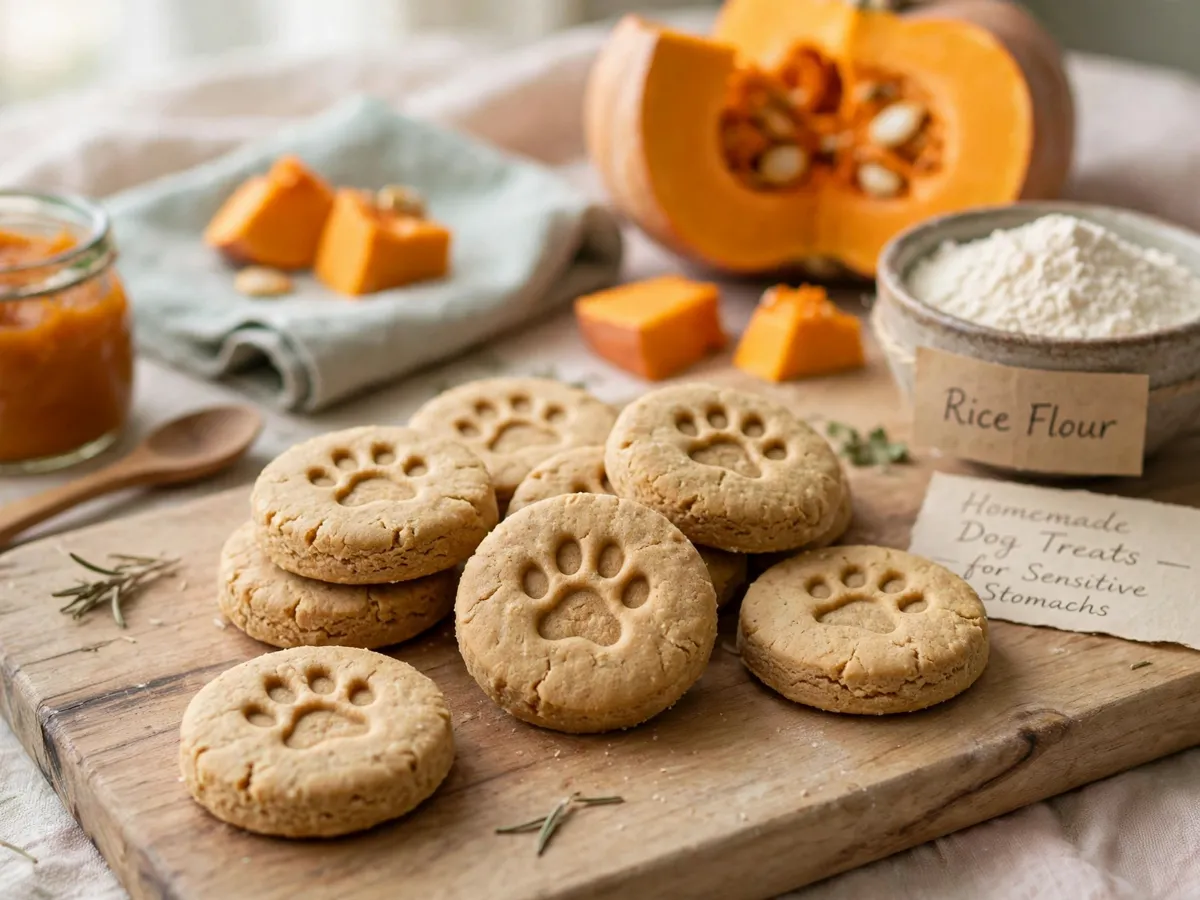
- Rice flour and pumpkin biscuits. A bowl of rice flour, a scoop of plain pumpkin puree (not the pie filling), and a splash of water. Roll thin, cut into rounds, and bake at a low oven until crisp. The gentlest recipe in the set and the one most dogs start with.
- Oat and banana bites. A bowl of ground oats, one ripe banana mashed, and a splash of water. The banana is the binder and the sweetness. Roll into small balls and flatten on the tray. The bites are soft, so they keep in the fridge.
- Chicken and rice flour rounds. A bowl of rice flour, a handful of plain cooked chicken shredded fine, and enough water to bind. The chicken adds protein without the fat of a meat broth. Bake until the rounds are dry to the touch.
- Pumpkin and oat cookies. A scoop of plain pumpkin puree, a bowl of ground oats, and a drizzle of olive oil. The oil is the only fat, and the cookies come out crisp enough to jar and label.
- Sweet potato and rice flour squares. A bowl of rice flour, a scoop of cooked sweet potato mashed, and a splash of water. Cut the dough into small squares and bake until the edges are firm.
Every recipe on this list skips the ingredients that commonly upset a delicate tummy. No dairy, no wheat, no eggs, no broth with onions or garlic, and no fat beyond a teaspoon of olive oil. The dog's response is the test that tells you which ones stay in the jar.
The portion reality: every dog is the individual dog
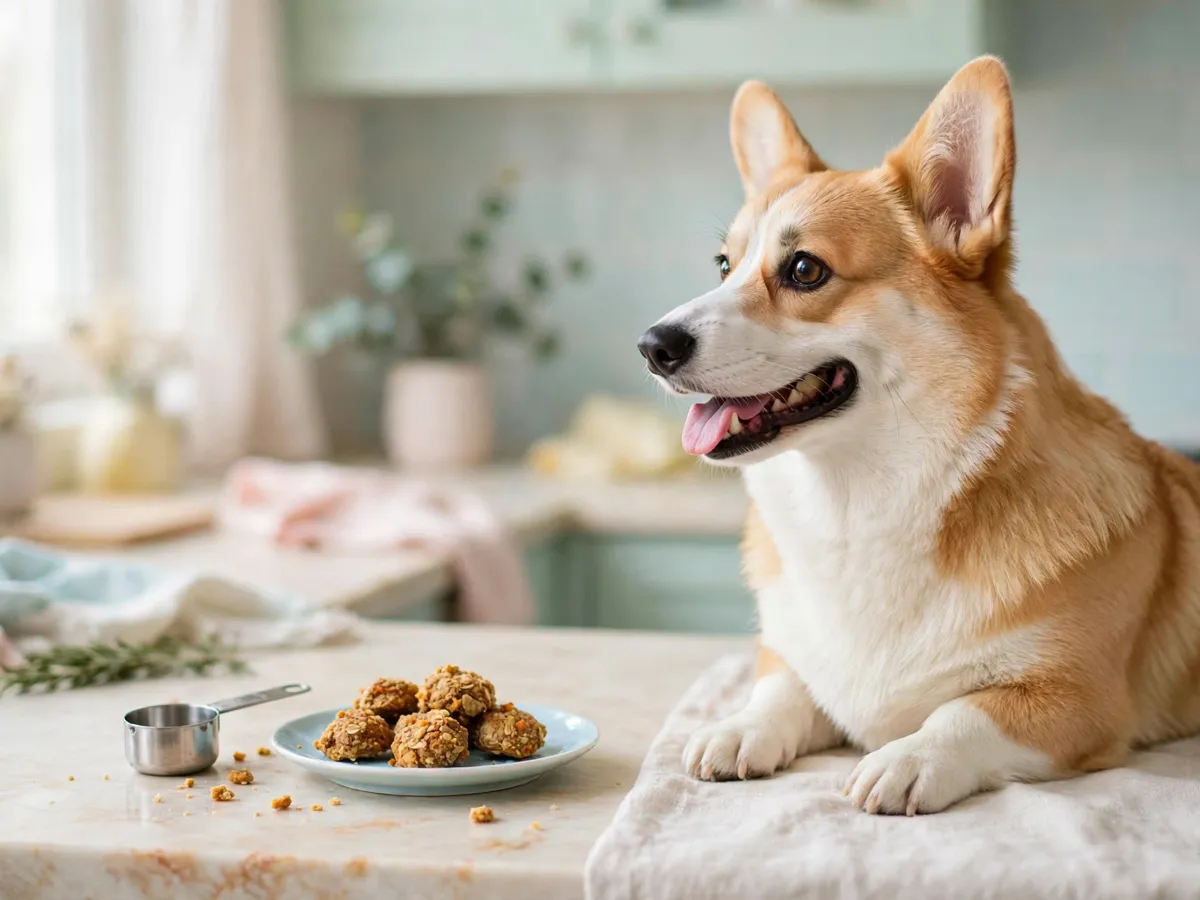
The treat jar is the part of the kitchen where averages cause trouble. A chart that says "ten biscuits a day for a medium dog" is a starting number, not a verdict. An individual puppy may need up to 50% more or fewer calories than the average. That variance is the reason the portion is the dog's own, not the chart's.
The way to use the average is as a ceiling, not a target. Start at the low end of the range, watch the dog's body condition over a week, and adjust. A dog that gains weight on the starting portion needs fewer biscuits. A dog that drops weight or stays hungry may need a slightly larger portion or a recipe with more protein. The label on the jar tells you the grams per biscuit, and the body condition tells you whether the grams are right.
Treats are also a fraction of the day's food, not the whole of it. Treats stay a small share of the day's calories, with the rest from the dog's regular meals. A measured biscuit is a small part of a medium dog's day, and the jar stays honest when the portion is measured rather than estimated by hand.
Switching from store treats to homemade
The switch from a shelf treat to a homemade batch is a few days of overlap, not a single-day swap. The first day, the dog gets the usual shelf treat in the morning and one homemade biscuit in the afternoon. The second day, the homemade biscuit replaces the afternoon treat. The third day, the homemade biscuit replaces both, and the shelf bag goes into the recycling.
The overlap is about the tummy, not the taste. A dog's digestive system adjusts to a new ingredient panel over a few days, and a sudden swap can read as a change even when the ingredients are gentler. The label on the jar is the record that confirms what changed and when.
Homemade dog treat questions
What ingredients are gentle for a delicate tummy?
Rice flour, pumpkin, oats and plain cooked chicken are the base most gentle recipes start from. The label on the ingredient panel tells you what went into the bag.
How many treats can I give my dog?
An individual dog may need more or fewer calories than the average, so the portion is the dog's own. Start small and watch the body condition.
Can I switch from store treats to homemade?
A switch over a few days is the way. The label on the homemade batch carries the same fields as the bag on the shelf.
The treat-making kit
What you need for the homemade batch
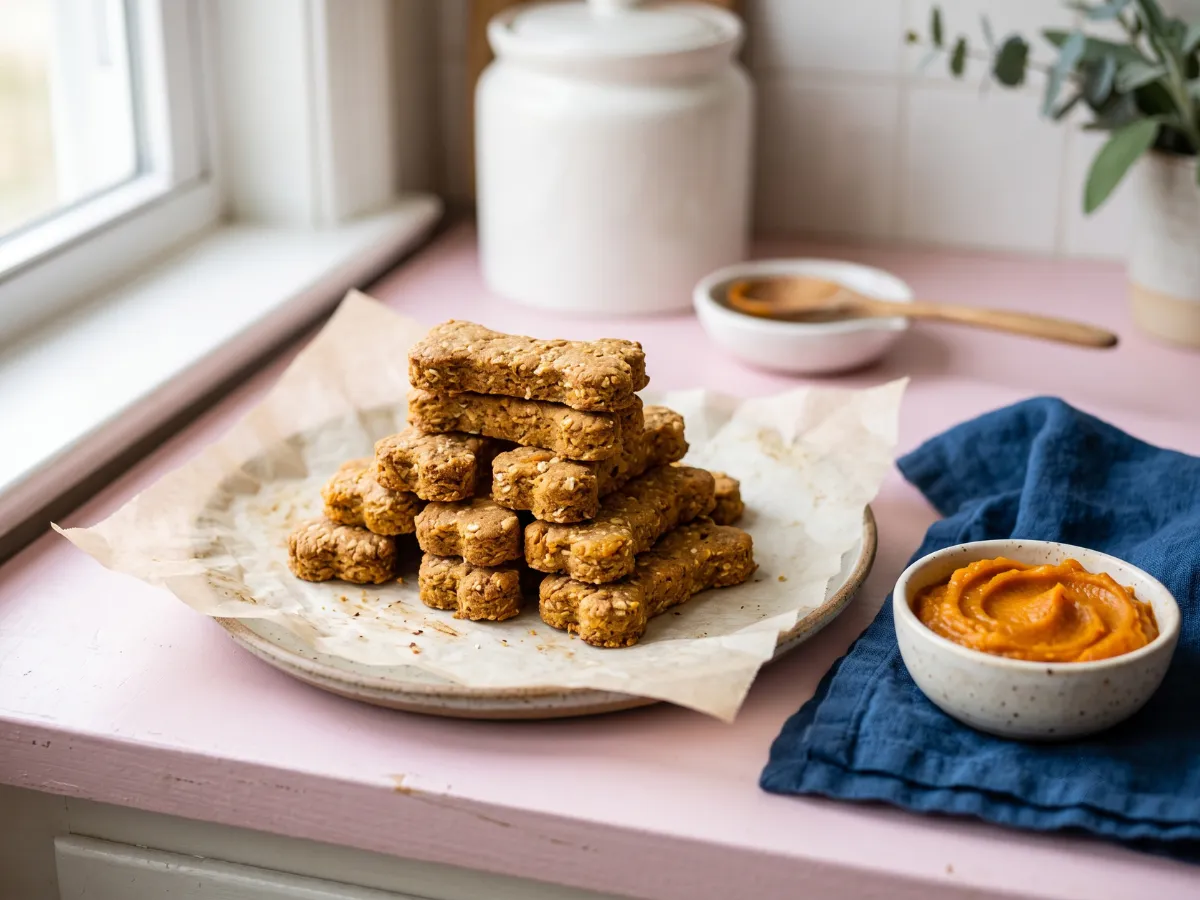
Rice flour, silicone treat molds, a measuring scoop and a labeling roll cover the five recipes on this page.
See the kit →As an Amazon Associate we earn from qualifying purchases.
Save these recipes
Pin the page for the baking afternoon and keep the label rule on the fridge. The Dog Food collection holds the rest of the jar, from the peanut-free batches to the sweet potato cookies that round out the rotation.