 PawStyle Daily
Dog Food & Treats
Dog Birthday Cake Recipes: A Safe Pupcake Base and Frosting
A dog birthday cake is a small baking project with an unusual customer: a diner who cannot read the menu, tolerates no chocolate, and would happily eat the plate. The good news is that the safe version is not a lesser version. One plain pupcake base, baked once and portioned by the dog, beats a human cake on every count that matters at the party: it holds together for the candle photo, it cuts clean for the guests, and the birthday dog finishes it without the emergency clinic in the plans. This page owns the baked birthday route: the base, the bake, the frosting label read, the portions, and the never list that keeps the celebration boring in the best way.
By PawStyle Daily · Updated 24 November 2026
Good to know: a baking guide with checked limits · for informational purposes, consult your vet.
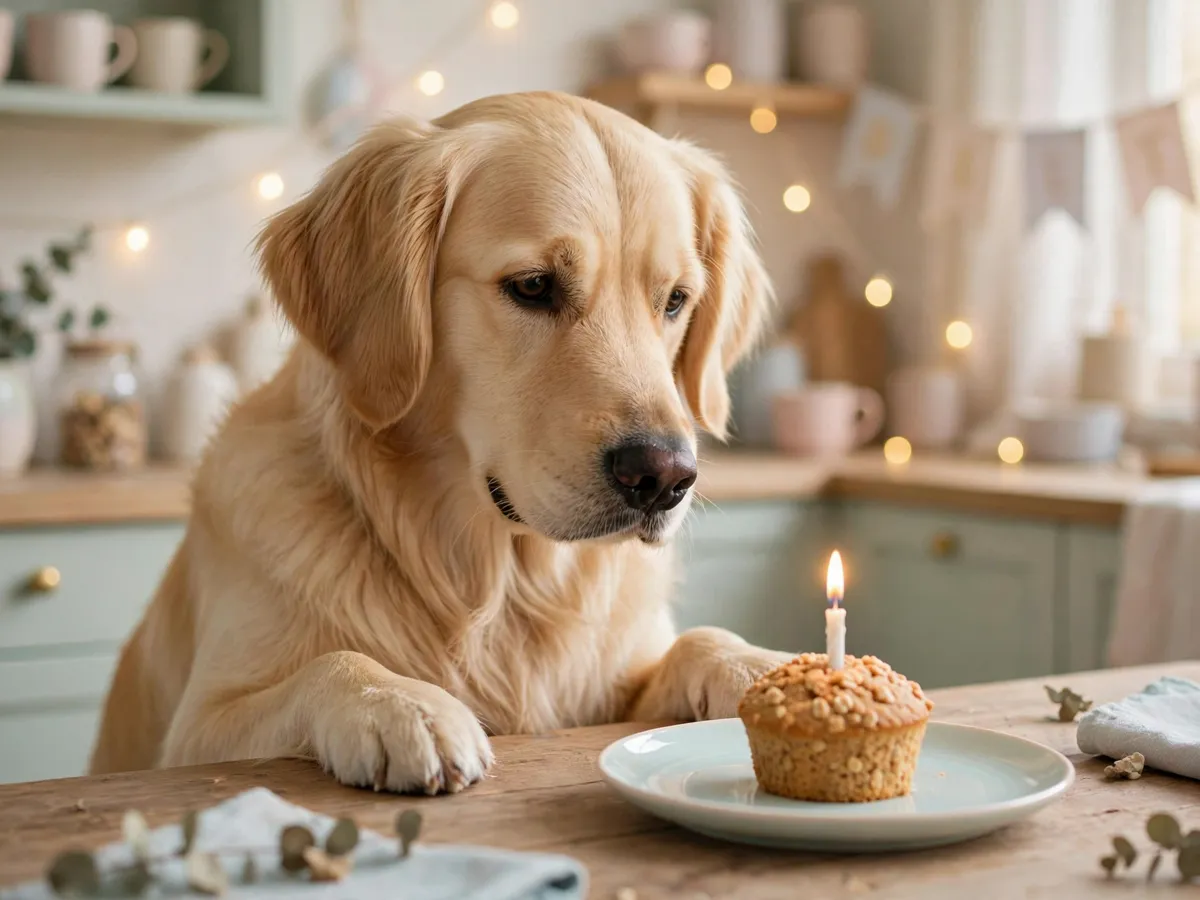
One Batter, One Birthday, Zero Regrets
The whole route runs on a single decision made early: bake for the dog, and let the humans at the party eat their own dessert from their own table. The moment a cake tries to serve both audiences, it serves neither, because the ingredients that make a human cake taste like a celebration are the same ones that make it a bad idea for the guest of honor. A pupcake does not miss them. Dogs have no cultural memory of vanilla sponge, and what they register is fat, egg, and a smell that came out of the oven for them.
The rest of the plan is logistics, and logistics are what make the day safe. The base is short and plain. The bake is low and slow on a sheet pan so the middle sets without the edges turning to brick. The frosting is a label read before it is a recipe. The portions are decided by the size of the dog, not the size of the dog's enthusiasm. And the never list is taped to the fridge in the head of whoever is baking, so a well meaning aunt does not quietly hand the birthday dog a corner of the human cake while the photos are being taken.
The Pupcake Base That Carries the Day
The base is a four item shopping list. A flour that agrees with the dog, most often oat flour for its plain behavior or a whole wheat flour the dog already eats in treats. A moisture ingredient that brings the flavor and the color: pumpkin is the house favorite because it bakes wet, holds structure and photographs gold. An egg, which binds the batter and adds the richness a cake needs to feel like a cake. And a fat, either the oil already on the shelf or the peanut butter the dog already tolerates, measured with a level spoon rather than a generous one.
The mix runs thicker than a human batter, closer to a stiff cookie dough that just gives when pressed. That thickness is the structure: a wet batter rises into a dome and then collapses into a gummy middle, while a stiff one bakes flat and even across the pan. Portion it with a scoop straight into muffin cups or onto a lined sheet pan, flatten each scoop with a wet fingertip so the tops bake level, and the batch comes out as a set of identical little cakes ready for a candle, a photo, and a plan for the slice.
Two routes live elsewhere on the site and are worth the detour. The no bake peanut butter dog cake page owns the zero oven version of the same party, built for kitchens that never turn the oven on, and the peanut free dog treat recipes page covers the same celebration for a dog whose allergies take peanut butter off the table. The baked base here works for both crowds with the fat swapped.
The Sheet Pan Bake and the Doneness Read
Bake low, bake flat, bake by the center not the clock. A moderate oven and a sheet pan give the batch the evenest heat, because the pan spreads the batter thin enough that the middle and the edge finish together. A dozen flat scoops bake evenly in a single rotation. A stacked muffin tin needs the middle watched, and a deep cake tin asks for twice the bake and half the confidence.
The doneness read is the same one a human baker uses, minus the crumb peek. Press the center of one pupcake with a fingertip: a done cake springs back, an underdone one holds the dent. A toothpick into the thickest cake should come out clean, and the edges should look set and dry rather than wet and dark. Err slightly toward under for dogs: a moist crumb is the goal, and carryover heat finishes the last few minutes on the pan. Cool the batch fully before frosting, because plain yogurt frosting on a warm cake melts into a puddle the birthday dog will still enjoy but nobody will photograph.
Frosting: Read the Label Before the Spoon
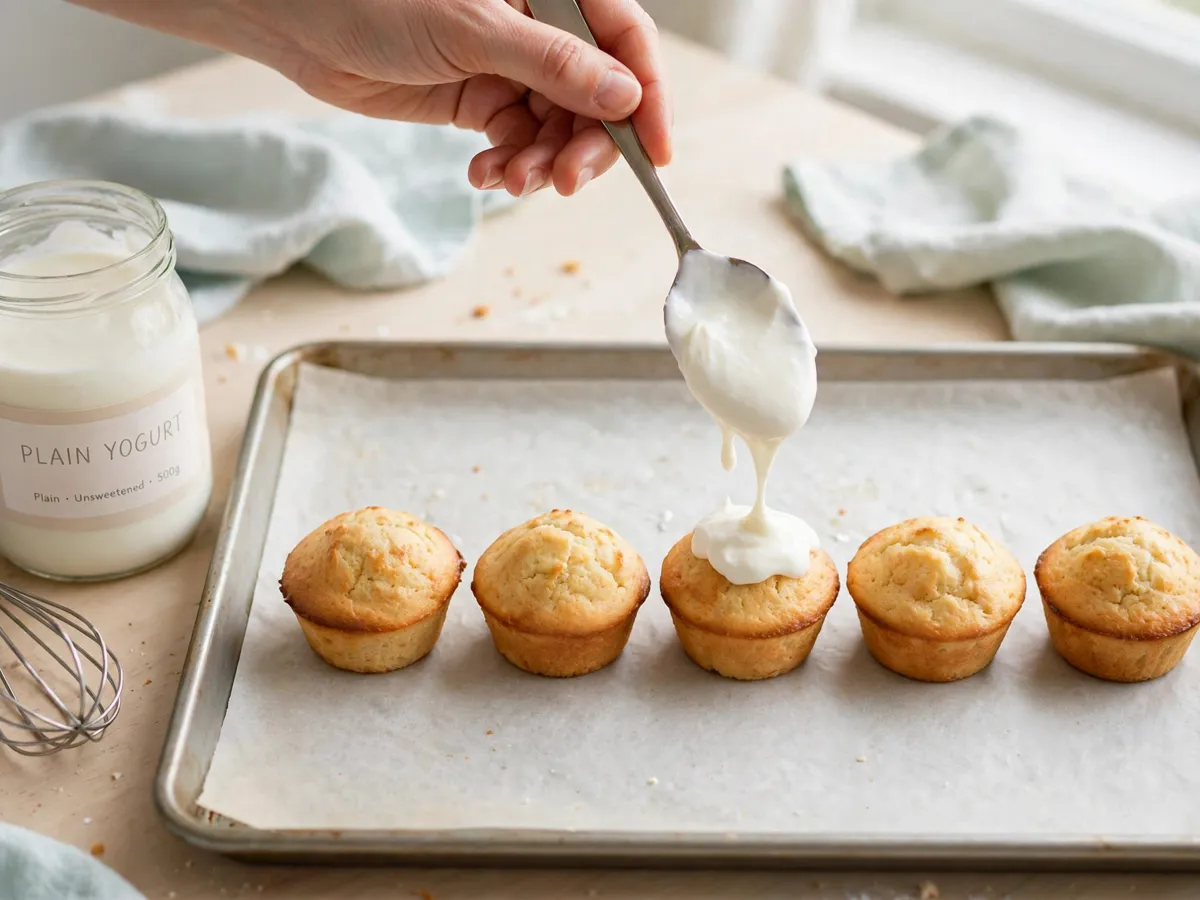
Dog frosting is one ingredient pretending to be a recipe: plain unsweetened yogurt, whisked until smooth, spread with the back of a spoon. It pipes, it holds for the length of a party, and it reads as frosting to every phone camera in the room. Plain is the word doing the work. Flavored yogurts carry sugars and, on occasion, sweeteners a dog has no business meeting at a birthday party.
The label read takes a moment and decides the whole batch. Turn the tub, read the ingredients to the end, and put it back on the shelf if the list runs past milk and cultures into anything sweet. The same read applies to every purchased item that touches the cake, from the peanut butter to the pumpkin puree: the short plain list passes, and anything with a sweetener the dog does not already eat does not. When the label is clean, whisk the yogurt thick, frost the cooled cakes, and set the remainder in the fridge so the party pieces stay firm.
Portions by Dog Size and Dog Shape
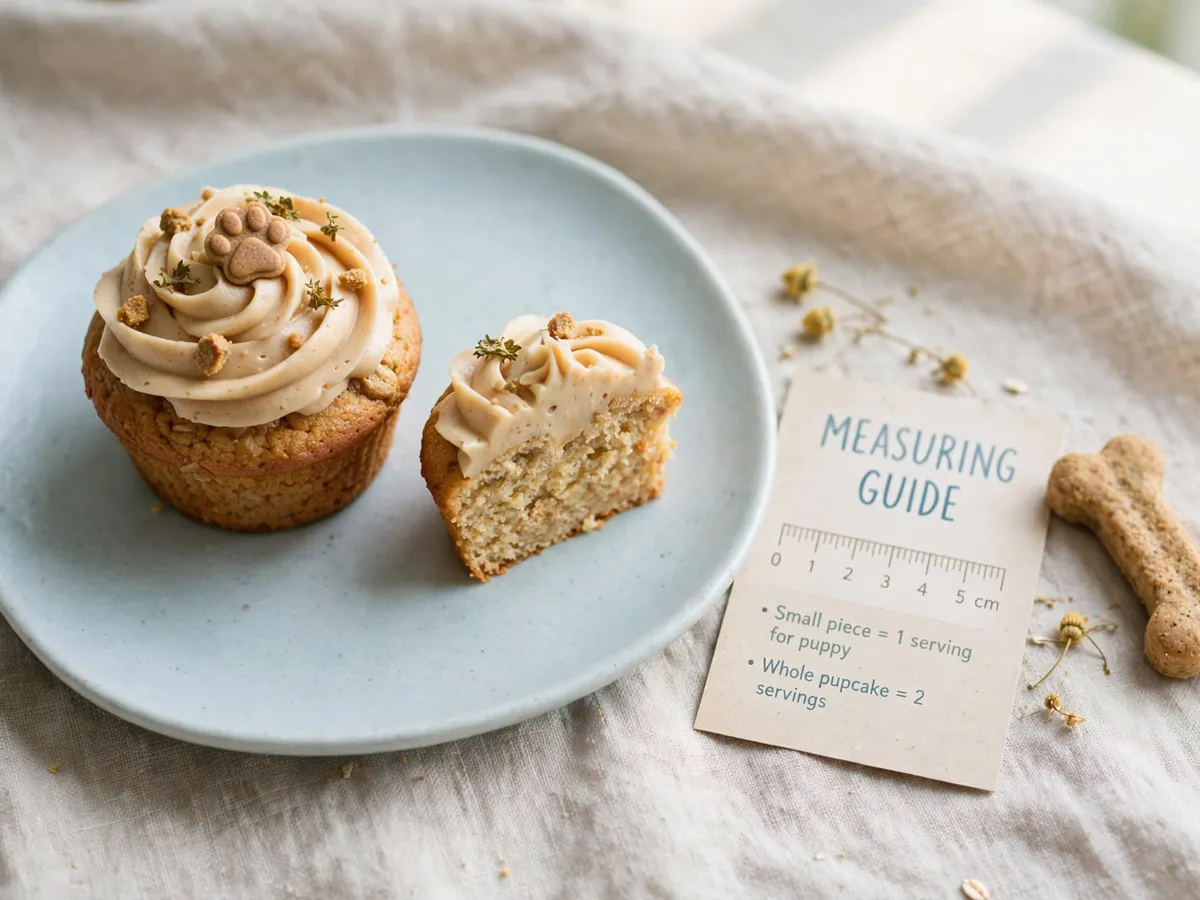
A birthday portion is a treat portion with a candle in it, and treat portions stay small on purpose. The working rule the whole site uses: treats and extras hold a minor share of the day's food, and a party does not suspend the arithmetic. For a small dog, the honest serving of a pupcake is a sliver: a quarter of one small cake, no more. A medium dog takes half. A large dog can finish a whole small pupcake as the entire party allotment, and a giant breed can look at two before the day's budget is spent.
The shape of the dog changes the math as much as the size of the dog. A lean, active dog burns the party piece off on the afternoon walk. A round, sedentary dog converts the same piece into a nap and a slightly rounder week, so the party portion shrinks a notch and the rest of the batch goes into the freezer labeled by date rather than into the bowl labeled repeat. A dog on a vet directed plan for weight or a medical condition gets a party piece cleared at the regular checkup, sized by the person who knows the dog's numbers.
The Birthday Foods That Never Make the Plate
The never list for a birthday is short because the party is short. Chocolate in every form, from the chips in the human cake to the cocoa dusted on a latte within tail reach. Anything sweetened with xylitol, which means the label read extends to the peanut butter jar and the yogurt tub. Raisins and grapes, which show up in human party baking more often than anyone expects. Alcohol in any quantity, including the sip of beer a relative thinks is funny. And the sugar itself: not an emergency the way the others are, but a dog cake needs none of it, so a sweet human cake is not a dog cake with the frosting scraped off. It is a different object.
The full keep out list, with the reasoning and the what to do numbers, lives on its own page: the toxic foods keep out list covers the whole year, not just the birthday. The birthday version here is the field notes: the handful of items a party table actually puts within reach of a dog who is having the best day of his year and believes the whole table is his.
Safe dog birthday cake questions
What should a dog birthday cake never contain?
Chocolate is toxic to dogs, so no chocolate, cocoa or coffee ever goes into a treat. Xylitol is a sweetener that can drop a dog's blood sugar and hurt the liver, so it never goes into a homemade treat. It hides in more places than the sugar bowl. Xylitol is used as a sweetener in many products, including gum, candy, baked goods and toothpaste. Read every label, frosting included, before the spoon moves.
How much birthday cake should a dog actually get?
Treats should stay at no more than five percent of a dog's daily calories, so keep the pieces small. A birthday slice is still a treat even with a candle in it, and for a small dog that means a sliver of one pupcake. Hand out the party pieces across the day, and the next meal goes back to normal.
Can I use regular cake mix for a dog birthday cake?
No. A boxed cake mix is built for human taste, and its ingredient list can carry items a dog should not have, from added sweeteners to cocoa. A dog cake starts from a short plain list: a flour base, a moisture ingredient like pumpkin or egg, and a fat. The no bake peanut butter dog cake page carries a mix free option, and the peanut free recipes page covers dogs who cannot have peanut butter.
Save the Safe Dog Cake Sheet
Pin this sheet before the next birthday lands, and the base decision is already made. The Dog Food & Treats collection holds the rest of the year's recipes. For informational purposes, consult your vet.