 PawStyle Daily
Homemade Dog Treats & Meal Planning
Dog Dental Chews — What They Can and Cannot Do
The dental aisle is where honest hope and marketing blur. This guide keeps the line sharp: what a chew does for the teeth, what only brushing does, why plaque starts its clock again the same day as any cleaning, and the label reading that tells a dental chew apart from a treat wearing a dental costume.
By PawStyle Daily · Updated 18 November 2026
Good to know: brushing first, chews second · every chew counts in the treat budget · for informational purposes, consult your vet.
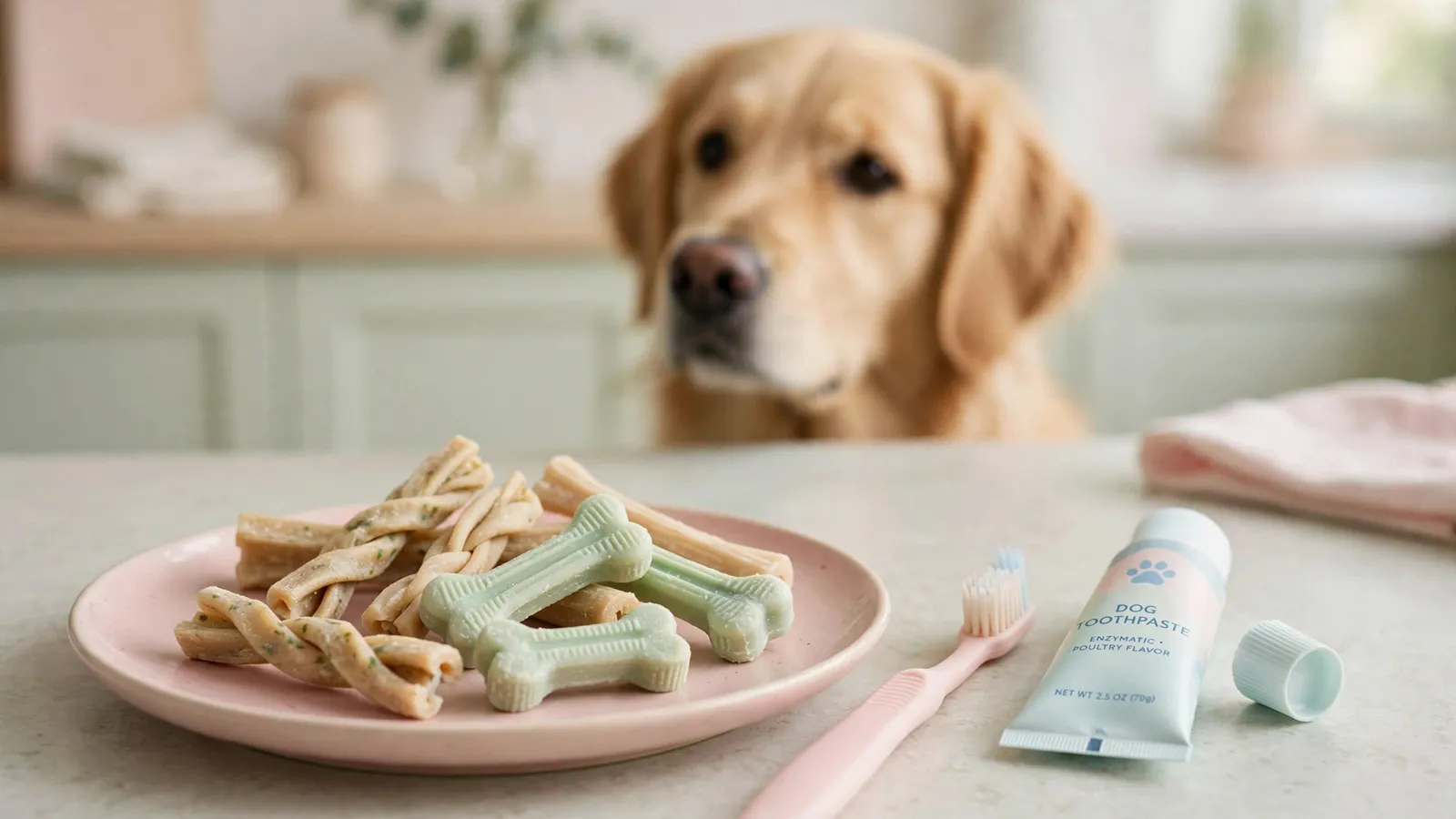
Why the teeth get their own guide
The American Veterinary Medical Association reports that 80% of dogs show signs of periodontal disease as early as age three. That is the reason dental chews fill a whole aisle: most dogs carry the problem early, and everyone is looking for the easy lever. The lever exists — but it is a routine, not a single chew, and knowing which part of the routine each product belongs to is what this page is for. It is also not a stand-in for a vet's eyes: a mouth that smells, bleeds or drops kibble is a question for the vet, whatever the chew shelf says.
What a dental chew does
A dental chew's honest job description is mechanical: the abrasion of chewing, the way the chew must be gnawed rather than gulped, and the minutes of contact with the teeth and gumline. Between brushings, that is the work a chew does — and the reason shape and chew-time matter more on the label than the flavor. A chew the dog finishes in two bites has done almost none of it; a chew sized so the dog actually works at it is the one the label's purpose statement was written for.
What a chew does not do is the brushing step. Brushing physically removes the plaque film; a chew scuffs and slows it. The two stack — the home brushing routine carries the paste-and-finger walkthrough, and the chew sits after and around it, not instead of it.
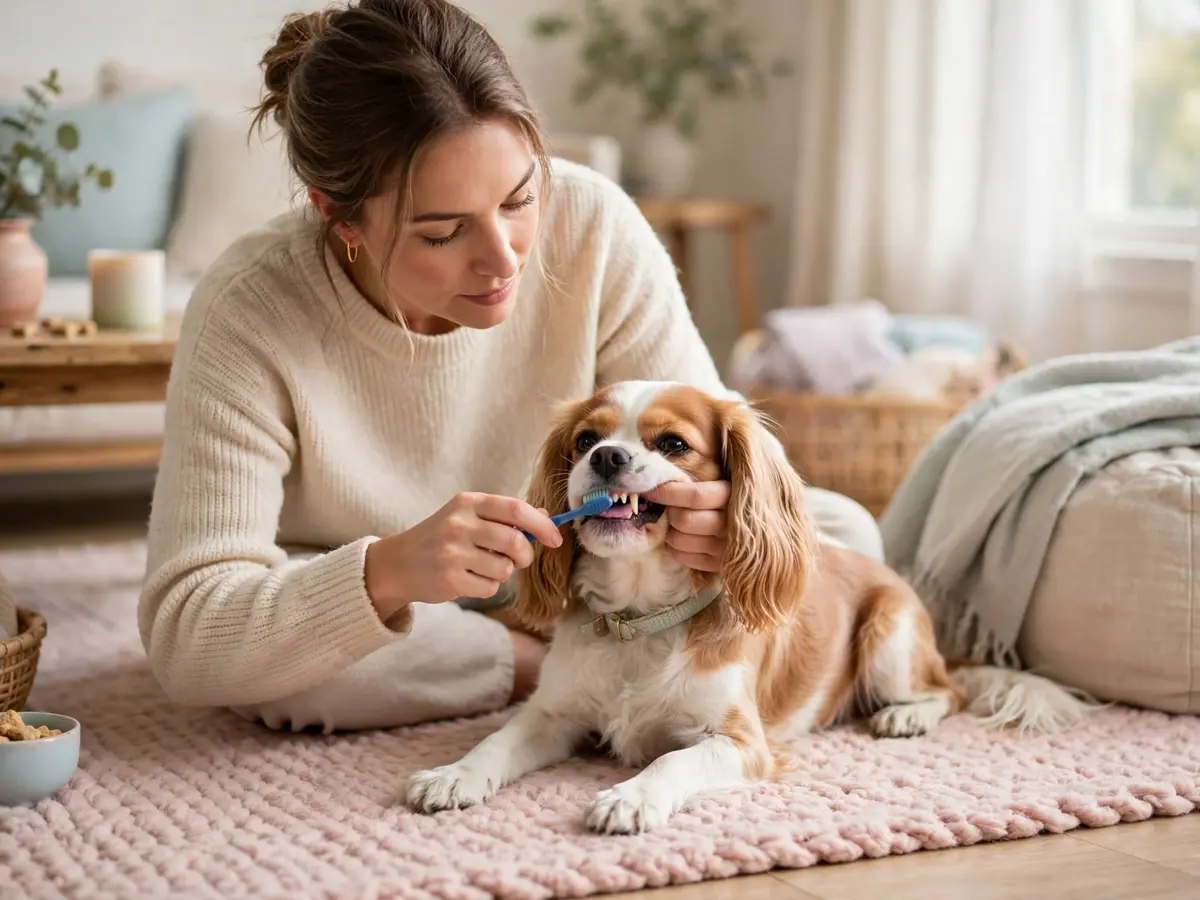
Plaque starts its clock again fast
Plaque forms again in as little as six hours after a professional dental cleaning. Read that as the design principle of the whole routine rather than a stadium-sized problem: the professional cleaning removes what home tools cannot, and the film begins rebuilding the same day — which is why an every-day routine of brushing plus a chew is shaped the way it is. The timetable is also not a prescription for how often anyone's dog needs a professional cleaning; that number belongs to your vet's eyes inside the mouth, at the checkups.
The practical take for the kitchen counter: the routine matters more than any single product. A dog brushed most days and given a chew that makes it work is running a real program; a dog with an expensive chew three times a week and no brush is not, whatever the bag promises.
The label line: dental chew or treat?
The test takes one panel of the package. A dental chew names its purpose — working the teeth as the dog chews — and carries a sizing guide with feeding guidance for the dog in front of you. A treat lists the flavor and stops. Both can live in the same cupboard; the difference is which one gets counted against the day's calorie budget, and under which line.
That budget exists for everything on the shelf, dental-labeled or not. Treats should stay at no more than five percent of a dog's daily calories, so keep the pieces small. The chew is part of that share, alongside the training bites and the corner of apple. If a chew looks big enough to be a snack event, it is one: fold it into the day the meal prep planner lays out, so dinner flexes instead of the waistline.
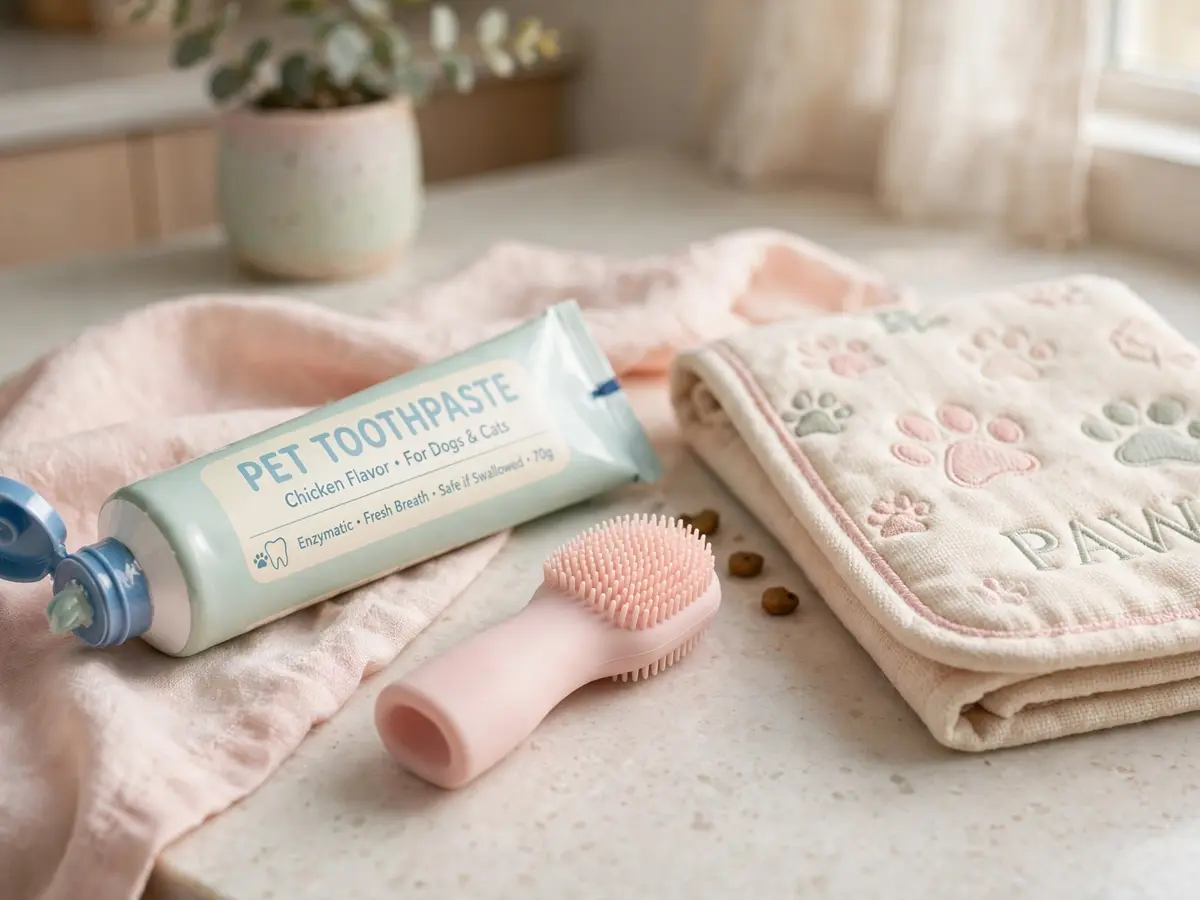
The routine, assembled
Brushing is the anchor step, with the paste made for dogs — human toothpaste can contain xylitol and fluoride, which a dog may swallow, so it is not the paste to brush with. The chew comes after the brush or on the no-brush days, sized so the dog works at it, and counted in the treat budget. Around both sits the vet: the mouth gets looked at at checkups, and anything that smells or bleeds is a question for the practice, not for a harder chew. No page — this one included — can hand you a disease-free promise; what a routine does is keep the plaque film working on your side of the equation between the professional eyes.
Dental chew questions
Can a dental chew replace brushing?
No — and the honest framing is the order of operations. Brushing is the plaque-removal step, and a chew is what happens around it: something for the teeth and the minutes between brushings. A dog who gets a chew and no brushing is not getting the step that does the real work, however good the packaging sounds.
How do I tell a dental chew from an ordinary treat on the label?
Read the claim on the front and then the purpose on the back. A dental chew states what it is for — mechanically working the teeth and gums as the dog chews — and carries feeding guidance sized for the dog. An ordinary treat lists flavor first and function never. Our rule of thumb: if the package cannot tell you what the chew does besides taste like something, it is a treat, and it belongs in the treat count of the day.
Why does human toothpaste get mentioned on a dog dental page?
Because the bathroom shelf is where the plan breaks. Human toothpaste can contain xylitol and fluoride, which a dog may swallow, so it is not the paste to brush with. A dog does not spit, so whatever is on the brush is swallowed — the paste that goes near a dog is the one made and labeled for dogs.
Do dental chews count against the day's treats?
Yes. Treats should stay at no more than five percent of a dog's daily calories, so keep the pieces small — and a dental chew is a treat with a job description, not a free pass. If the chew is sizeable, it comes out of the day's treat allowance rather than stacking on top of the training bites and the broccoli.
How often does plaque come back after a professional cleaning?
Plaque forms again in as little as six hours after a professional dental cleaning. That is not a reason to skip the cleaning — the professional scale removes what a home routine cannot reach — but it is the reason the daily routine exists at all: the clock on plaque starts again the same day.
The dental drawer
Paste, brush and a chew that makes them work
A dog-safe toothpaste, a soft brush that fits a muzzle, and chews sized so the dog actually gnaws them — the drawer a dental routine lives in.
See the dental drawer →As an Amazon Associate we earn from qualifying purchases.
Save this for the shopping aisle
Pin the label test before the next restock. The Homemade Dog Treats collection holds the rest, including the brushing routine that pairs with every chew on this page.