 PawStyle Daily
Cat-Friendly Apartment Decor
Mid Century Modern Cat Tree: 60s Style Picks
A room styled in mid century modern runs on one quiet agreement: every object in it has clean lines, honest wood, and a reason to stand where it stands. The average cat tree breaks that agreement from across the room - beige carpet, boxy platforms, a silhouette borrowed from a pet store aisle. The mid century cat tree is the piece that signs the agreement instead: tapered legs, walnut and teak tones, a perch shaped like a stool, and sisal tucked exactly where the scratching goes. This page owns the look and the room - what makes the read, which tones carry it, where a low tree earns its floor space, and how to place the piece so it looks chosen rather than tolerated.
By PawStyle Daily · Updated 20 November 2026
Tapered legs, square base, no carpet boxes | walnut and teak tones over plush fabric | a perch that reads as a stool | sisal where the scratching lands | the tree placed beside the pieces it matches.
What makes a cat tree read as mid century
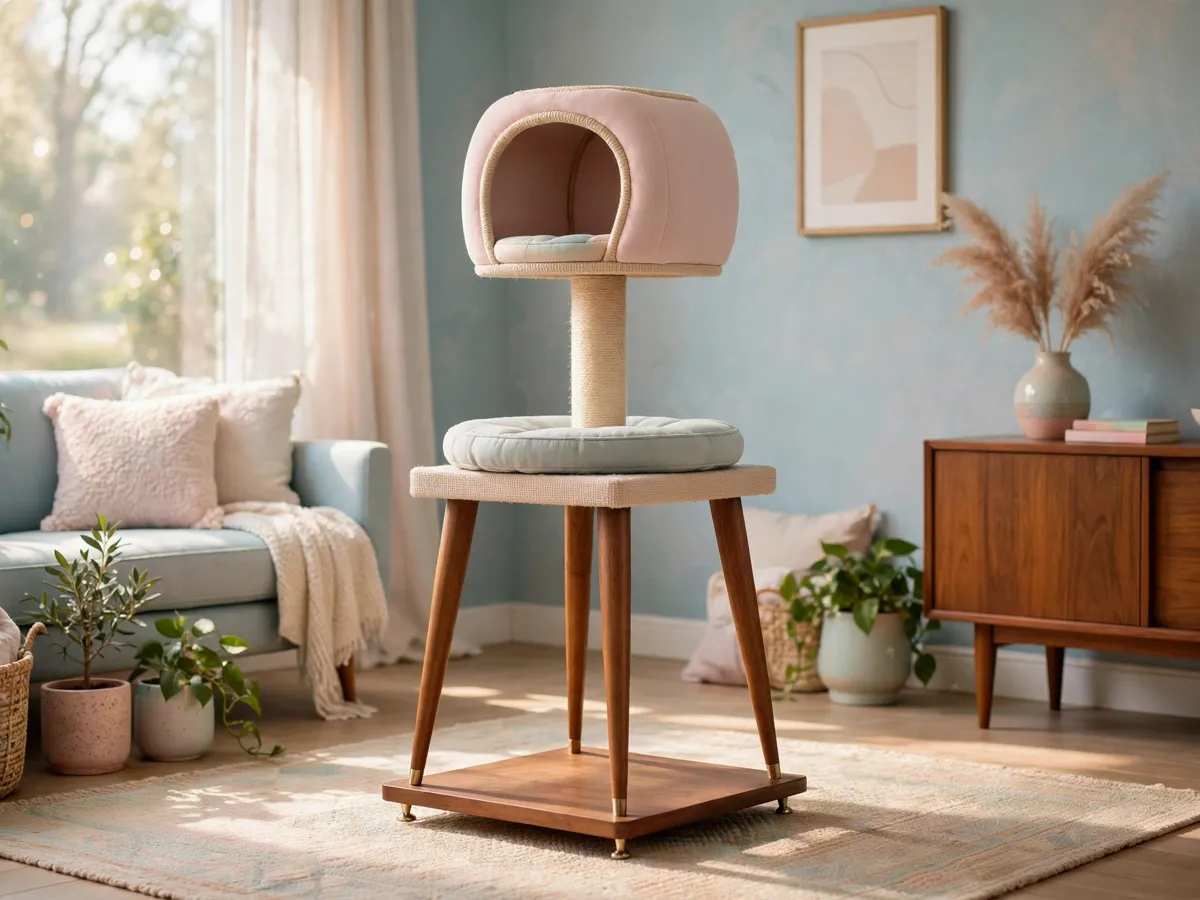
Three tells decide it, and a visitor reads all three before reaching the sofa. The legs: tapered, splayed with a slight outward lean, wood rather than tube steel or plastic. The platforms: low, flat, square or round, more side table than playground. The surfaces: wood in a visible grain, sisal on the post, and not one square of carpet anywhere. A tree carrying all three reads as furniture that happens to have a cat on it; a tree missing one reads as pet gear wearing a costume.
The distinction matters because the goal is not a tree that hides - camouflage fails twice, disappointing the room and the cat alike. The goal is a tree that reads as a chosen piece, the way a good side table is chosen: its tone sits inside the room's palette, its shape repeats a line the furniture already draws, and its job is visible without being announced. Guests compliment good rooms for the objects in them; a mid century cat tree wants to be one of the objects they name.
The material debate - what the frame is worth, how the surfaces compare - lives in the buying guide on this site, and this page stays on the style decision. For the tone language itself, the real wood cat trees walkthrough shows what visible grain does in a styled room; the mid century pick is that same honesty with the silhouette lowered and the legs tapered.
The lines that carry the style
The taper is the signature, and it works because of what it implies: lightness. A straight post reads as structure; a tapered leg reads as design, the way the legs on a real side table or credenza do. The lean is slight and the effect is large - the piece stops looking planted and starts looking placed. When comparing listings, the leg photos tell the truth faster than any description: a straight square leg is a pet store tree in disguise, and a proper taper is the pick.
The platform is the second line, and the mid century move is down, not up. A low perch at sofa-back height reads as a stool pulled up beside the seating; a second, smaller platform reads as a stepping stool. The base follows the same logic - a square or round slab of wood rather than a carpeted box - and the whole silhouette stays under the sightline of the room, which is exactly where a 60s styled space wants its furniture.
In a small apartment the low silhouette doubles as a space decision. A tall tower owns a corner and the air above it; a low tree borrows the floor beside the sofa and gives the room its height back. The negative space around the piece is part of the style - mid century rooms breathe between objects - so the pick that holds the line in a small home is usually the lower, wider one, with a heavy base doing quietly what height would have done loudly.
Wood tones that match the room
Walnut is the default and the safest first answer, because it sits in the warm middle of the wood range: dark enough to look deliberate beside pale walls, warm enough to agree with the honey tones most vintage pieces carry. Teak runs slightly lighter and more golden, and it is the match for rooms already styled in teak. The mistake runs the other direction - near black or pale blonde finishes that read as contemporary rather than mid century, and pull the eye away from the furniture the tree was bought to join.
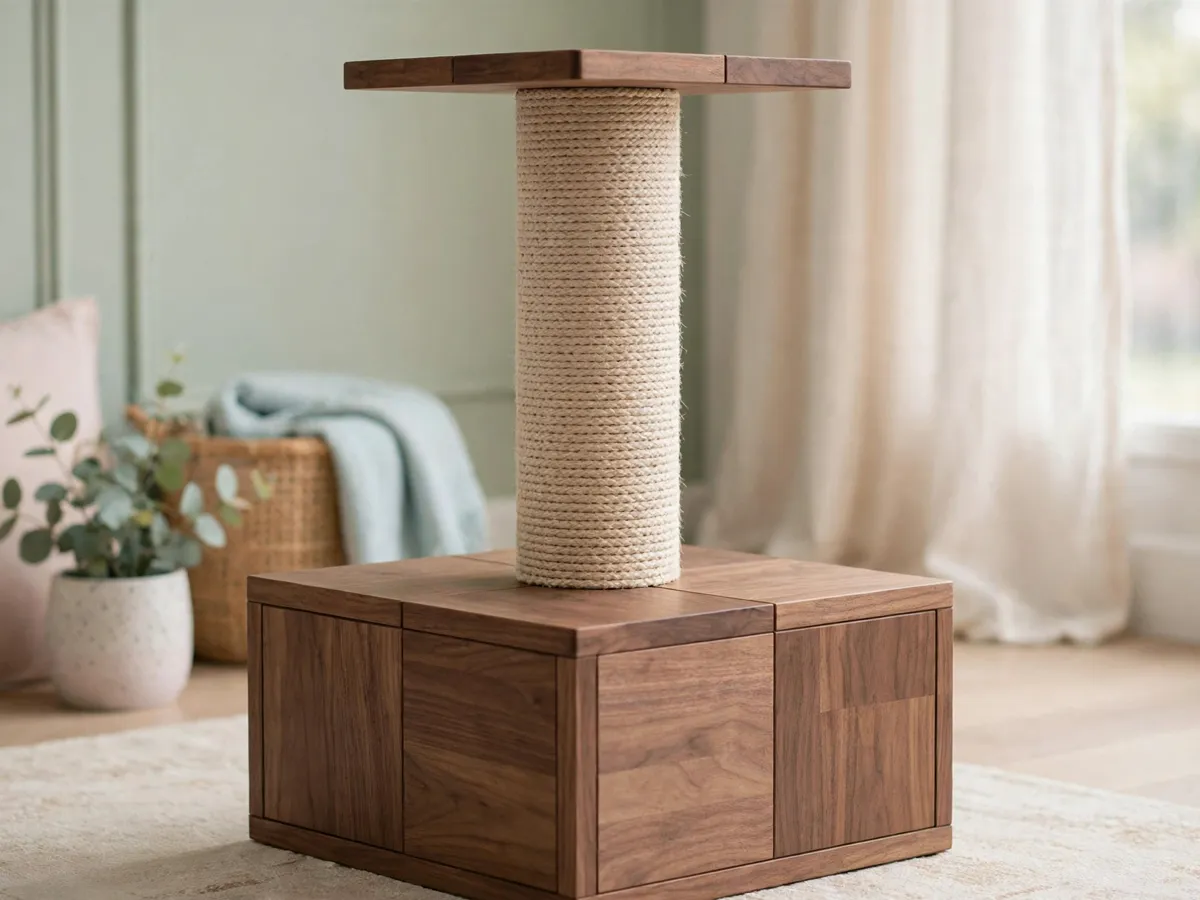
Match the tree to the pieces it will stand beside, not to the room in general. The test is simple: photograph the sideboard or the coffee table, hold the listing photo next to it, and ask whether the two could have left the same workshop. Grain direction, tone depth, and the finish's shine all answer in the photo. A matte or satin finish wins over high gloss in this style - the shine level of oiled vintage wood, not the shine level of a new laminate floor.
The sisal-wrapped post is the honest pet detail, and the style absorbs it better than it absorbs carpet. A sisal cylinder in a natural tone reads as texture, the way a jute rug does, and it gives the scratching a single designated place so the platforms stay plain. Rounded corners on the wood edges take the wear gracefully, and a base with real weight means the piece never needs anchoring hardware drilled into it - the floor and its footprint do that work.
Quiet perches and the low tree's real job
A low tree is not a failed tall tree - it is a different instrument. Most cats in a styled apartment live a sofa-height life: the arm of the couch, the window sill, the back of a chair. The low perch meets that life exactly where it already happens, and the cat that naps on the platform uses the tree the way the household uses the side table - constantly, without ceremony. The quiet perch is the piece's whole point: a spot at the room's own height, in the room's own material.
An athletic cat needs a second answer, and the honest one is height elsewhere in the room. A wall shelf route above the sofa gives the climber its vertical life while the floor piece keeps the style intact, and the pairing covers both cats in one household without compromising either. The shelf planning is its own project on this site; the style decision here is only that the two can coexist - the low walnut platform as the furniture, the wall line as the gym.
Quiet also describes what the tree should not carry. No dangling pom poms, no plush mouse on an elastic string, no bright fleece blankets that argue with the palette. A folded throw in a room tone on the lower platform gives the nap spot softness without the costume, and it lifts off for washing. The tree that looks mid century on day one stays mid century because everything added to it afterwards answered to the same three tells: line, tone, restraint.
Placing the tree so it reads as furniture
Placement finishes the illusion. The classic seat is beside the sofa, leg line roughly parallel to the sofa's own legs, close enough that the two read as a set and far enough apart that neither crowds the other. A spot near a planter works the same way - wood next to green is the vintage-poster pairing, and the tree picks up the botanical company. What the placement avoids is the corner-of-shame arrangement: the tree exiled to the farthest corner, where its loneliness tells everyone it was tolerated rather than chosen.
Light decides how well the tone read lands. The piece wants the indirect light the room already gives its wood - near a window but out of the hard midday beam, which bleaches finishes over the long run and makes the grain go flat in photos. The full arrangement, from sightlines to sofa distance to the light the piece stands in, is mapped on the living room placement page; this page's rule is only that the tree stands where the furniture stands, in the light the furniture likes.
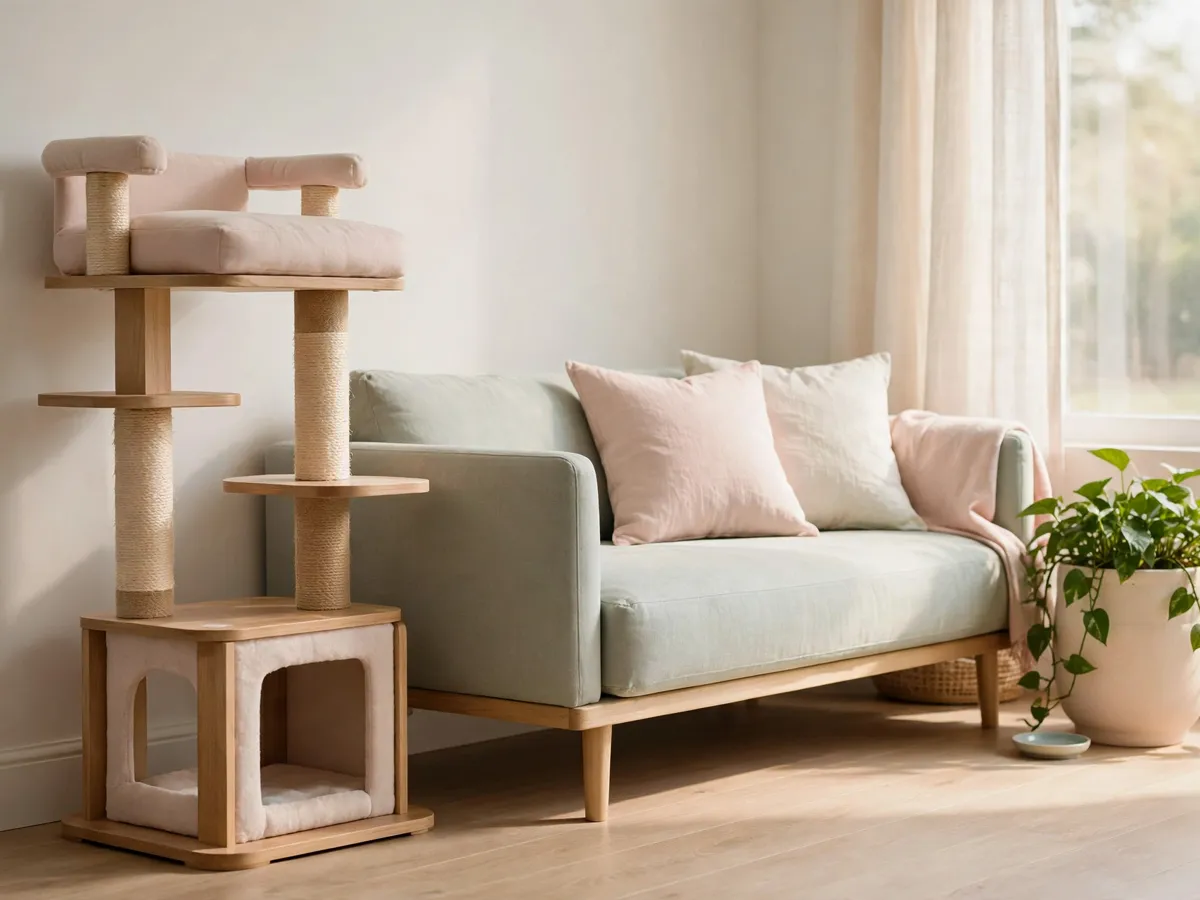
The last move is rotation of the soft layer, not the tree itself. A throw swapped for the season, a ceramic bowl moved off the platform to a mat beside it, the planter nudged closer in winter - small edits that keep the vignette alive. The tree holds its post in the room the way the credenza does: fixed in place, restyled in place, and photographed by the household every time the light turns golden, cat included.
Questions about mid century cat trees
What makes a cat tree look mid century?
Tapered legs, a square or round base instead of carpeted boxes, and wood in walnut or teak tones. The perch reads as a small stool rather than a pet platform.
Is a low mid century tree enough for a climber?
For a laid back cat, yes. An athletic cat still wants height elsewhere, so pair a low platform with a wall shelf route above the sofa.
How do I keep the wood finish from shredding?
Choose posts wrapped in sisal and leave the platforms plain. Cats scratch at edges, so rounded corners and a heavy base take most of the wear.
Save these on Pinterest
Pin the three tells before the next furniture browse, or send the tone-match photo trick to a friend whose beige tower is losing an argument with her credenza. The Cat-Friendly Apartment Decor collection holds the real-wood picks, the placement mapping, the litter setups that hide in plain sight, and the shelf routes that give a styled room its climber back - so the cat furniture finally looks like part of the plan.
For informational purposes only.