 PawStyle Daily
Cat-Friendly Apartment Decor
Japandi Cat Tree: Slatted Wood, Low Perches, Quiet Lines
Most cat furniture announces itself. It arrives carpeted, in a beige tower shape, and the room reorganizes around it: the plant moves, the lamp moves, the corner stops being a corner. The japandi read is the opposite move. The cat piece is treated as joinery, in pale matte wood, sitting low, in a room that has been emptied around it on purpose. None of that is expensive, because it is a list of decisions rather than a budget. This page covers the vocabulary, the low perch instead of the tower, the slatted panel and what a cat does to a slat, the empty wall, the lantern and single branch, and the finish that makes a piece read as furniture.
By PawStyle Daily · Updated 20 November 2026
Good to know: pale wood and a matte finish | low perch over tower | one slatted panel, the rest of the build clear | the empty wall is part of the design | paper over a slat is the part to skip.
What the style is actually asking of a cat piece
A cat tree has three jobs: somewhere to sit above the floor, somewhere to scratch, and somewhere to watch the room. Every tower on the market solves all three in one vertical object, wrapped in carpet, and that is precisely why it reads as pet equipment. The japandi approach splits the jobs across ordinary furniture shapes. A bench sits where the tower sat. A slatted panel takes the scratching. A window sill takes the watching. Nothing is given up, and the corner stops being a cat corner.
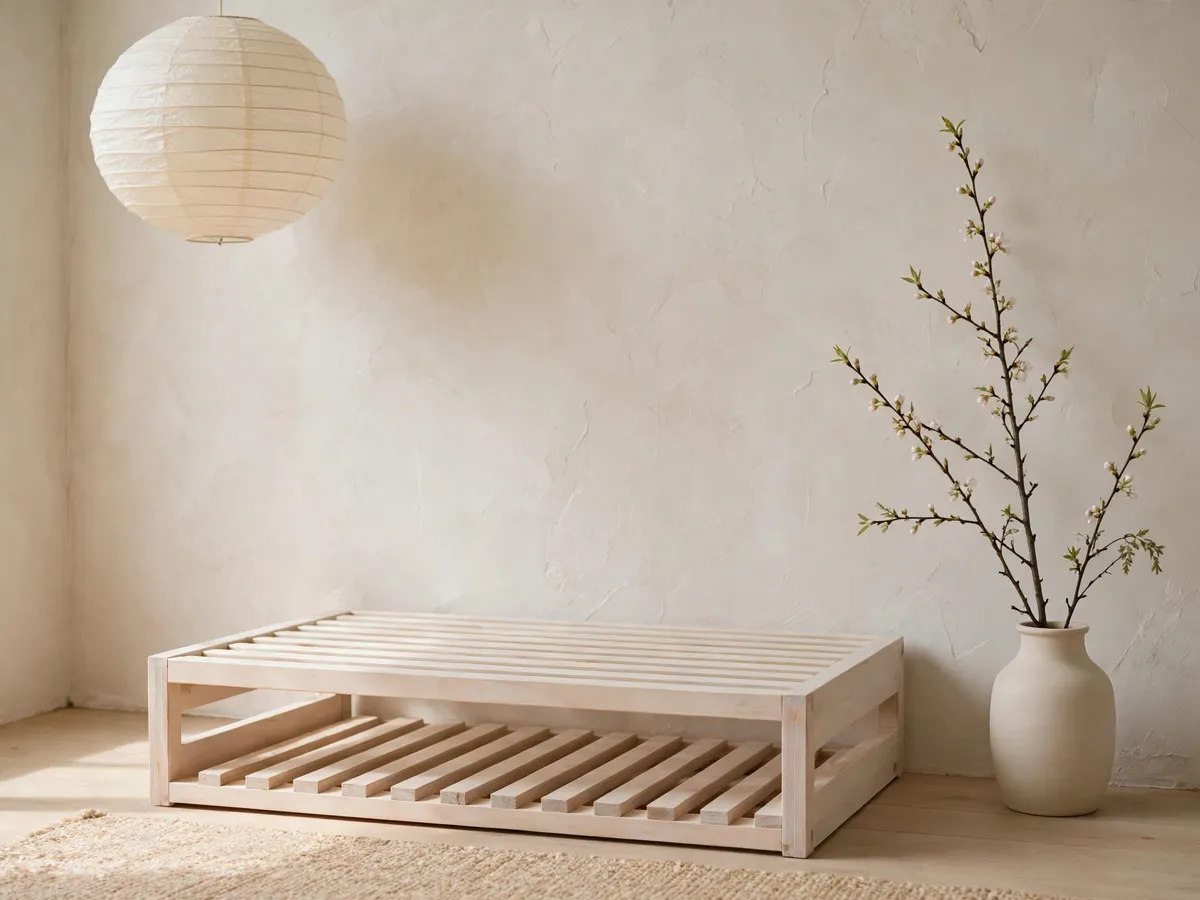
The style asks for three things, and the piece fails when it skips one. Pale wood rather than dark. A matte surface rather than a gloss. And room left empty around the object, which is the ask nobody expects and the one that does the most work. A beautiful low bench crowded by baskets and a plant stand reads as cat furniture with better bones. The same bench against a bare plaster wall reads as furniture, full stop.
Worth saying early: this page is about the look and the parts of the build that create it. It does not re-pick a tree and it does not re-place one. Those are settled elsewhere on this hub, and the links at the end go to them.
The vocabulary, and why japandi is not mid-century
Japandi is the crossover of a Japanese and a Scandinavian read. The Japanese half brings the slat, the paper lantern, the rush mat and the single branch in a vase. The Scandinavian half brings pale oak, low horizontal lines, and the refusal to hide the construction. Together they read as quiet, and quiet is the entire objective. It is a style built out of subtraction, which is why it is unusually forgiving on a small budget: what you remove costs nothing.
The confusion with mid-century matters at the shop, because the two lanes look similar on a catalog card and behave differently in a room. Mid-century is walnut, tapered legs and warmth coming from brown. Japandi is pale wood, square or softly rounded edges, and a quietness that comes from what is left out. A piece can sit between the two, and the mid-century modern cat tree page owns that lane properly. What pulls a piece onto the japandi side is the combination rather than any single tell: matte pale wood, horizontal emphasis, negative space around it, and slats where another style would put carpet.
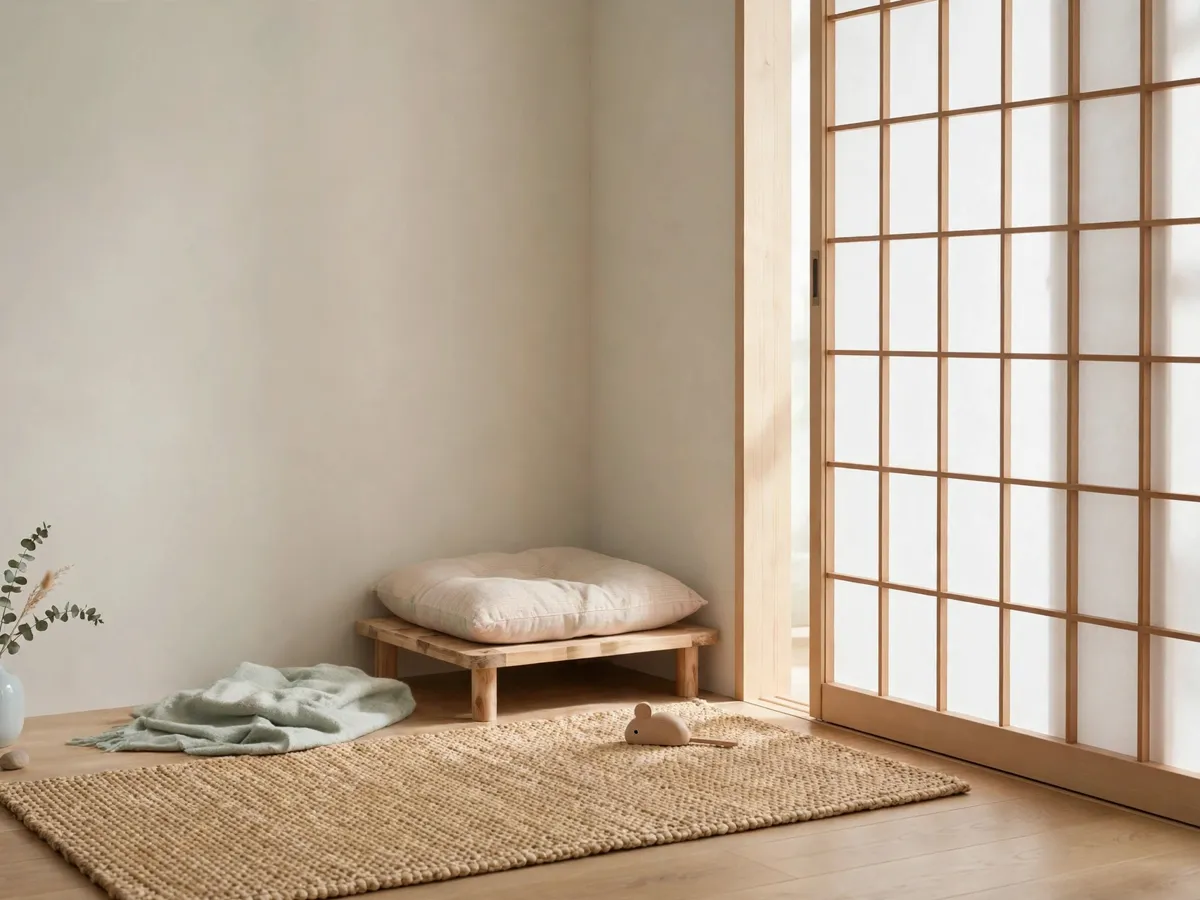
Carpet is the tell to beat. It is the strongest single signal that an object is pet furniture, and a japandi room has no use for that signal. A piece with a carpeted platform is not a japandi piece in a lighter color; it is a different object altogether. Scratching belongs on the slat, on sisal set into a recessed panel, or on a separate post that lives low behind the sofa, and the seating surfaces stay wood, or a removable cushion in a plain linen that goes in the machine.
The low perch instead of the tower
The tower is the default cat shape and japandi drops it. Where a carpeted tower stacks upward, a japandi arrangement spreads outward: a low bench at the window line, a platform beside an existing shelf, one step between the floor and the sill. The cat keeps a route upward that never reads as a climbing frame, and the room keeps its sightlines. That is most of why the style works in a small apartment. A low piece leaves the window visible, the wall visible and the floor visible, and a room with visible floor reads larger than it is.
The trade is honest and worth naming before buying. A cat gives up altitude and takes territory instead. In a tall tower the animal owns a column. In a low arrangement the animal owns a route: bench to platform to sill, and every surface on that route does double duty as furniture first and cat item second. Cats use what is reliable rather than what is high, and a bench that is always there tends to outperform a summit reached once a day. The trade is reversible: one wall shelf added above the bench closes a missing middle rung without turning the corner back into a tower.
What to look for on the shelf at the shop. Pale wood, usually oak, ash or a light birch. Flat seats rather than cup beds, because a cup bed is a shape the style does not have. A wide base and a low center of gravity, so the piece does not rock when a cat lands on it. Legs or a plinth base rather than a solid panel down to the floor, since the space under the piece is where a cat puts itself and where a room keeps its air.
The slatted panel, and what a cat does to a slat
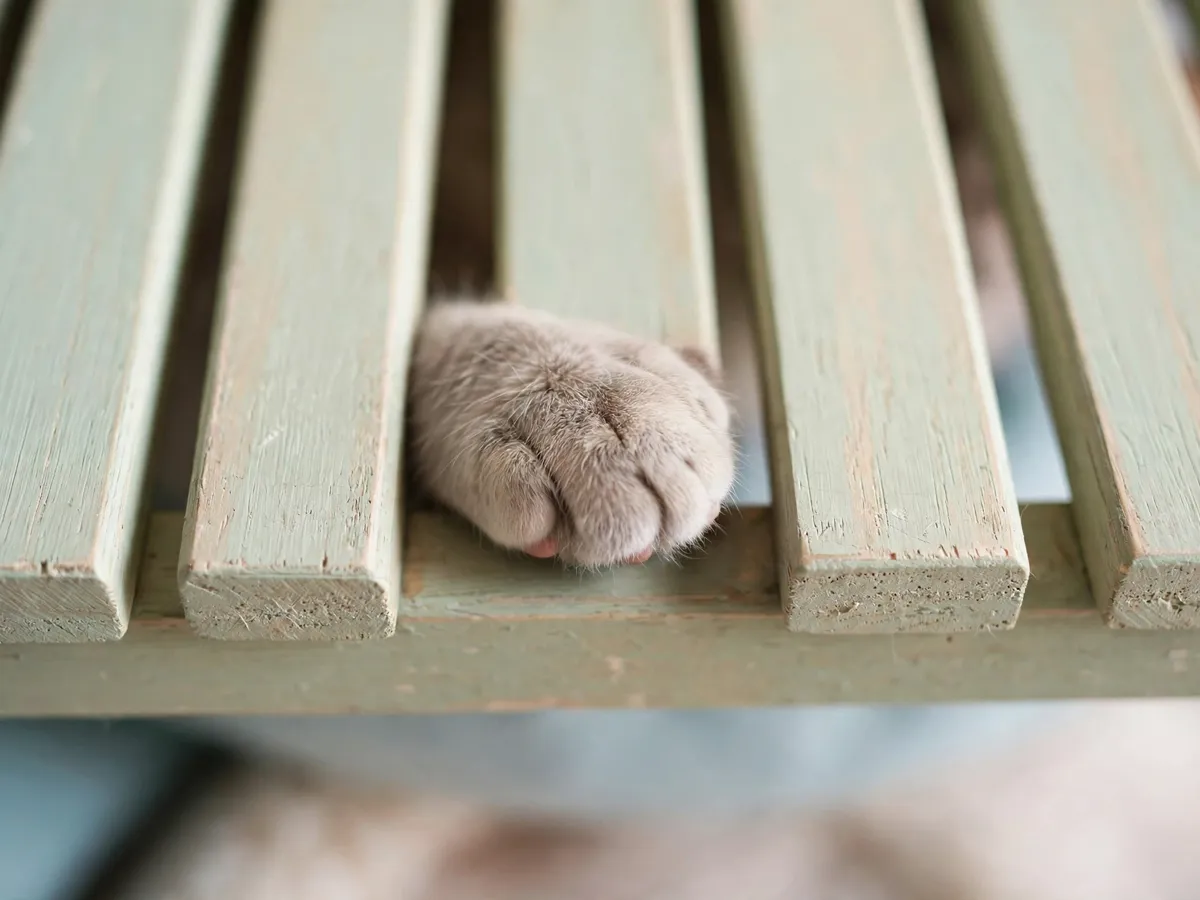
The slat is the signature. Evenly spaced strips of wood running horizontal along a bench side or a platform edge, and they are what separates a japandi piece from any other pale wooden furniture in the same price band. They also give the build its honest double life. From across the room a slatted side panel is texture and shadow. Up close it is a scratching surface, whether or not anyone intended it as one.
Decide that before the purchase rather than after. A slat will be scratched, and that is the design working rather than failing. Leave one panel facing the floor line, at the height a cat reaches from a standing position, and keep the rest of the build clear of it: no rope wrap, no fabric sleeve, no paper. Paper over a slat is the part to skip, because a cat finds the edge of it, and a torn sheet lifting off wood is uglier than any scratch mark ever was. A scratched slat reads as grain from a distance. This is the one part of the piece designed to take wear, which is exactly why it should not be decorated.
Where the slat fails is the fixings. Slats glued flat to a backer board hold. Slats set into a routed groove hold better. Slats butt-joined into an edge with no backer, at a corner a cat uses as a launch point, eventually work loose. Press one slat with a thumb in the shop, and if it moves it will not survive a cat. The repair is cheap: wood glue, a clamp, and the piece out of service while it sets.
The empty wall, the lantern, and the single branch
Japandi rooms are built out of what they refuse. The wall around the cat piece stays empty, and the emptiness is the design rather than the absence of it. One low pale bench against a plaster wall reads as furniture with room to breathe. Hang three prints above it, lean a mirror against the same stretch of wall, and the bench drops back to pet item in a corner on the same day. Negative space is what makes a low perch read as joinery, and it is the only move on this page that costs nothing at all.
Around the piece the vocabulary is short. A paper lantern overhead gives the corner a soft light that does not compete with the wood for attention. One branch in a floor vase beside it, and that branch is the whole arrangement. A woven rush mat under the bench, and the mat is where the cat actually sleeps. That is the entire kit. No gallery wall, no stacked plant shelf above the perch, no basket wall beside it, because every added element re-pet-fies the corner the build worked to quiet down.
Finish and hardware close the read. Matte, always matte: a gloss surface catches the light and turns any wood into something that reads as laminate from across a room. Brass and black hardware both sit well here, the choice being warm or graphic rather than right or wrong. Visible joinery counts as a feature and not a flaw. A dowel, a peg, a through tenon reads as craft, and the Scandinavian half of the style is built on showing construction honestly. A piece that hides every seam under trim is trying to be something it is not, and the cat does not care, but the room does.
Japandi cat tree questions
Is a japandi cat tree just a low cat tree?
The low line is one part of it. The rest is the slat, the empty wall around the piece, and a wood chosen to read as joinery rather than as a pet item sitting in a room built for people.
Will a cat use a slatted panel?
A slat is a scratching surface whether or not anyone intends it. Leave one panel facing the floor line and keep the rest of the build clear of it. Paper over a slat is the part to skip, because a cat finds the edge of it.
Does the style work in a small apartment?
Better than most. A low perch keeps the sightlines open and the room reads larger, which is the same reason the placement page pushes a tree against a wall instead of into the middle of the floor.
Save this japandi cat room guide
Pin it before the next furniture order, so the pale wood rule and the one panel rule are handy when the shopping starts. The Cat-Friendly Apartment Decor collection holds the buying guide, the placement walkthrough, the mid-century lane and the repair notes that keep a wooden piece in service. If the bench is already bought and the corner still fights it, the cat tree placement page covers where a piece stands so the room works around it instead of the other way round.
Pale wood and a matte finish | low perch over tower | one slatted panel, the rest clear | the empty wall is part of the design.
For informational purposes only.