 PawStyle Daily
Budgie & Cockatiel Corner
Budgie Cage Size: Bar Spacing and Flight Room
A budgie cage is picked on two measurements, and the shop only prints one of them. The first is the length of the floor, which is the distance the bird has to travel across the room it lives in. The second is the gap between two bars, which is the number nobody writes on the box and the one that decides whether the cage is a home or a trap. This page owns the hand test for the gap, the case for buying wide before buying tall, and how one cage carries a bonded pair. For where the cage goes and what goes on the perches, the budgie cage setup checklist page owns the layout, and this one does not repeat it.
By PawStyle Daily · Updated 20 November 2026
Good to know: measure the floor length first, lay a flat hand between two bars, and buy two of everything for a pair.
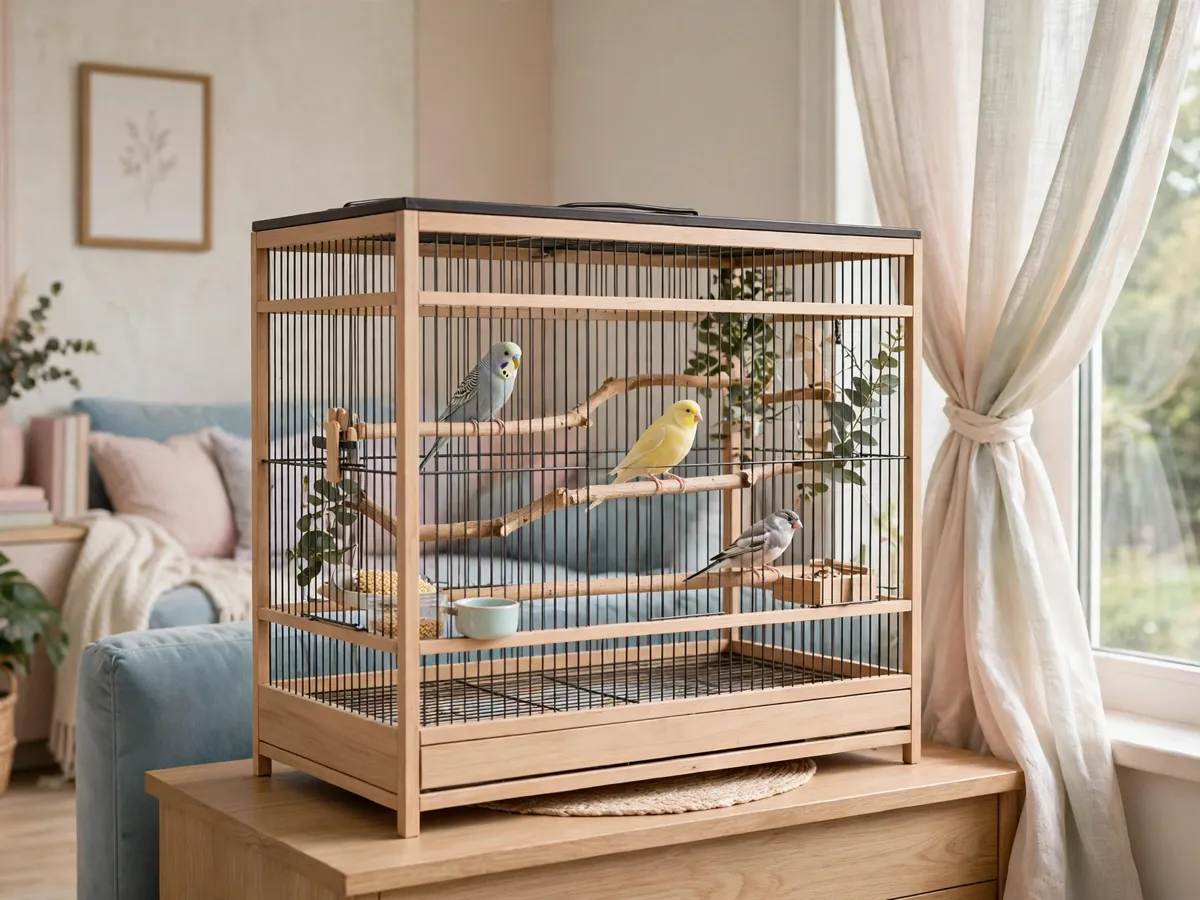
Two numbers, and the one the label hides
The cage aisle is arranged by height, because a tall cage looks grand in a shop aisle and photographs well against a wall. Budgie cages are sold as towers: narrow footprint, lots of vertical bar, a dome on top. The bird inside a tower gets a climb and no glide, and the owner gets a cage that costs more than the wide one beside it.
Size the cage on the floor first. Lay a hand flat along the bottom and count how many hand spans the floor runs from one end to the other, then count how many the bird needs to hop and open its wings without a bowl in the way. That distance is the number the packaging buries under the height.
The gap between the bars is the second number, and no label on the shelf carries it in a form a shopper can use. A gap wide enough for a budgie head is a gap a budgie head fits through. The hand test in the bars section settles it in a minute at the shop.
Flight room: buy wide before you buy tall
A budgie moves across a cage, not up it. In the wild the bird travels in a long low line through the grass and the low scrub, and the shape of the flight is a flat arrow, not a ladder. Inside a cage, the bird repeats that shape: it leaves the sleeping perch, drops a little as it crosses, and lands on the far bar. A cage with length gives that trip somewhere to end. A cage with only height gives the bird a climb and a sharp drop onto the tray.
The practical rule is to spend the budget on the floor before spending it on the roof. Two cages at the same price can differ in one direction only: one is longer and lower, the other is taller and narrower. Take the longer one. Headroom is worth having, and a bird needs enough of it to open its wings without a bowl in the way, but headroom beyond that buys nothing the floor cannot buy better.
Wing stretch is the test, and you can run it on an empty cage. Set the perches at the two ends of the floor, then stand back and watch the first trip the bird makes. A bird that lands on the far perch with a beat of control has been given enough length. A bird that arrives feet-first and rebounds off the bar, or that gives up on the trip and climbs instead, is in a cage that is short in the one direction it uses most.
The bar gap, checked by hand
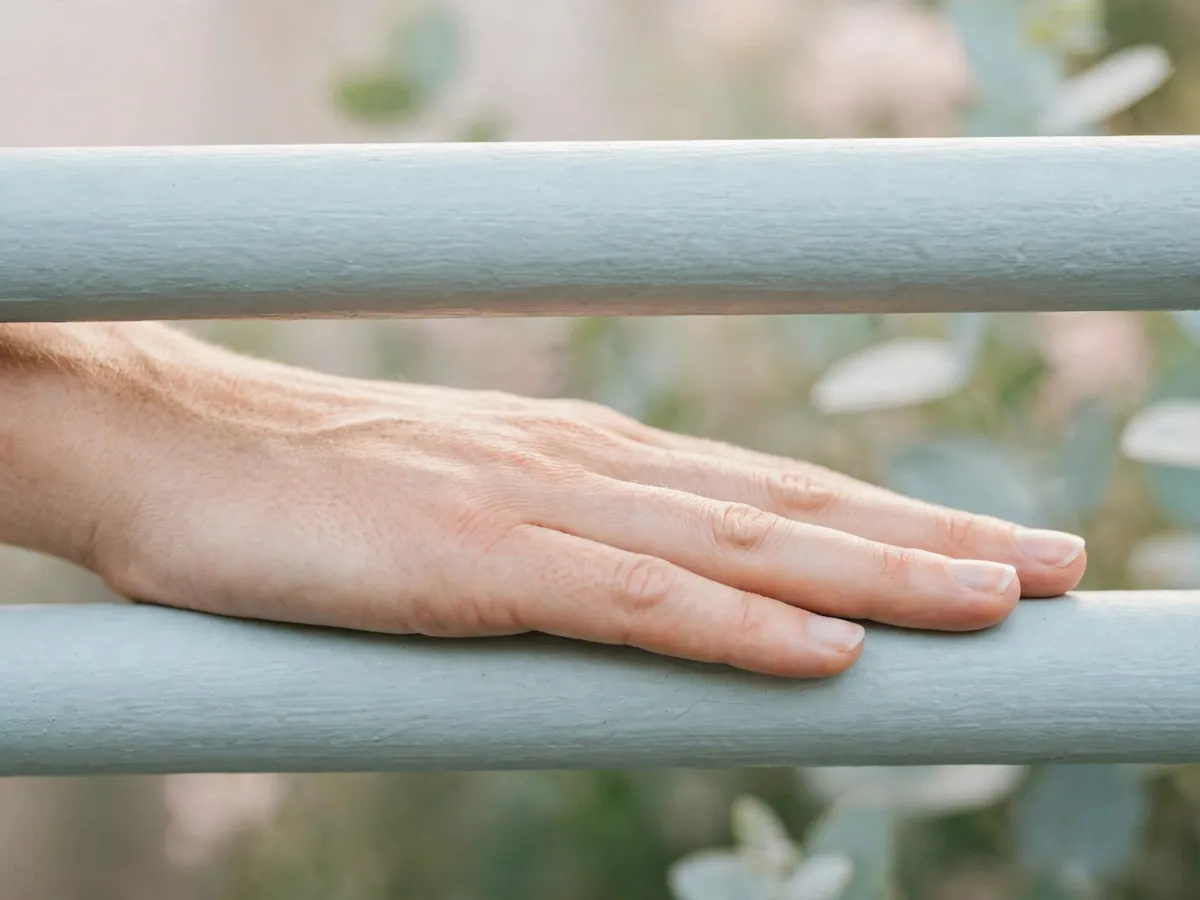
Bar spacing is the one cage measurement no label tells you in a form you can use in the aisle, and it is the one that decides whether the cage is a home or a trap. The check takes a flat hand and a minute. Lay your hand between two bars, fingers together, palm down. If the fingers slide through with room to spare, the gap is wide enough that a budgie head can test it, and a head that tests a gap is a head that goes through one.
The gap you want stops the head and still lets the feet work. A budgie climbs on the bars, and a bird that climbs needs a rung to hold. Bars set horizontally are the version that gives the bird a rung, and they are the reason the horizontal cage is the default pick for a bird that spends its day on the wall rather than on a perch. Vertical bars remove the rung and leave only the gap, so a bird on a vertical cage slides instead of climbing.
Check the gap in three places, not one. The front door is where the bars are spaced widest on most cages, because the door frame needs its own upright, and the gap beside the latch is frequently the odd one out. Check the corner where two walls meet, since a welded corner can pull the bars apart on a cheap cage. Check the back wall too, because the back is the wall nobody looks at in the shop and the wall the bird leans on at night.
Bring the hand test to a cage you already own as well. A bird that has outgrown the interest of its perch will find the bars, and a gap that looked fine on the box may be a gap the bird has learned to push a shoulder through. Run the flat hand along every wall once a season and look for a bent bar where the bird leans hardest.
Why a curved wall gives the bird nothing
The round cage and the dome top sell on the look, and they fail on the same point: a curve offers no flat surface to ride. A budgie rests against a wall the way a person rests against a headboard, with a foot braced on something that does not roll. On a curved cage the bird slides down to the lowest point, which is the tray, which is where the bowls and the husks live. A bird that ends the night in the tray is a bird that wakes up under its own dust.
A rectangle gives the bird four walls with corners, and a corner is the spot a budgie uses more than any perch in the cage. The bird braces a foot in the corner, twists, and climbs the next wall. That turn is how a budgie changes direction inside a cage, and a cage with no corner forces the bird to fly the turn instead of walking it, which is the difference between a bird that moves around its home and a bird that stays on one perch.
The dome top costs room at the place the bird wants it most. A sleeping perch goes high, and a dome pulls the roof down over the center while leaving the edges low and unusable. The bird takes the corner of a flat-roofed cage over the middle of a dome every time, because the corner has a wall behind it and a bar to hold. A flat top hangs a cover, and a dome does not, which is a problem on the night the room stays bright.
Door placement is part of the shape decision. The door should open on the side you reach from, and it should be wide enough to take a hand in to the far perch. A cage with a small top hatch is a cage where every bowl and every perch goes in sideways, and a bird watching a hand fumble through a hatch is a bird that hangs on the bars instead of stepping back. For perch diameters and the spacing footnote, the cockatiel cage setup page owns perches, and this one owns the shell around them.
One cage for a bonded pair
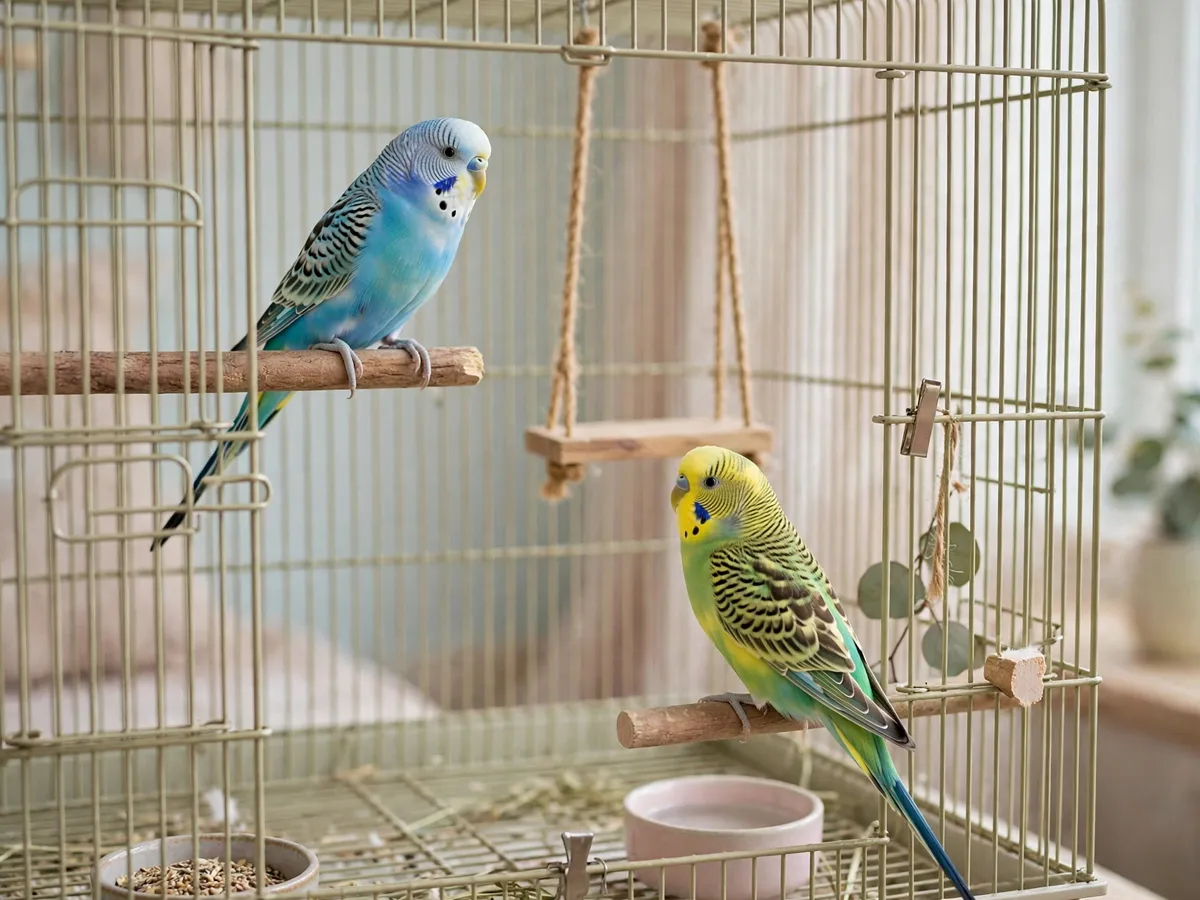
Two budgies in one cage is not one bird plus a roommate. It is one cage doing two jobs at once, and the cage has to carry the second job without shrinking the first. A pair bought into a single-bird cage settles for a week and then starts fighting over the good perch, and the fight is about the furniture rather than the birds.
The rule is two of everything. Two bowls, so a bird that arrives late to the millet is not standing behind the other bird. Two waterers, since a bird drinks where it sits and a single dish becomes a queue. Two perches at different heights, so a bird that wants the high corner does not have to displace the bird already there. A swing or a shred toy counts as a third thing to share, and a pair with one toy spends its day taking turns.
Length matters more for a pair than it does for a single bird, because the trip between the two ends of the floor is the flight the pair uses to avoid each other. A short cage forces two birds into the same corner, and the one with the weaker claim to the perch ends up on the bars. Buy the longer shell you can stand in the room and set the two sleeping perches at opposite ends, so neither bird owns the middle.
Watch the pair for a week before deciding the cage works. The signs are simple: both birds eat without one guarding the bowl, both sleep on a perch rather than on a bar, and neither spends the day shadowing the other from a corner. A pair that passes those three checks is in a cage with room enough, and a pair that fails one of them needs the length before it needs anything else.
Budgie cage size questions
Should a budgie cage be tall or wide?
Wide first, then tall. A budgie travels across a cage rather than straight up, so floor length matters more than headroom, and a curved wall offers no flat perch to ride.
How do I check bar spacing without a ruler?
Lay a flat hand between two bars. If the fingers slip through, the gap is wide enough for a head to test; the bars should stop the head, and a climbing bird should also find something to hold.
Is one cage enough for two budgies?
For a bonded pair, yes, when the cage carries two of everything: bowls, perches at different heights, and enough length for a short flight between them without a collision.
Save this cage size guide
Pin it before the next cage order, and keep the flat-hand test in mind at the shop. The Budgie & Cockatiel Corner collection holds the setup checklists and the bathing pages that sit beside this one.
For informational purposes. Check with avian vet on anything about your own bird.