 PawStyle Daily
Puppy Training Tips
Sleep Train a Puppy: Quiet Nights Without Crying
The first nights with a new puppy decide more than the first week of tricks does. A household that gets through them asleep starts the training with patience full; a household that spends them listening to crying starts with nothing left for the daytime work. The good news is that sleeping through is a routine, not a talent - the puppy learns it the same way it learns everything else, from the shape of the evenings and the answer it gets at the crate door. This page walks the wind-down, the crate placement, the waking cries, and the setup details that make the crate a place the puppy wants to settle inside.
By PawStyle Daily · Updated 20 November 2026
Quiet last hour, no zoomies before bed · crate in the bedroom for the first stretch · one boring check at a night cry · potty immediately, then straight back · the door latched open at night.
Why the night is the first real lesson
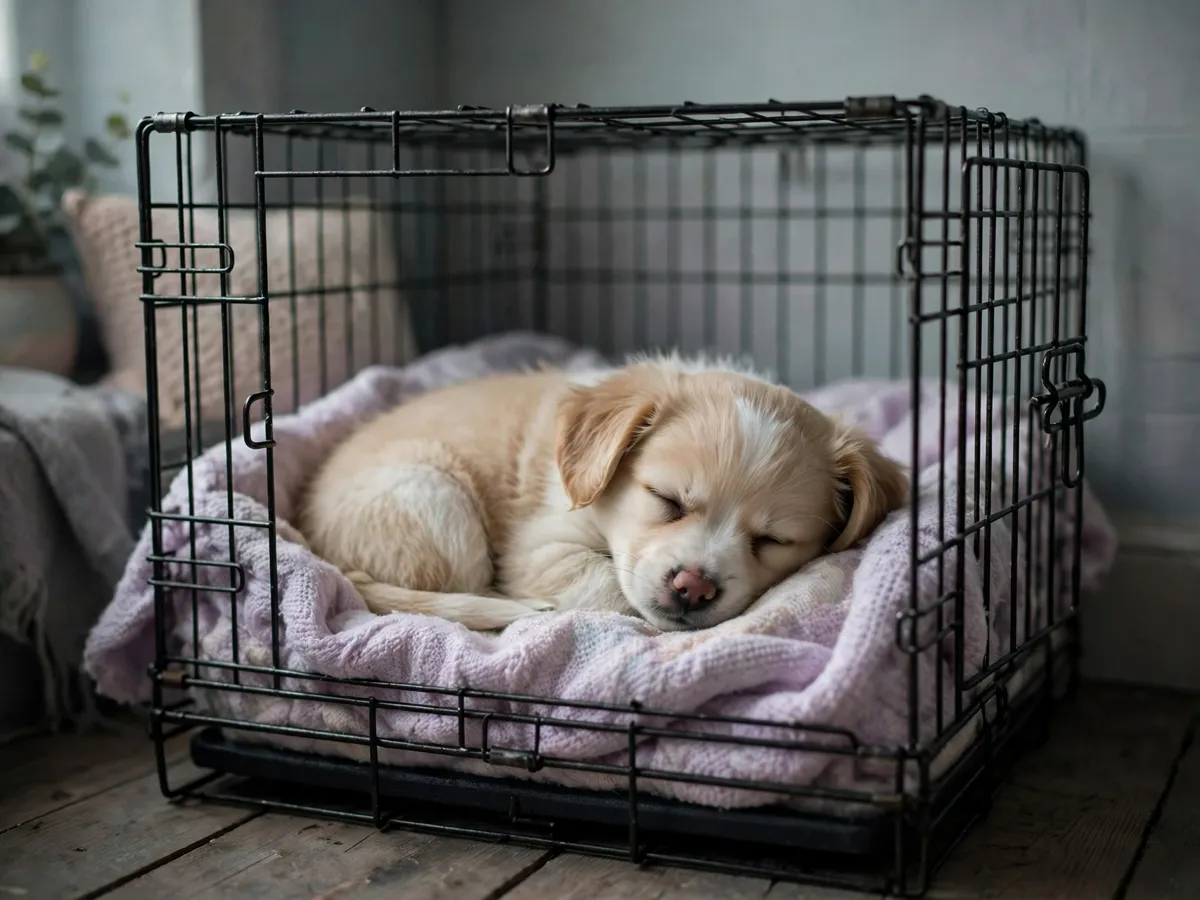
A puppy arrives having never slept apart from its litter, and the first night asks it to do something genuinely unusual. The crying that follows is not protest and not a sign the crate is wrong - it is a young animal calling for company, exactly as it was built to. The household's job is not to answer the call but to teach the puppy that the call goes unanswered at night and answered fully in the day. That lesson lives entirely in the consistency of the reply, and the reply is the same at midnight as it was at the first cry of the evening.
The night also runs on biology the training cannot rush. A small puppy's bladder holds little, and waking to potty is physical rather than behavioural - no amount of settling teaches a puppy to hold through a night its body is not ready for. The honest plan therefore has two tracks: teach the settling, and manage the potty around it. Households that mix the tracks - treating every cry as a training test or every cry as a bladder emergency - end up either ignoring a real need or rewarding the whining. Reading which cry is which is the skill this page builds.
The crate groundwork - the opening sessions, the door games, the first day of alone time - lives on the crate training first week plan, and the daytime rhythm that the nights stand on - when food, play and potty land - lives on the training schedule by age page. This page owns the hours between the last walk and the first morning stretch.
The wind-down routine
The last hour before bed sets the whole night, and its rule is descending energy. Dinner lands early enough to digest before the crate, the last play session stays on the floor rather than the air, and the roughhousing that makes a puppy buzzy stops well before lights-out. A puppy launched from a wrestling match into a crate is a puppy who argues with the crate. The wind-down gives the body time to come down to resting temperature, and the settling that follows comes far quicker.
The potty trip is the last move, and it is boring on purpose. Out the same door, to the same patch, on leash, with the light low and the voice quiet - no games, no greetings with the neighbours, no sniff expedition. The puppy empties, gets one quiet praise, and goes straight in. The trip teaches that the outdoors at night means business, and the business is potty and only potty. Households that turn the last trip into a evening adventure get a puppy who holds out for the adventure.
Then the crate becomes the end of the day, in the same order every night: potty, in, water out, a chew toy the puppy already loves, the door latched open, the household's lights going off around it. The repetition is the comfort. A puppy that can predict the sequence - the same words, the same patch, the same toy - argues with far less of it, because prediction is what settling is built from. The evening routine belongs on the fridge next to the dinner notes, and every caregiver in the house runs it identically.
Crate placement for the first nights
The crate goes in the bedroom for the opening stretch, close enough that the household hears the first rustle rather than the first howl. The placement does three jobs at once. It lets the puppy settle beside the sound and smell of its people instead of alone in a silent room. It catches the potty need early, before the bladder wins inside the crate. And it keeps the first nights from teaching the puppy that night means the house goes quiet and empty - the crate sits inside the family's presence, and the presence is what the crying asks for.
The corner beside the bed beats the middle of the floor. A crate in the walkway gets kicked by every 2 a.m. trip and reads as an obstacle; a crate tucked against the wall, one side open to the room, reads as a den with a view of the household's sleeping shape. The side of the bed the puppy's person sleeps on is the classic choice - the voice that answers the first cry arrives from the nearest shoulder, and the puppy learns the night ends with a quiet hand rather than a stranger's shout across the hall.
A low lamp rather than full light, and the lamp outside the crate. The dim glow gives the household the 3 a.m. potty trip enough sight to work by, and it keeps the room from the pitch darkness that makes every rustle sound enormous to a new puppy. The light stays off the crate itself - a lit crate is a suggestion to stay awake - and the whole setup says night, not evening. When the household eventually moves the crate out of the bedroom, the move happens after the nights below are steady rather than as the experiment that steadies them.
Handling the waking cries
The first waking cry gets one reply, and the reply has a shape the household chooses before the night starts. The shape that works for most puppies: a quiet check, no words beyond a soft cue, lights still low, straight to the potty patch, straight back in. The check answers the bladder - the real need underneath many cries - and the boredom of the trip keeps the cry from paying out in fun. What the night must not contain is the party: the play bow, the biscuit, the puppy lifted out and carried around the dark kitchen. Attention at night teaches the puppy that crying opens the house, and an opened house at 3 a.m. is a habit that takes months to close.
The fussing cry - the argument that lasts a couple of minutes with no potty shape to it - gets a different answer: nothing, from a quiet voice at most. The household waits out the arc of the protest, and the arc ends, and the puppy that discovers protesting ends in sleep has learned the lesson the crate teaches. The moment the crying stops is the moment the check happens, never a minute before - and a household that answers the peak of the howl teaches timing it will spend months un-teaching.
The pace of the nights belongs to the puppy's body, not to the plan. Early wake-ups are the normal shape of the first stretch at home, and the stretch lengthens on its own schedule - the bladders grow, the routine repeats, the crying thins out and eventually stops mid-night. The household's only real lever is consistency: the same boring answer every time, the same wind-down every evening. Whenever anything about the puppy's sleep or appetite looks unlike the norm for its age, the vet is the call - this page owns the routine, not the health of the animal.
The crate setup that makes settling easy
The crate wants to be a den, and the den details are cheap. A liner the puppy can nest into - a folded blanket, the towel the breeder used for the first days - gives the floor warmth and a scent the puppy already knows. The divider for a growing puppy keeps the space snug rather than cavernous: a crate sized for the adult dog lets a young puppy potty at one end and sleep at the other, and the nesting instinct that settles the crate works against a too-big box. Anything the household does not want shredded stays outside the door.
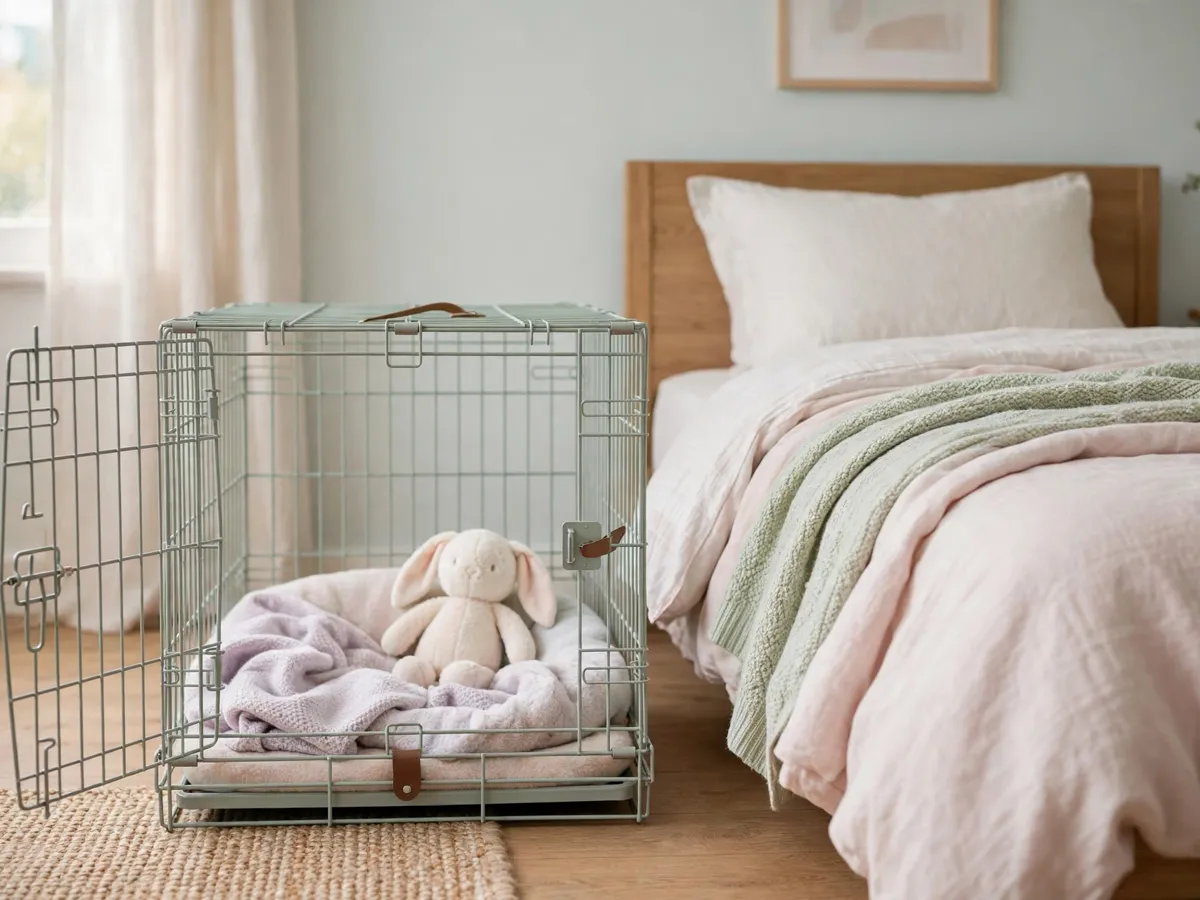
Water lives outside the crate at night, and the bowl comes in with the morning. A puppy with a bowl inside the den learns to splash it, lie in the puddle, and wake in wet bedding - the night's potty trips multiply for nothing. The last drink lands with the wind-down, the bowl rests beside the crate door for emergencies the household can see, and the first morning trip is both potty and refill. Daytime water stays free and full; the night is the only restriction, and it is about the bedding as much as the bladder.
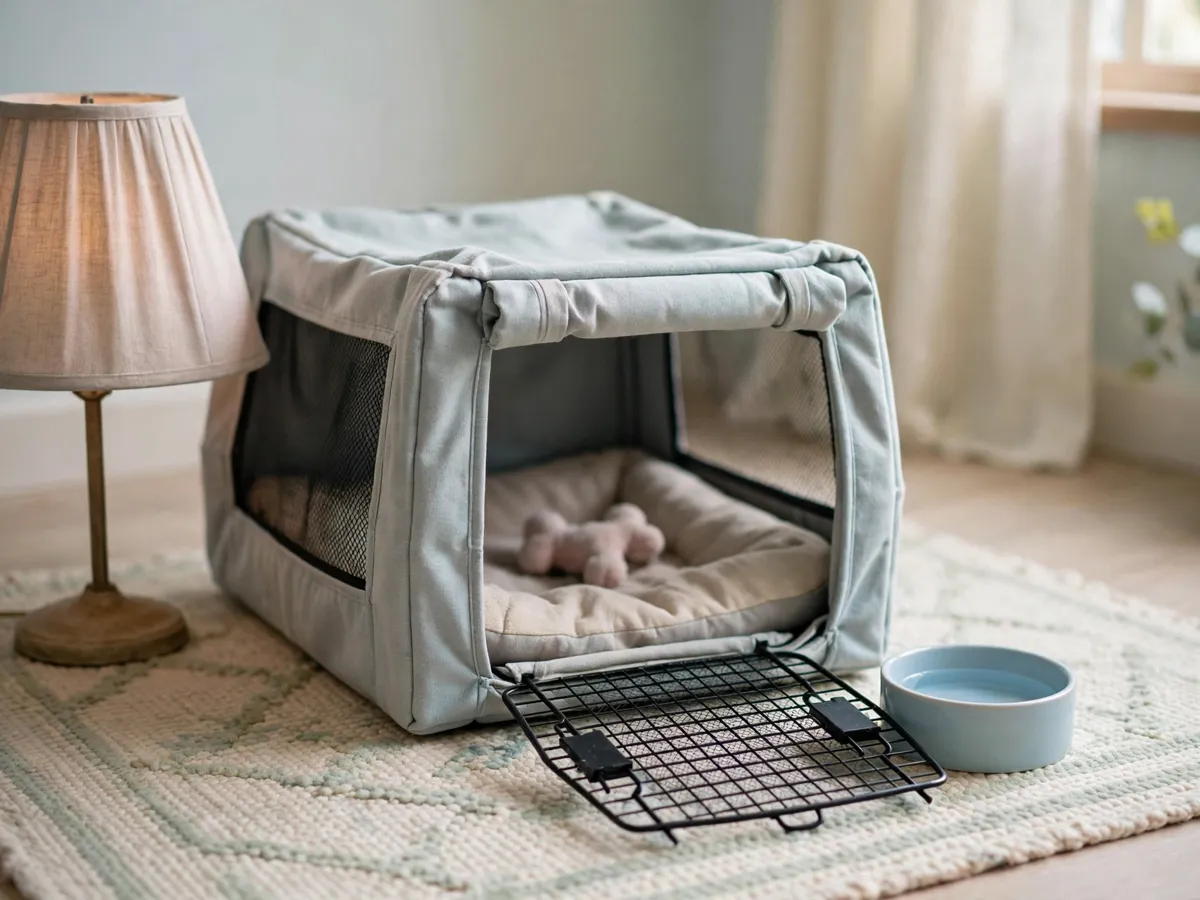
The door stays latched open at night for the same stretch the crate stays in the bedroom. A shut door at midnight turns a rustle into a trap, and the puppy that cannot step out to greet the household at dawn spends the night arguing with the latch instead of sleeping. The closed-door hours belong to the daytime plan - the short alone sessions on the crate-training page - where the puppy learns them with the sun up and the house active. Night is for the den with an open door and a person asleep an arm's length away.
Questions about sleeping through the night
How long before a puppy sleeps through the night?
Most puppies stretch their nights across the early weeks at home. Small bladders decide the pace more than training does, so early wake ups are normal.
Should the crate sit in the bedroom?
Yes for the first stretch. A crate within earshot means you hear the rustle before it becomes whining, and the puppy settles with you nearby.
What should I do about night crying?
One quiet check for a potty break, then lights low and no play. Extra attention at night teaches the puppy that crying earns a party.
Save these on Pinterest
Pin the wind-down order before the puppy's first night, or send the one-boring-check rule to a friend running on almost no sleep. The Puppy Training Tips collection holds the crate plan for the opening week, the schedule by age that the nights stand on, and the potty and settling guides that finish the first month - so the household gets through the crying phase with the daytime training still intact.
For informational purposes only.