 PawStyle Daily
Pet Loss Memorial & Rainbow Bridge
Pet Memorial Suncatcher: Glass Light Catcher Ideas
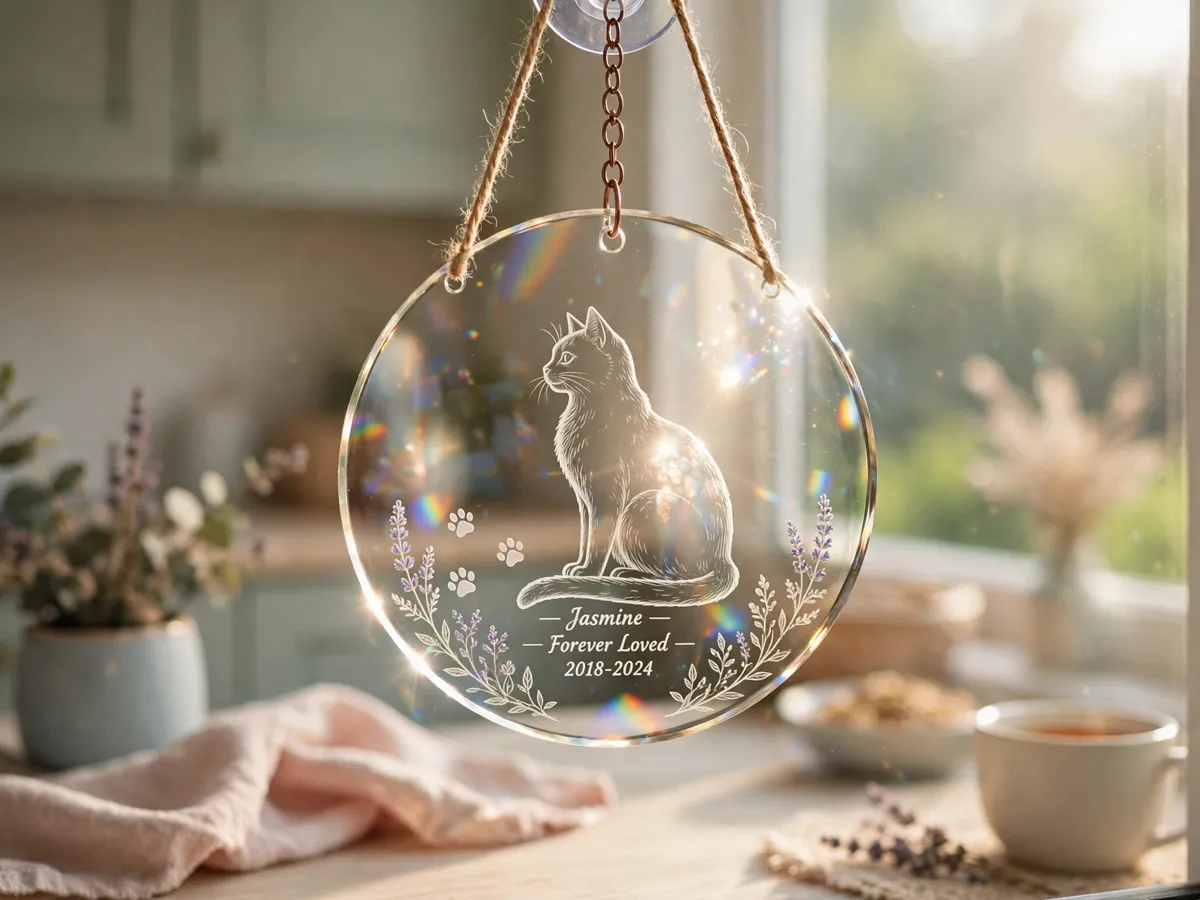
A suncatcher is the memorial that does something every day. It sits in a window and waits, and when the sun reaches that pane it throws colour across the wall, the floor or the chair the pet used to sleep on, then it goes quiet again until tomorrow. That one quality makes it different from a frame or a figurine on a shelf: the tribute is not static, it is tied to the light, and the household notices it without deciding to. It is also one of the most affordable memorial objects there is, and the easiest to make personal, which is why it shows up so often in the first months after a loss. This page covers the designs that read well in glass, the lettering that stays legible against a bright pane, the window that actually gets the light, and the gift etiquette around all of it.
By PawStyle Daily · Updated 20 November 2026
Good to know: thin lines over heavy fills · an east or west pane, not a hot southern one · a silhouette traced from a real photo · no deadline on choosing any of it.
Why light works as a memorial
Most memorial objects ask the household to visit them. A frame on a dresser needs someone to walk past, an urn in a cabinet needs someone to open the door. A suncatcher reverses that: it comes to you, because the light arrives on a schedule nobody sets. In the first months after a loss, when the days are uneven and the thought of the pet arrives unbidden, an object that answers with a patch of colour on the wall lands differently than one that has to be sought out. It is a small thing, and small things are what most households can face at that point.
The second reason is practical. A suncatcher costs little, needs no shelf, and lives in a window the room already has, which makes it the memorial chosen when the budget went to the vet bills and the funeral, or when the household rents. It moves easily too: it lifts off a hook, goes in a box, and hangs in the next home. For the versions that stay indoors on a shelf instead, the memorial ornament ideas page collects the ornaments that travel the same way.
Designs: silhouette, paw, beads or panel
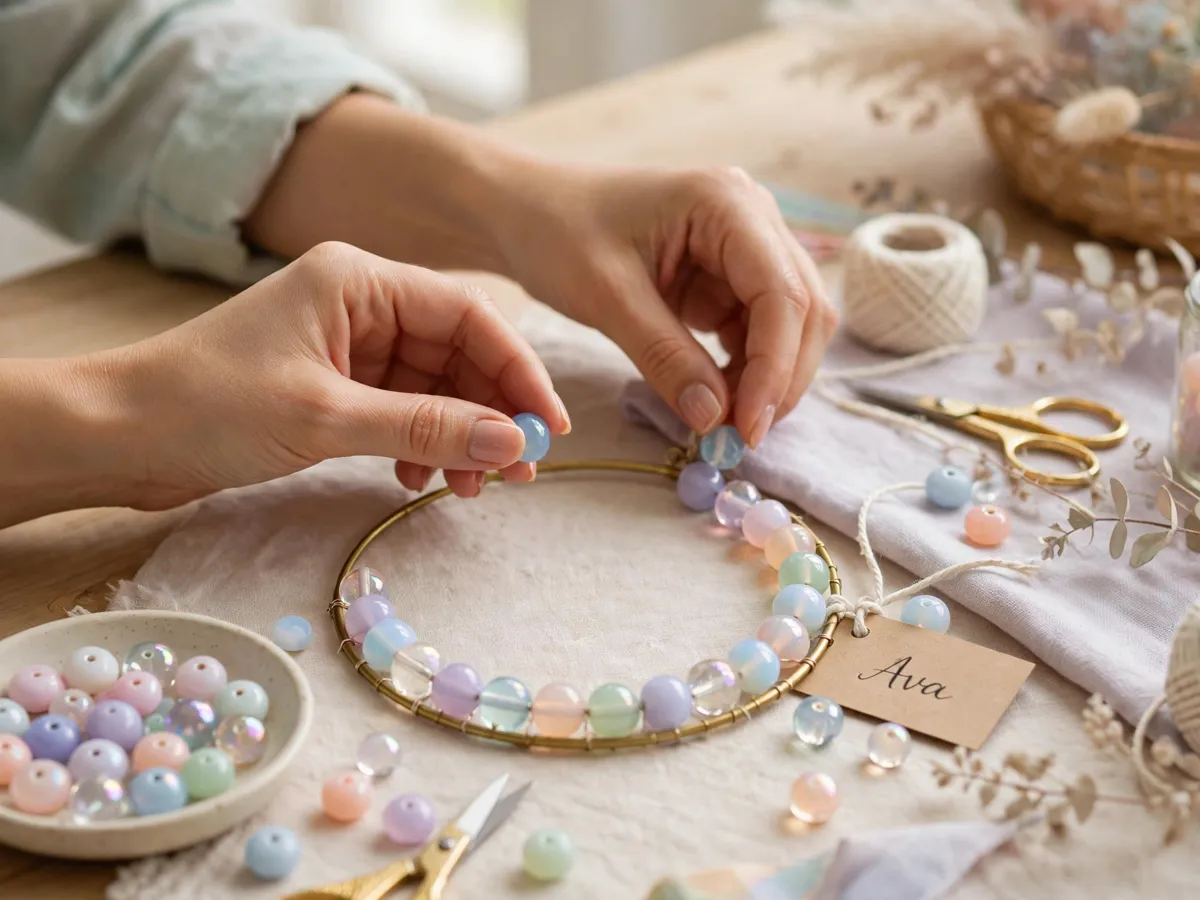
Four designs carry nearly every memorial suncatcher made. The etched panel is a single round or heart of glass with a silhouette cut into the face, and it is the cleanest of the four: one animal, one outline, no colour but the frost of the cut. The stained panel uses pieces of coloured glass joined with copper foil, and it throws the strongest colour onto the wall. The bead design strings faceted glass around a name charm, which is the version a household can assemble at a craft table in an evening. And the acrylic panel is a printed or engraved plastic disc, the cheapest option and the one that survives a porch.
Thin lines are the rule behind all four. A suncatcher works by letting light through, so a design that fills its face with dense colour reads as a dark shape against the window and throws almost nothing into the room. An outline reads the other way: the light passes the clear glass, picks up the coloured edges and lands on the wall as a shape you recognise. That is why the silhouette of this particular animal, traced from a photo the household owns, beats a generic angel or a stock paw print. The outline of one dog's ears is the whole point, and it takes a design that lets the light through to show it.
Lettering that reads against a bright pane
Lettering on transparent glass is harder than lettering on stone, because the background is the brightest thing in the room. Three tricks work. Etched lettering, cut into the face with a diamond point, holds a shadow line and reads from across the room. Frosted panel lettering, where the whole disc is etched and the letters are left clear, reverses that and glows when the sun hits it. And a small opaque plate, a sliver of white or coloured glass soldered along the bottom edge, gives painted names a background to sit on. What does not work is thin painted script straight onto clear glass: it vanishes at walking distance and wears off within a season.
Keep the layout to three lines and put the name first. The name, the years, and one short mark such as a paw or a single phrase is the arrangement that stays legible on a disc the size of a hand. Larger letters read; elegant small script turns to blur against a bright pane, no matter how good it looks on the seller's mockup. Ask for a proof before anything is cut, and hold the proof at arm's length rather than reading it on a phone screen. If the household wants the lettering made from a real print rather than a stock icon, the DIY memorial frame keepsakes guide covers the paw impressions that can be traced and reused across several objects.
The window that actually gets the light
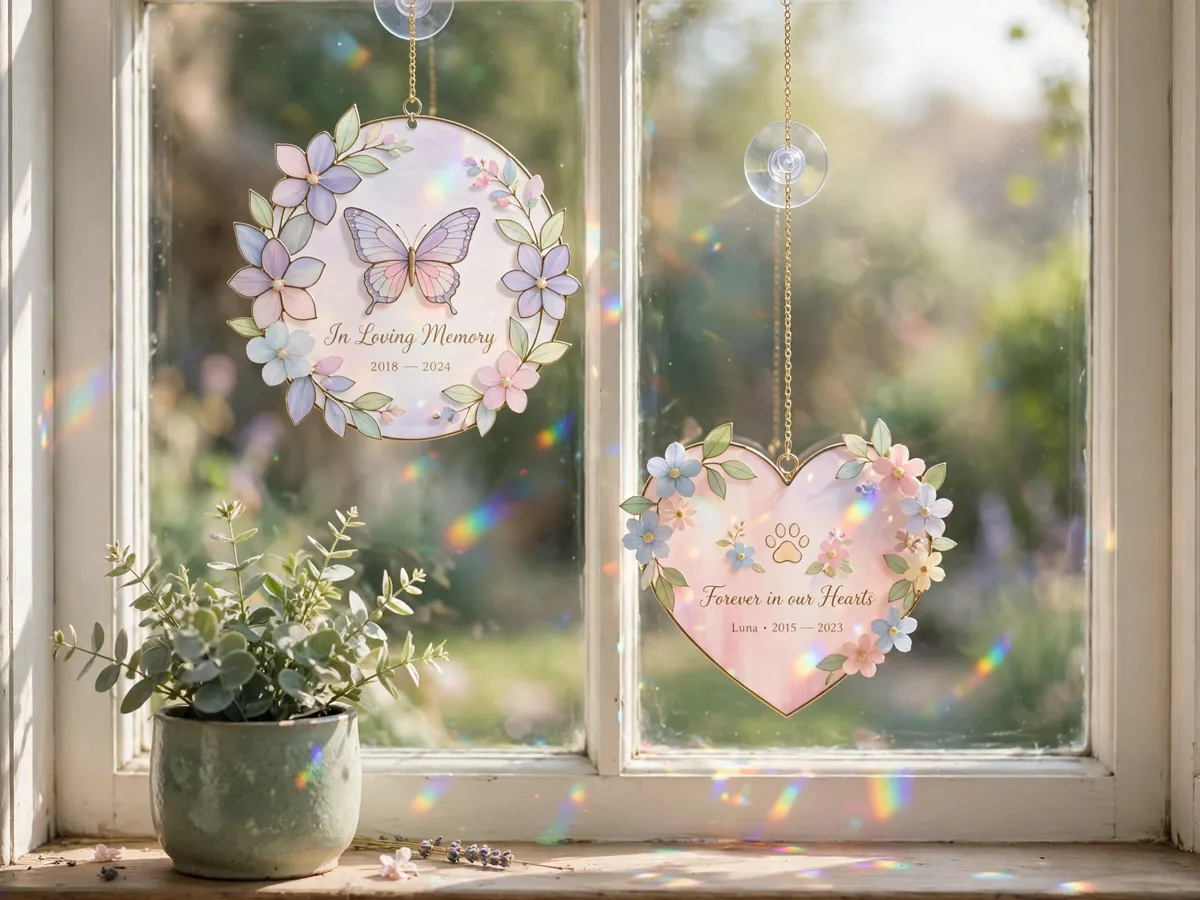
Direction matters more than size. An east pane catches the morning sun, so the colour lands on the wall early, when the house is quiet and the coffee is on. A west pane does the same at the end of the day, which suits a household that comes home late and wants the tribute to arrive then. A south pane gets the most hours of sun and the least flattering light: the disc is washed out while the sun is behind it, and the heat cooks anything soldered or glued to the face. If the room only has a south window, hang the suncatcher an inch off the glass on a short chain and it reads far better.
Height is the second decision. Hang the disc where the household passes it at standing height and where the sun actually crosses it, not behind a curtain. Two suncatchers at different heights in one window works for a household with more than one pet, because the light reaches them at different moments and each gets its own turn. Give a soldered joint a day before the disc goes up, use a suction hook in a rental pane, and check the chain each spring, since the same sun that makes the colour dries the cord that holds it.
Giving one to someone who is grieving
A suncatcher is a good sympathy gift on one condition: it has to be about this pet. A name or a silhouette taken from a photo the family sent you reads as thought, while a generic angel from a gift shop reads as a trip to a gift shop. Ask for the photo, ask for how the family wants the name spelled, and let the design be simple. If the household has not told you what it wants done with the memorial objects, a hanging tribute is a low-pressure choice, because it can go up in any window or go into a drawer without ceremony.
Timing matters more than price. A memorial gift in the first week competes with flowers and casseroles and often goes unseen; one that arrives in the second or third month, when the visitors have stopped, is the gift people remember. Say nothing grand in the card. Write the pet's name, and one line about what you remember. If the family wants something that stays on a shelf rather than in a window, the ornament collection beside this page holds the indoor versions, and the keepsake frames hold the ones built from a real paw print.
Memorial suncatcher questions
What designs suit a memorial suncatcher?
A silhouette, a paw print or a simple name with the years. Thin lines catch the light best; heavy fills block it.
Where should a suncatcher hang?
A window that gets direct morning or evening light. The color lands on the wall for a short, quiet part of the day, which is part of the ritual.
Are suncatchers a good sympathy gift?
Yes, when the design stays personal. A name or silhouette made from a photo means more than a generic angel design.
Save this suncatcher guide
Pin it before you choose a pane, and check the design against a real photo rather than a mockup. The Pet Loss Memorial collection holds the ornament list, the keepsake frames and the stone and garden projects that sit beside this one.
For informational purposes only.