 PawStyle Daily
Pet Loss Memorial & Rainbow Bridge
Pet Memorial Blanket and Quilt: What to Sew and What to Keep
The cloth goes first. A collar ends up in a drawer, a bowl goes back to the shelf at the shop, and the shirt with the hole in the cuff stays in the hamper because washing it feels like finishing it. Fabric is the memorial material most households already own, and it is the one that can become something with a use instead of something put away. This page is the sewing read: which cloth to gather, how to build one keepsake square, when a single block grows into a quilt or a throw, what goes between the layers, how the edge is finished, and the one decision that has to be made before the binding goes on. No special machine is needed and no step here has a deadline.
By PawStyle Daily · Updated 20 November 2026
Good to know: cut only washed cloth | one keepsake square carries the fur and the print | weak cloth needs a sturdy neighbor | batting only if the piece gets used.
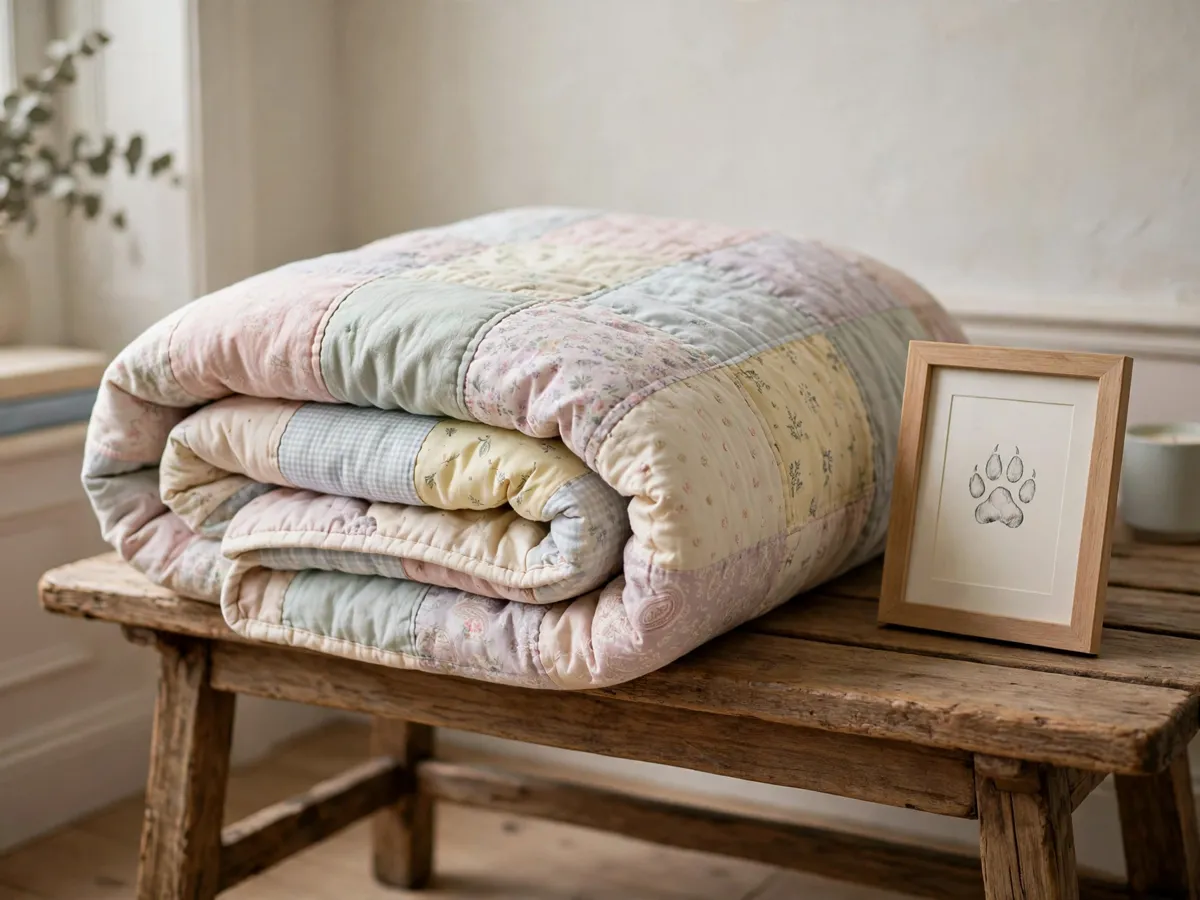
Why the cloth, and why not the whole closet
A memorial blanket is not a scrapbook sewn together. It is a small number of pieces of cloth worked into something that gets used, and the restraint is the whole craft. Twelve shirts in one top reads as a laundry pile; three blocks and a plain backing read as a decision. So the first job is not cutting. It is choosing, and choosing means holding each item and being honest about whether it still carries anything.
Cloth also has an advantage nothing else in the house has: it is already familiar to the animal. The sweat on a collar-side shirt, the fur pressed into the nap of a worn sweater, the chewed hem of a flannel that lived on the floor by the bed. Those marks are the reason a blanket reads differently from a photograph. They cannot be added later, and they are the part worth cutting around.
One warning before the rotary blade comes out. Wash everything you intend to cut, even the piece with the fur on it, and dry it flat. Unwashed cloth shrinks at a different rate than the backing, and a top that is flat on the table goes wavy in the wash. If a garment is too fragile to launder, do not cut it. Take a square from a hidden seam allowance instead, keep the garment whole, and let the small block do the work.
Gathering the cloth, and the two-cloth rule
Sort the pile into three heaps and stop there. The first heap is the memory cloth: the shirt, the sweater, the flannel, the bandana the animal slept on. The second is the structure cloth: a sturdy cotton, quilting weight, in a color you would actually look at. The third is the backing and the binding, which is plain cloth bought for the purpose. The memory heap is the smallest of the three, and that is normal.
Here is the rule that saves the project. Memory cloth is almost always weaker than structure cloth, because it is old, worn, or washed thin from love. A favorite shirt is usually the softest thing in the drawer and the weakest of the pile. So never let a memory square carry weight on its own. Pair it with a sturdy neighbor, back it with a second layer of cotton, and let the blend hold the structure while the memory cloth does nothing but be seen.
Cut generous and trim later. Squares cut from worn cloth pull apart at the corners when they are handled, so cut a little wide and take the seam allowance off afterward rather than before. Press every piece flat before it joins another, and lay the top out on the floor once, in daylight, before anything is stitched. A block that looks right on the bed will look different against a wall, and moving an unstitched square costs nothing.
The keepsake square: fur, print, and one layer of cloth
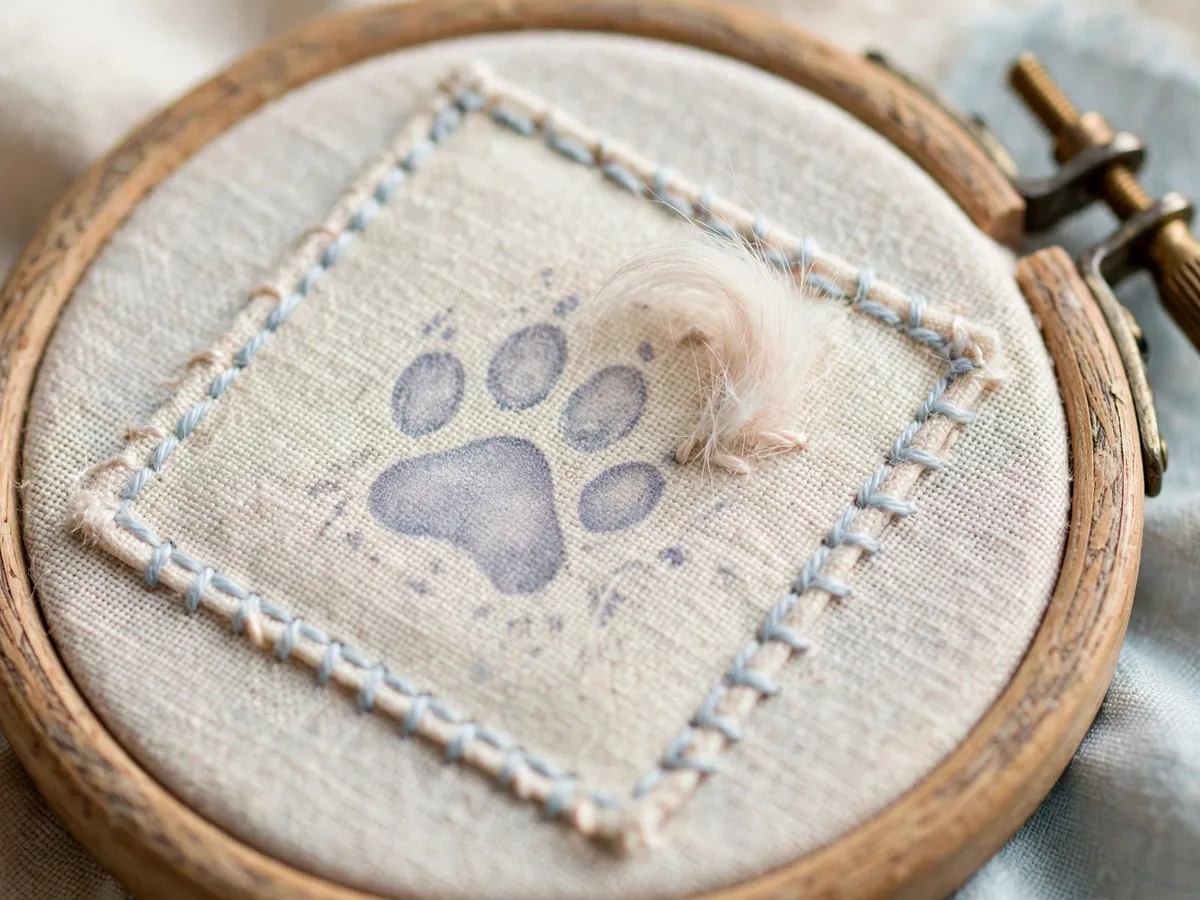
Every memorial textile on this hub has one block that carries the animal, and the rest of the piece is built around it. The square is the smallest version of that idea: a palm-sized block that holds a combing of fur and a paw print between two layers of cloth, and can be stitched into a quilt, hung on a wall, or set in a frame on its own.
Two layers, one opening. Cut the front and the back from structure cotton, place the fur on the front layer, and stitch around three sides with the fourth left open. Turn it right side out through the opening, press, and close the last side with a few small slip stitches. The fur is held inside the block rather than glued on top of it, which is the difference between a square that survives a wash and one that does not. If the print is on paper, do not bury it. Print it onto cotton fabric and cut that as the front layer, because paper in a sealed block stays damp and marks the cloth around it.
How much fur is less than people fear. A combing is enough, and a combing is what a brush gives in one pass over a coat. The fur page covers the other ways a lock is held, in resin and in a bead, and this article does not repeat those steps. A square needs a wisp, not a shearing.
One block, a cushion, or a whole throw
The piece has three honest sizes and the right one is decided by how much memory cloth exists, not by ambition. A single keepsake square with a frame is a finished project. A cushion cover with the square set into one face uses two blocks and an afternoon. A lap throw built from a row of blocks uses six to nine and is the largest thing worth attempting on a first pass. A bed quilt is a different order of work entirely, and it deserves its own month rather than a weekend stolen from something else.
Build the top in rows and press each seam open as it goes. Worn cloth puckers when seams are stacked, and a pressed seam is the cheapest fix in the craft. Join memory squares with plain sashing between them: a strip of structure cotton on every side gives the eye a place to rest and gives the weak cloth a frame. The sashing is not filler. It is the reason a blanket made of old shirts looks designed instead of salvaged.
Keep the layout asymmetric on purpose. One memory square, a wide field of plain cloth, and the piece reads as a keepsake with room around it. Twelve squares in a grid reads as a sampler. If a second animal is later added to the same blanket, the empty field is where that block goes, which is the practical argument for not filling every slot on the first pass.
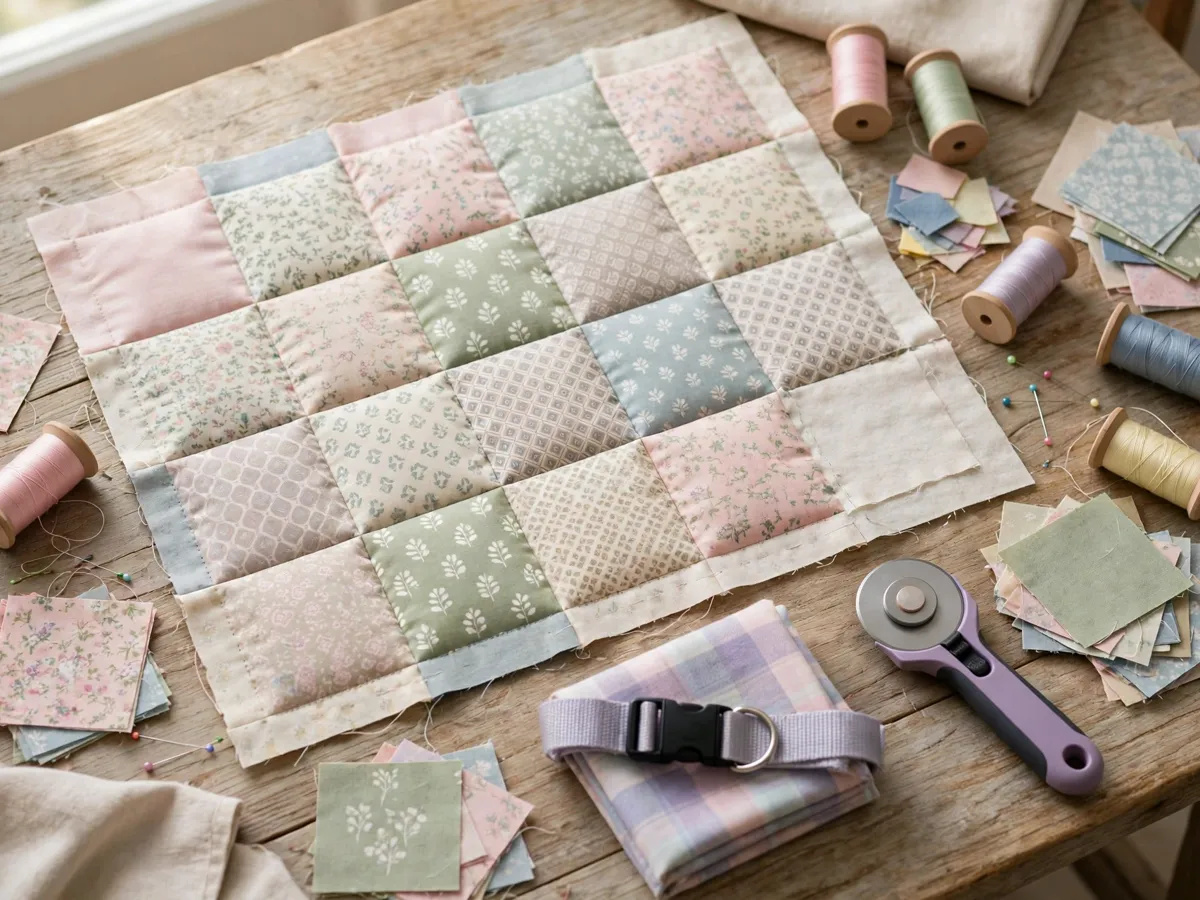
Batting, binding, and the use-or-shelf decision
Decide this before the layers go together, because it changes what goes inside. A piece meant to be slept under needs batting, and it needs a washable one, and it needs to be quilted through well enough that the batting does not migrate to one corner after a season in the machine. A piece meant for a cupboard or a frame needs none of that. Skip the batting, skip the heavy quilting, and store it flat in the box it was made for. The mistake that ruins a keepsake textile is a beautiful shelf piece that gets pulled into service and then frays at every fold.
Binding is the part that determines how long the piece lasts, and bias binding is the part people skip. A straight-grain strip will not turn a corner smoothly on a quilt with a thick stack, so it pulls and eventually tears at the point. Cut the binding on the bias, join the strips into one long ribbon, and stitch it to the front, wrap it, and hand finish the back. It is the slowest step in the project and the only one that cannot be redone later without unpicking the whole edge.
Thread matches the cloth, not the mood. A memory square of worn cotton stitched with a heavy decorative thread cuts itself. Use an ordinary all-purpose thread in a weight suited to the fabric, and let the color do the work of highlighting the block. Wash the finished piece cold, lay it flat to dry, and never put a keepsake square in a dryer. Fur trapped between layers does not survive heat, and neither does the nap of an old sweater.
Memorial blanket and quilt questions
Do I need a lot of fur for a blanket?
No. One block takes a combing and a little cloth besides. The fur page covers how a lock is held in resin or in a bead; here it is stitched inside a square and set among fabric you already own.
Which fabric should I not sew with?
Anything washed thin. A favorite shirt is usually the softest cloth in the drawer and the weakest of the pile, so run it beside a sturdier cotton and let the blend carry the structure.
What do I do with it once it is finished?
Decide before the binding goes on whether the piece is for use or for the shelf. A blanket meant to be slept under wants a washable batting; one meant for a cupboard wants none, and it will stay in the box it was made for.
Save this blanket and quilt guide
Pin it before the cloth comes out of the drawer, so the two-cloth rule and the use-or-shelf decision are handy when the cutting starts. The Pet Loss Memorial collection holds the clay print, the frame build, the stone and garden projects, and the fur keepsakes that sit beside this one. If the fur is the part you want to settle first, the pet hair keepsake ideas page covers resin and beads, and the DIY pet memorial frame page covers display for a square you would rather hang than sew into a blanket.
Washed cloth only | weak cloth gets a sturdy neighbor | batting only for a piece that gets used | binding on the bias.
For informational purposes only.