 PawStyle Daily
Pet Loss Memorial & Rainbow Bridge
Marble Pet Memorial Urns: Stone Choices and Engraving
A stone urn is the memorial that carries the weight of the loss on purpose. It does not fold away into a drawer, it does not need a battery or a frame, and it stays where it was set for as long as the household wants it there. Marble is the classic choice for a reason: it takes a polished face, it holds a cut letter crisply, and its veining means no two urns look alike. It is also the choice people buy on a hard day and then live with for years, so this page covers what the stone actually asks in return, how engraving depth changes what the shelf reads, and where a heavy object belongs in a home with cats, children and a busy floor.
By PawStyle Daily · Updated 20 November 2026
Good to know: cut lettering, never printed · a low shelf with a deep face · indoor stone stays indoors in a frost · take the time on the wording.
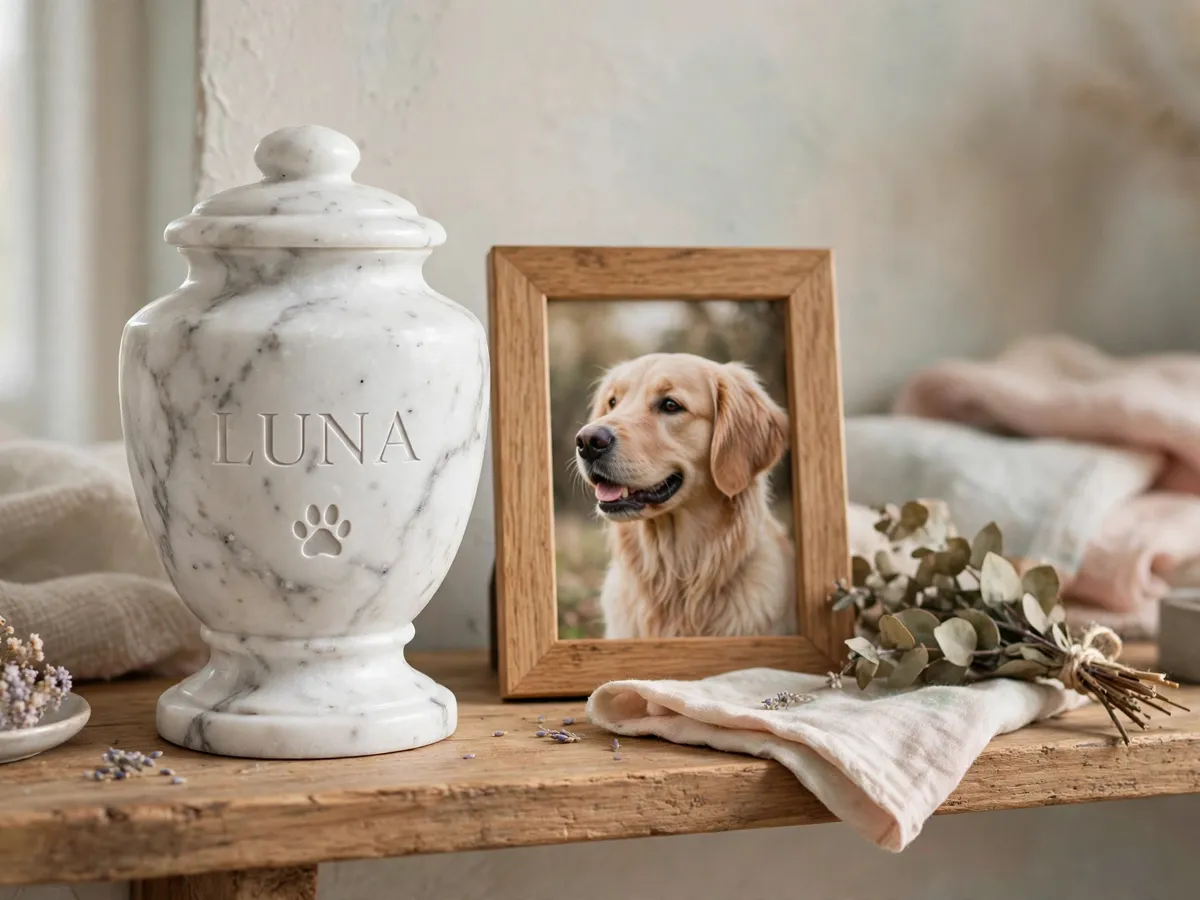
What a stone urn is for
An urn gives the remains a place with a lid on it. That is the practical job, and it is worth saying plainly, because a household choosing memorial keepsakes often starts with the decorative options and arrives at the urn only when the question of where the ashes live comes up. Stone answers it in a way a wooden box or a ceramic jar does not: permanent, heavy enough to stay put, and readable as a deliberate object rather than a container. A cabinet and an open shelf are both ordinary places to live with one.
The second job is the surface. A polished stone face carries a name, two dates and a small mark, and those three lines turn a container into this pet's memorial. That is why the stone choice and the engraving choice matter more than the shape: the shape is what the shelf looks like, and the lettering is what the household reads. The pet memorial gifts page covers the keepsakes that share the shelf, from the paw cast to the framed portrait, so the urn can be read as one part of a larger arrangement rather than the whole of it.
Marble, granite and onyx
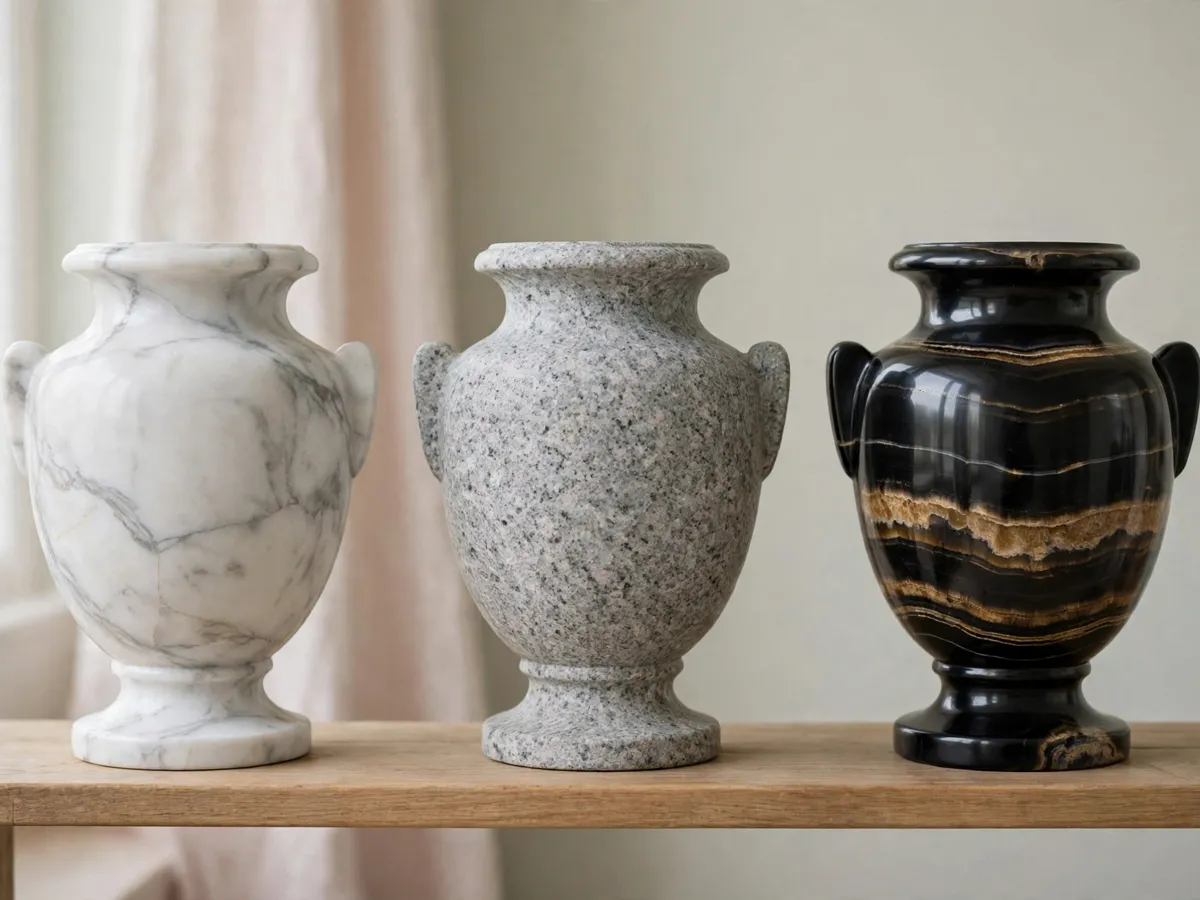
Marble is the soft, veined one, and it is the stone that looks like a memorial. It polishes to a warm matte shine, the grey veins run differently through every block, and the lettering cut into white marble reads clearly from across a room. Its trade-off is that marble is a porous stone, so it takes on colour from spills and it etches where an acid touches it. A household that wants the classic look and keeps the urn inside, away from anything that could be knocked over onto it, is the household marble suits.
Granite is the hard, speckled one, and it is the practical choice. It takes a polish that reads as glass under light, it shrugs off spills, and it holds an etched line as sharply as marble does. The look is darker and busier than marble, which suits a shelf with warm wood and reads well in black or deep grey. Onyx is the decorative one: translucent, boldly banded, and often backlit so the light comes through the stone. It is the most striking of the three and the least forgiving, since the banding can swallow a small line of lettering. Whichever stone the household picks, the engraving test is the same one, and it is the next section.
Engraving: depth is the whole decision
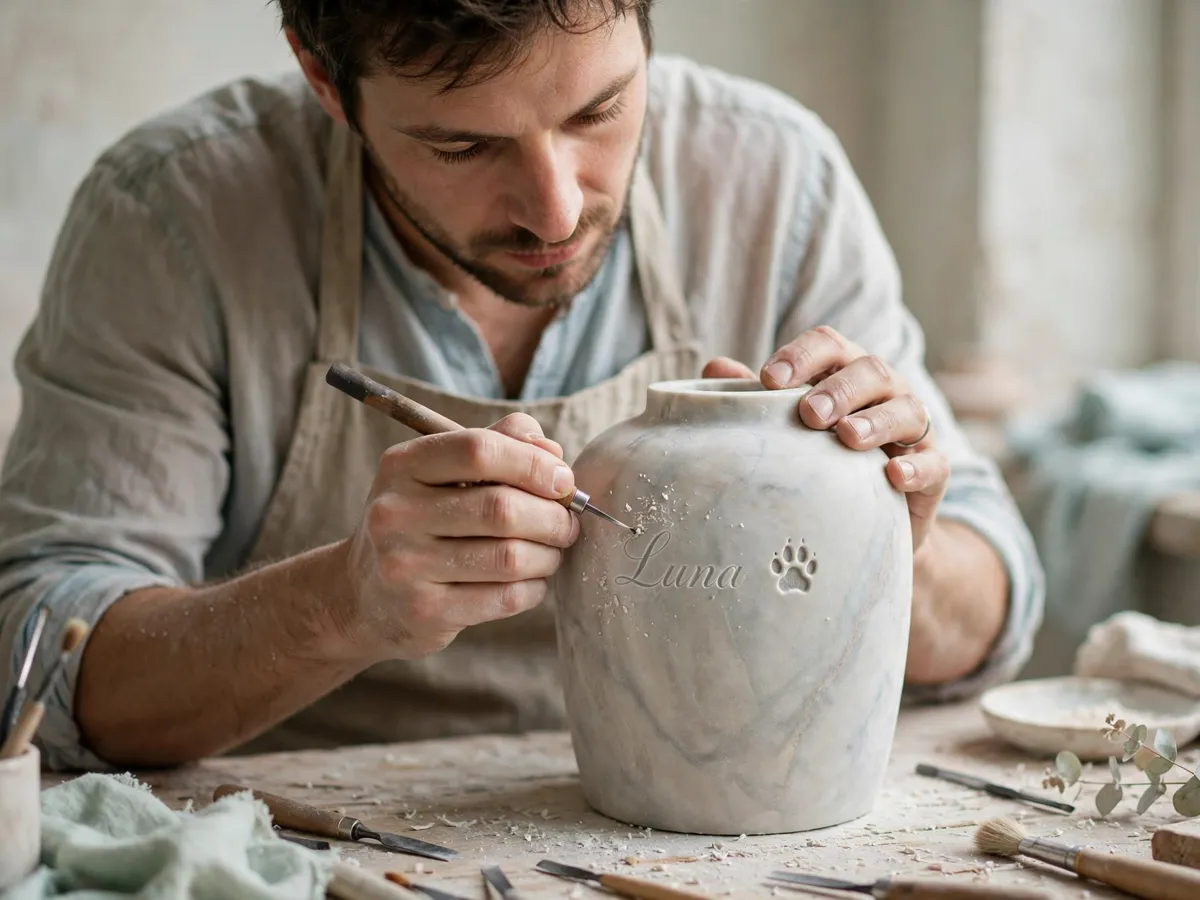
The only durable lettering on stone is lettering cut into it. A deep-cut engraving, worked with a rotary tool or a hand chisel, leaves a groove that holds shadow, so the name reads even when the urn is dusty. A laser etch leaves a frosted pale mark on a polished face, which is crisp, repeatable and the cheapest of the two, and it is what most online sellers use. Both survive. What does not survive is surface printing: a decal, a painted name or a heat-transferred vinyl reads beautifully on day one and fades, chips and lifts within a year on any face that gets handled or cleaned.
The layout is worth more thought than the font. Three lines is the working limit on an urn face: the name, the years, and one short mark such as a paw, a silhouette or a single line of words. Larger lettering reads from across the room, and small script that looks elegant on the seller's mockup turns to blur on a curved stone. Ask for a proof before the cut, and read the proof at arm's length rather than at phone-screen distance. The paw-print motif is the one detail worth sourcing from a real print, either the impression a clinic took or a traced outline of the pet's own paw, because a generic stock paw is the one element on the urn that reads as ordered rather than made.
Where a stone urn belongs in the house
A stone urn is heavy on a small footprint, the combination that falls over. The display rule follows: a low shelf, a deep face, no edge traffic in front of it. A mantel at cat height is the worst spot in most homes, because a cat that patrols high surfaces treats the urn as a landing, and a tipped stone urn does not bounce. Inside a cabinet, on a floor ledge, or on the deep back shelf of a bookcase, the urn stays where it was set.
The other display question is light. Marble and onyx read best in soft daylight from the side, which shows the veining and lets the cut lettering hold a shadow line; a spot under a warm ceiling lamp flattens both. A household that wants the urn visible but not handled tends to land on a shelf at eye level in a room used daily, behind the row of books or beside the photo frame. A felt pad under the base keeps a polished stone from marking whatever it sits on, and it stops the urn creeping across a smooth shelf every time the house settles. For the memorial that shares the shelf and gets lit on the anniversary, the memorial candle ideas page covers the candle versions, including the unscented picks a shared room wants.
Caring for stone that stays
Stone urns need almost nothing, and the almost nothing matters. Dust with a dry or barely damp cloth, and skip anything acidic: lemon cleaners, bathroom sprays and general-purpose multi-surface products etch marble on contact and leave a dull patch exactly where the wipe went. Granite takes the same treatment kindly and forgives more. A cloth with plain water and a drop of mild soap, then a dry pass, keeps a polished face reading as polished.
Frost is the one environmental hazard worth naming. A marble or onyx urn left on a covered porch through a freezing season takes moisture into its pores, and the freeze cycle works at the stone from the inside until a face cracks or a corner spalls. Garden stone memorials are cut and sealed for that life, and the painted river rock on this site's memorial page is made for the soil, but an urn bought for indoors stays indoors. The last care note is the one nobody expects: the lettering can be refreshed. A deep-cut groove that has filled with decades of shelf dust takes a renewed cut from any engraver, so a name worn soft by the years can be sharpened rather than replaced along with the stone.
Stone urn questions
How do marble, granite and onyx urns differ?
Marble shows veining and a soft polish, granite has a speckled hardness, and onyx is translucent with bold banding. Each takes engraving differently.
What engraving lasts on a stone urn?
Deep-cut or laser-etched lettering into polished stone. Surface printing wears; cut lettering stays readable for decades indoors or out.
Where can a stone urn sit safely at home?
A low, stable shelf away from edge traffic. Stone urns are heavy, so the surface matters as much as the spot.
Save this stone urn guide
Pin it before the order form, and read the engraving proof twice before anyone cuts the stone. The Pet Loss Memorial collection holds the keepsake gift list, the candle set and the garden projects that sit beside the urn.
For informational purposes only.
The urn page reads marble, granite and onyx for the house; engraved versus natural stone takes the same question outdoors.