 PawStyle Daily
Pet Loss Memorial & Rainbow Bridge
Custom Pet Portrait Memorial Gifts to Keep
A memorial portrait is the piece made after the pet is gone, and the decisions that shape it are not the ones that shape a portrait made in ordinary time. In ordinary time the questions are style, artist, terms. After a loss the question is simpler and harder: where will this live, and can the person receiving it bear to look at it yet. This page owns only those decisions. Which format suits a shelf or a small box instead of a wall. Which photo to send when the only pictures you own are old. What goes on the name plate. And when to hand the piece to a friend. For the commission itself, the commissioning a portrait page walks the steps in order, and this page does not repeat them.
By PawStyle Daily · Updated 20 November 2026
Good to know: a shelf piece can be moved, a box card stays private, the clearest face beats the prettiest photo, and a surprise portrait is the one to leave for later.
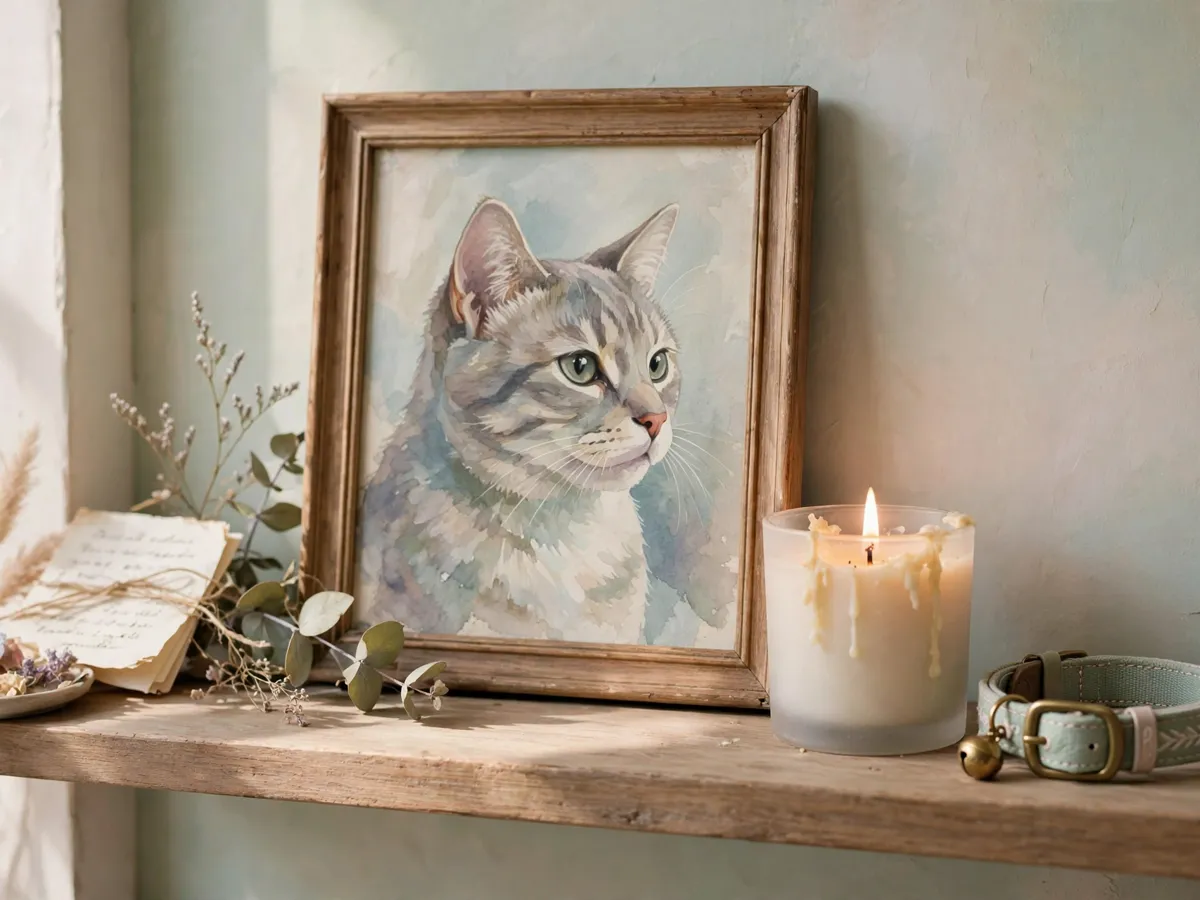
What changes when the portrait is a memorial
A portrait painted in ordinary time is decoration and celebration. A portrait painted after a loss is an object a household lives with on hard days as well as good ones, and that shifts every choice below it. The style matters less than the format. The terms matter less than the timing. And the photo matters more than anything, because the photo is the last record of a face that is no longer in the room.
The portrait cluster here already owns the process: how to commission, what an artist asks for, how the watercolor and the oil versions differ, how to bring several pets into one frame, how to paint the thing yourself. This page sits beside all of those and holds only what they do not. A household choosing between a canvas and a plaque is not asking about style. They are asking how much room the grief gets in the house, and for how long.
Shelf, wall, or box: where the piece lives
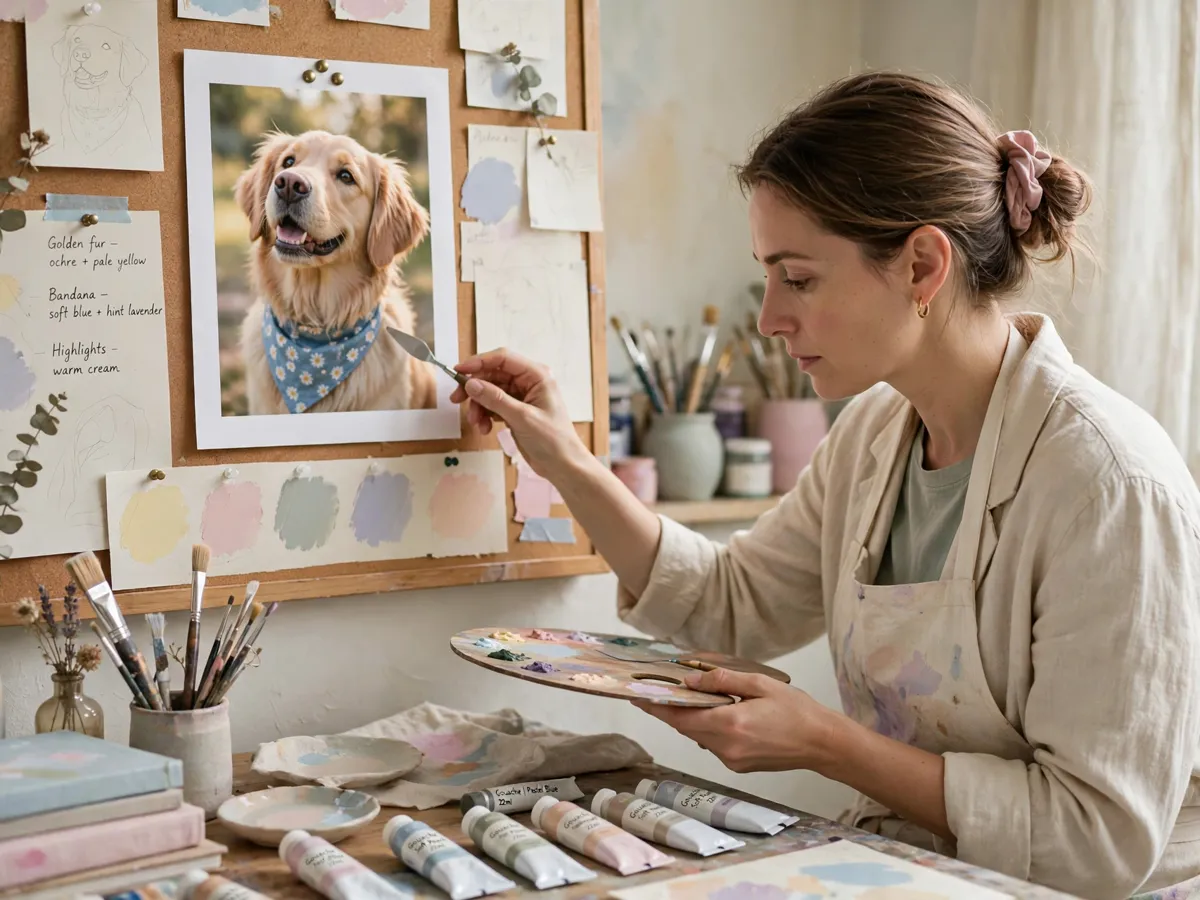
Format decides where the piece lives, and where it lives decides whether anybody looks at it. A large canvas commits to wall space. A grieving household may not want a face on the wall in the first stretch after a loss, and a canvas that arrives then can end up turned toward the wall or stored in a closet until the person is ready. A wall piece is a commitment to one room and to a daily encounter, which is the right answer only when the person has chosen that encounter themselves.
The shelf piece is the format most households reach for first. A small framed print or a painted round plaque sits where the person already sits, on a bookshelf, a mantel or a bedside table, and it can be moved without taking anything off the wall. On a day when the face is too much, it can be turned down or carried into another room. On a day when the face is what the person wants to see, it is right there. That mobility is the whole point at the start, when nobody in the house knows yet what they can bear.
The most private version is the printed portrait card inside a keepsake box. A card the size of a postcard, printed from the painting and slipped in beside the collar and a name tag, is the one a person opens when they choose to and closes when they choose not to. It asks nothing of the room it sits in and nothing of a visitor. It also travels. A box goes to a new apartment, a new city, a different shelf, and the portrait goes with it.
Choosing the photo when the pictures are old
The photo is the part people worry about most, and the worry usually sits on the wrong thing. The question is not whether the picture is a good one. The question is whether the face is clear enough for an artist to read a likeness off it. Eyes and ear shape carry that likeness more than coat color or pose, so a photo where the face fills the frame gives the artist what they need even when the rest of the picture is rough.
A phone shot taken in a bright room, with the light in front of the pet rather than behind it, is the working reference. A second frame from the side shows the head shape and guides the pose. When the only picture you own is old, the same rules apply: a clear face in an old photo beats a recent one where the face is in shadow or turned away. If there is a single soft frame and nothing else, send it anyway and let the artist say what they can do with it. Portraits painted from imperfect references are common, and a piece that eases off the detail still reads as this animal.
The one photo that does not work is a photo with no face in it. A pet shot from behind, or asleep somewhere the features are hidden, gives an artist nothing to start from. If that is all there is, look for a second picture on a friend's phone or in an old clinic record. The likeness lives in the face, and the face has to be visible.
The name plate and what goes on it
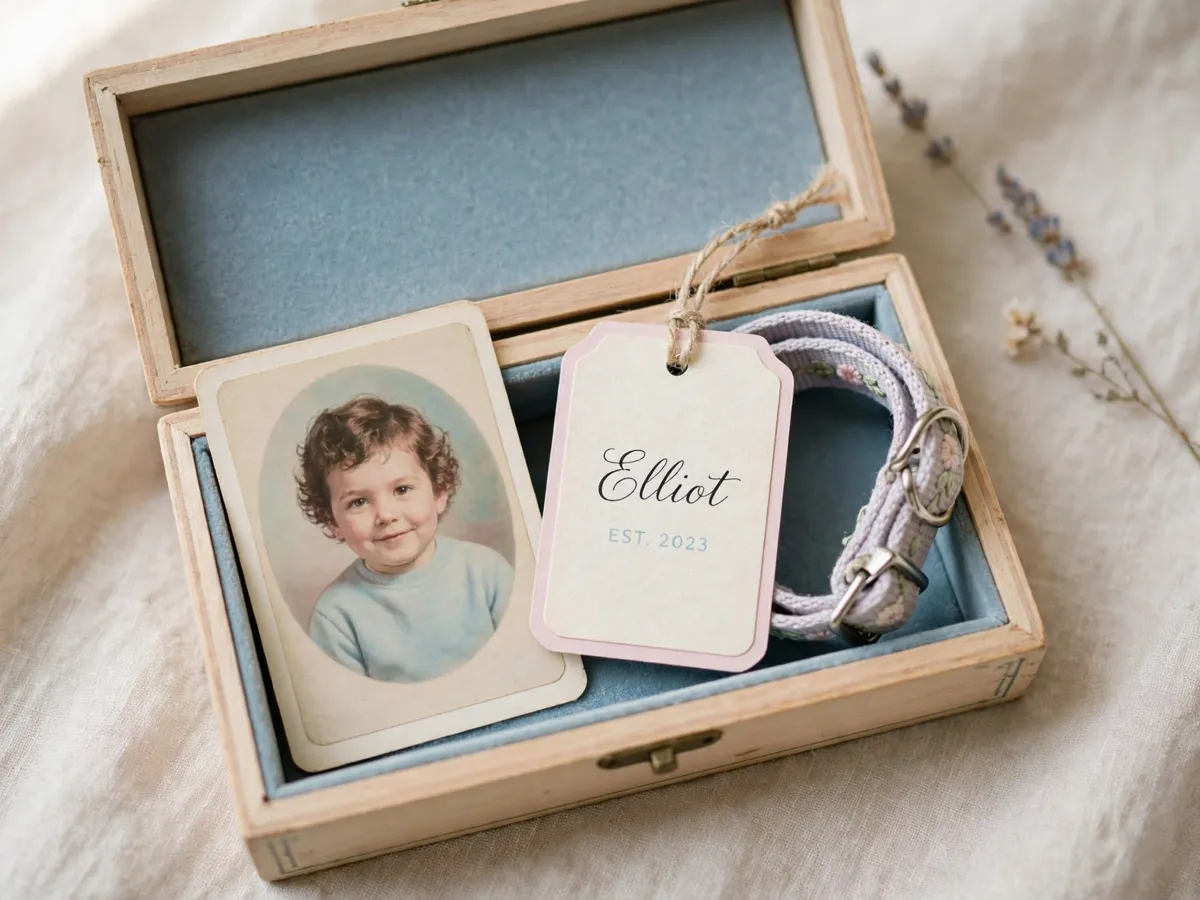
The engraving carries the name when the portrait alone is not enough. A plate on the frame, a tag beside the print, or a line cut into the back of a plaque labels the piece without putting words over the face of the art. The choices are small and they matter. A name on its own reads one way. A name with dates reads another. A household ready to mark the dates will want them cut now, and a household that is not will want the name alone, with room left to add the rest later.
Engraving goes on the frame or the tag rather than on the painting, so it can be changed without touching the piece. A brass plate on the bottom edge is the classic placement, and it sets the name in lettering that reads as a label rather than as part of the art. A tag beside the print in a box takes the name on one side and the dates on the other, and the box can hold it face up or face down. Choosing between dates now and space later is the choice between a piece that marks a finished life and one that lets the household decide when that feels right.
Giving a portrait to someone who is grieving
A portrait given as a sympathy gift is the most generous and the most fragile thing you can send, and the timing decides whether it lands as a gift or as a shock. A piece that arrives in the first stretch after a loss, before the person has found their footing, can feel like an assignment to grieve on somebody else's schedule. The same painting offered later, once the hard weeks have passed and the person can choose to look at it, lands as what it is: a piece of their animal that they get to keep.
The working approach is to ask for a photo first. Tell the friend you want a portrait made and ask which picture they would want used. The question says what you are planning without putting a finished piece in their hands before they are ready for one. If they cannot choose a photo yet, send a printed card of a sketch and offer the painting when they can. The friend sets the timing, not the giver, and a card in a drawer is easier to leave than a canvas on a wall.
A portrait is also not the only memorial gift, and it is not always the right one. For a household that is not ready for a face on the shelf, the memorial gift ideas page collects the candles, the stones, the frame keepsakes and the journals that carry a name without carrying a likeness. A portrait is the most personal of them, and the one that asks the most of the person receiving it.
Memorial portrait gift questions
Which portrait format suits a memorial gift?
A small framed print or a painted round plaque. A large canvas asks for wall space a grieving household may not want yet, and a shelf piece can be moved.
What photo should I send the artist?
The clearest face shot you own, even if the rest of the picture is rough. Eyes and ear shape carry the likeness, and a second side view guides the pose.
Is a portrait a good sympathy gift for a friend?
Yes, when it is not a surprise. Ask for a photo first, or send a printed card of a sketch and offer the painting once the hard weeks have passed.
Save this portrait memorial guide
Pin it before the conversation with a studio, and keep the format notes handy while the household decides. The Pet Loss Memorial collection holds the keepsake gift list, the frame and journal guides, and the garden projects that sit beside this one.
For informational purposes only.