 PawStyle Daily
Pet Holiday Costumes & Party
DIY Dog Advent Calendar: 24 Treat Pockets
A dog advent calendar is one afternoon of folding and one small moment every morning for 24 days: a pouch comes down, a piece the size of a pea goes out, and the day starts with the dog at the calendar instead of the biscuit tin. Paper pouches, mini tins or a felt board all hold the same 24 pockets, and none of them needs a sewing machine. For informational purposes, consult your vet before new foods go into the pockets.
The build is the easy half. The other half is the label check, which happens at the shop rather than at the calendar: a pocket is only as good as the piece inside it, so this page keeps every piece small, the sugar-free candy far away from the pouches, and the homemade batch labelled with a date before it goes into the freezer.
By PawStyle Daily · Updated 16 November 2026
Good to know: one afternoon to build · paper, tin or felt · 24 small pockets · label check before the batch.
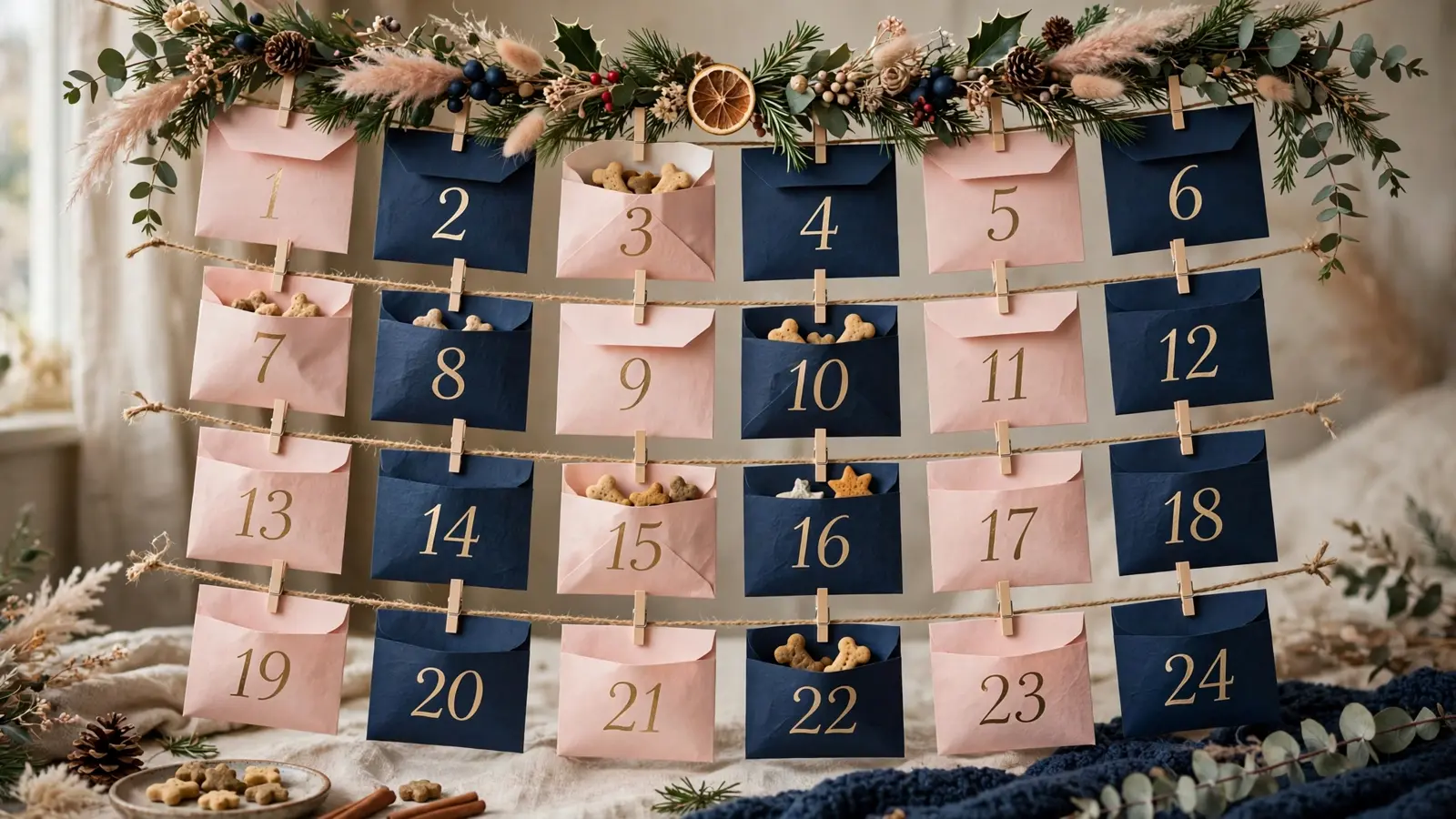
1-3. Three builds: garland, tin tower, felt board
All three builds hold 24 pockets and hang on a wall, a shelf or the side of a cupboard. Pick the one that matches the craft drawer you already own, because a calendar that needs a second shopping trip is a calendar that never gets finished.
- Paper pouch garland. Fold 24 kraft-paper pouches, punch two holes in the top of each, and thread them along a length of twine with a wooden peg between every pouch. Number the front of each with a marker, fill, seal with a paper clip, and hang the whole run at shoulder height.
- Mini tin tower. Collect 24 small tins with lids, stack them in four rows of six on a shelf, and number the lids. A strip of magnet tape along the back of the bottom row stops the stack sliding when a hand reaches in.
- Felt pocket board. Cut 24 felt rectangles, glue or stitch them in six rows of four onto a dowel-hung backing, and write the numbers on the felt with a fabric marker. Felt takes the most weight and the least tape of the three builds.
One afternoon · 24 pockets · shoulder height, every build.
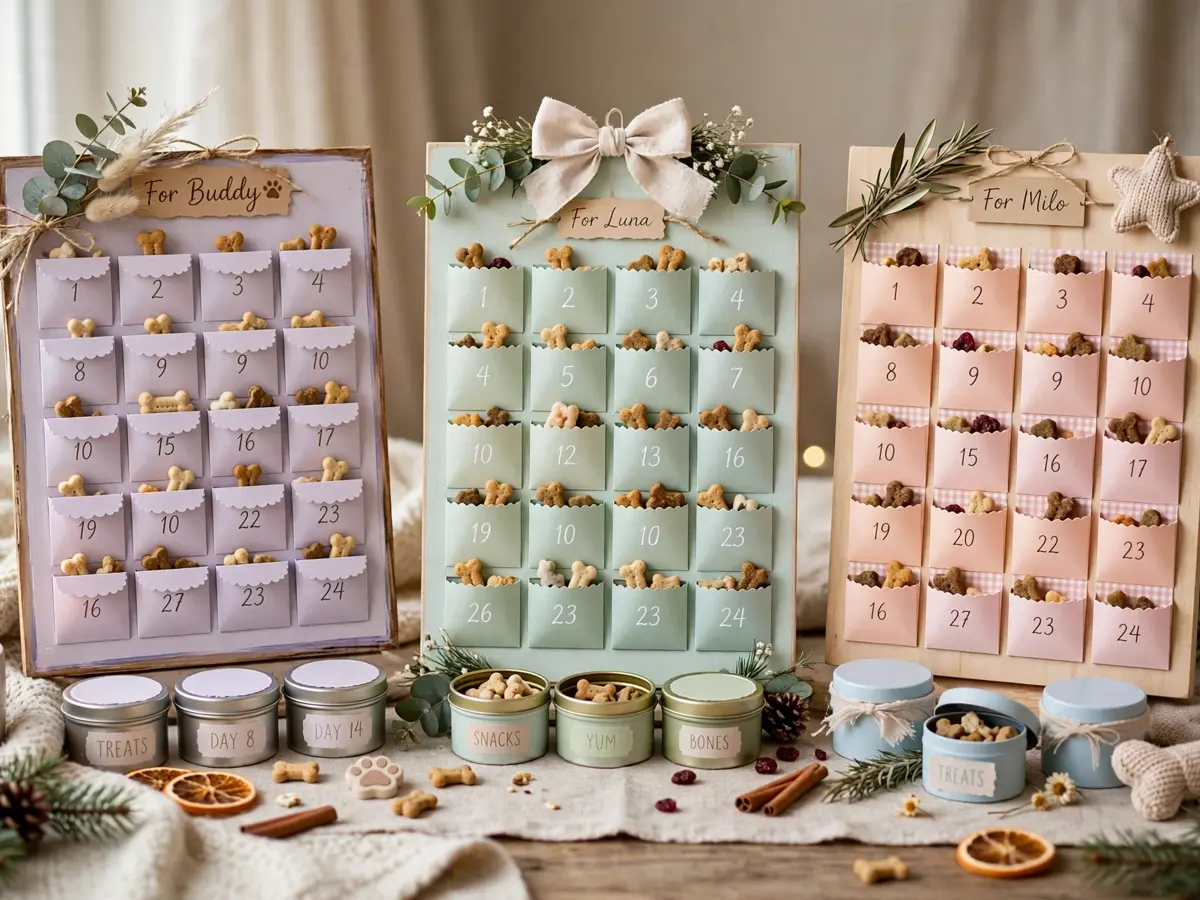
What goes in the 24 pockets
A pocket holds one small piece, never a handful. Three families cover the whole run: a training treat from the usual jar, a homemade bite from a weekend batch, and a vegetable snack. Small pieces of carrot, broccoli, green beans or cooked pumpkin make easy snacks.
Non-food pockets keep the run interesting for a dog who already owns every treat: a folded bandana, a replacement ID tag with the phone number on it, a mini rope toy, one tennis ball. Slide the non-food piece into a paper sachet so the pouch does not rattle, and put it somewhere in the middle of the run rather than in the first pocket.
Keep the wrapping simple: paper, twine and a peg. Ribbon, foil and cellophane all end up in the same mouth that finds the treat, so the pocket itself stays plain and the surprise lives inside it.
The label check comes before the batch
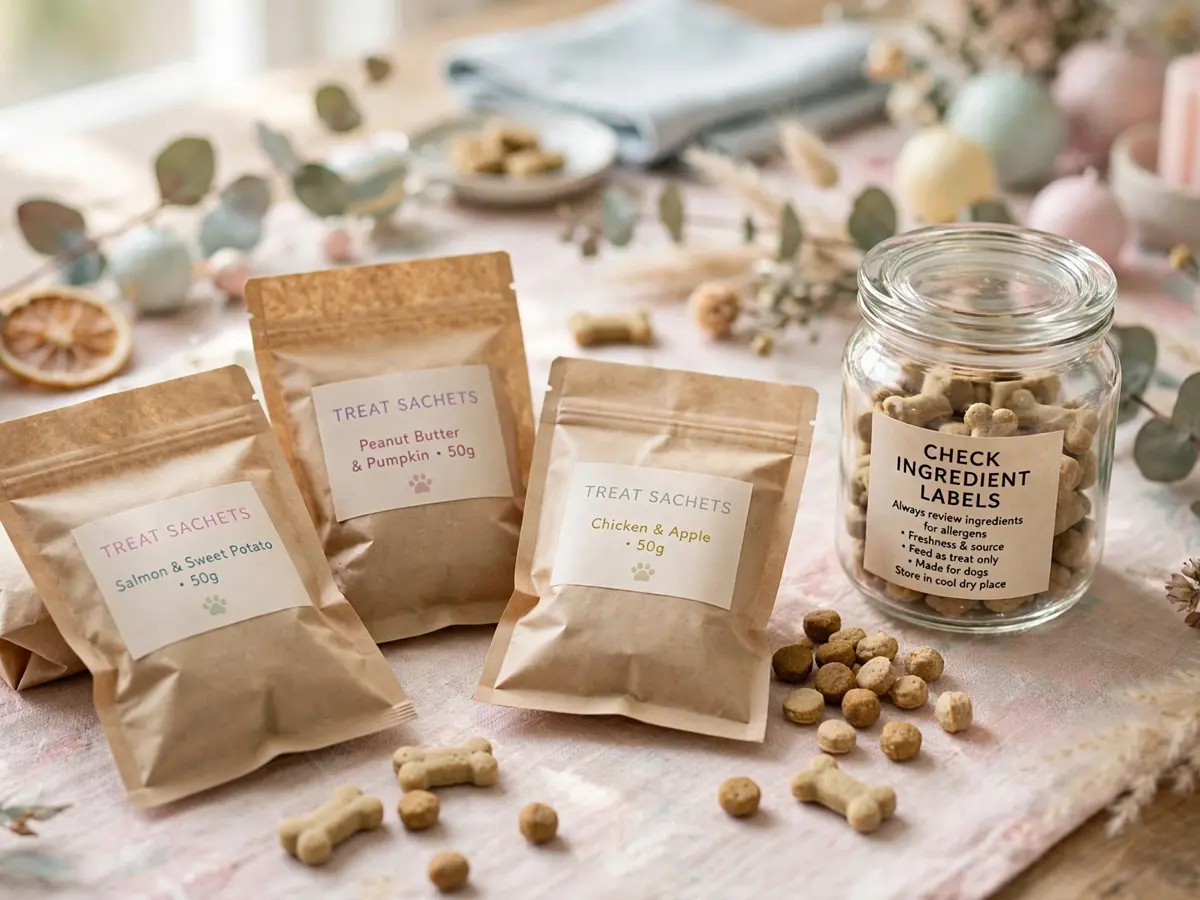
Every piece in a 24-pocket run passes the same check, and the check happens at the shop rather than at the calendar. Only a few peanut butter brands add xylitol, so read the ingredient label on the jar before a spoonful goes in the bowl.
Two minutes with the label is the whole insurance policy. Xylitol is a sweetener that can drop a dog’s blood sugar and hurt the liver, so it never goes into a homemade treat.
Sugar-free anything gets the same treatment. If a product is labeled sugar-free, check its ingredient list for xylitol before it goes anywhere near a dog, and that includes the mints in the cupboard beside the treat jar.
Chocolate is the other line that never moves. Chocolate is toxic to dogs, so no chocolate, cocoa or coffee ever goes into a treat, and that covers the foil coins wrapped for the humans in the same kitchen.
Read the jar · read the bag · chocolate stays with the humans.
One pocket a day, and the five percent line
Treats should stay at no more than five percent of a dog’s daily calories, so keep the pieces small. That one line is the whole size rule for the run: the bowl holds the day’s food, the pocket adds a taste on top, and 24 small pieces spread across December stay inside the line.
Snap or cut each piece until it disappears in one bite. A big piece is not a bigger treat, it is a pocket that needs two visits and a dog that learns to sit by the calendar and wait for more. One pocket a day, handed down by a person, keeps the ritual in the household rather than in the dog’s teeth.
The homemade half, and the freezer
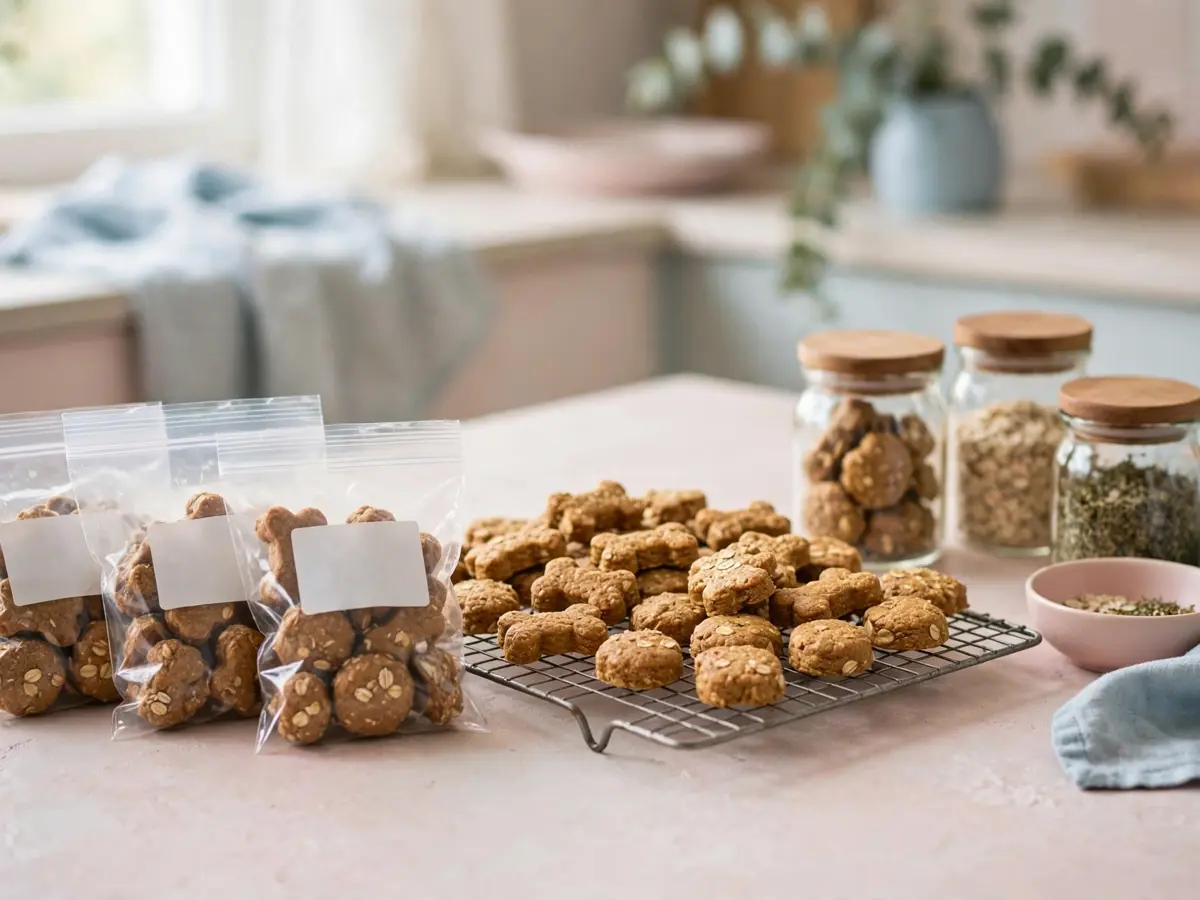
A weekend batch covers the homemade pockets. Roll, cut and bake, then cool everything on a rack before a piece goes anywhere near paper. Homemade dog food keeps about three days in the refrigerator and a month or two in the freezer, depending on how it’s sealed.
That storage line sets the build order: batch first, most of it frozen flat in a bag, one pocket’s worth thawed the night before. Write the date on the bag in marker, because a freezer holds a batch far longer than a memory does.
The ten-minute version of the batch is in our no-bake peanut butter dog treats recipe, and the holiday batch with pumpkin is in the Christmas peanut butter and pumpkin treats recipe. Both fill a paper sachet without crumbling.
The day-card list
A printed card on the fridge ends the daily negotiation. Write 24 lines, one per pocket, and let the list decide what goes in the pouch. Ours reads like this, and it repeats the favourites rather than hunting for a new idea every morning:
- One training treat from the jar
- Two carrot coins
- A broccoli floret
- Two green beans, snapped in half
- A spoon of plain cooked pumpkin
- A frozen bite from the batch
- A cube of cooked chicken, no seasoning
- A slice of banana
- Three blueberries
- A piece of apple, seeds out
- A plain air-popped popcorn puff
- A small piece of cheese
- A folded bandana
- A replacement ID tag
- A mini rope toy
- A tennis ball
- A puzzle feeder with one treat inside
- A snuffle-mat corner with a treat tucked in
- A paper sachet of dried chicken
- A fresh collar charm
- A sealed sachet from the freezer bag
- A chew stick sized to the label
- A photo of the dog at the front door
- A card for one long walk
What goes wrong with a dog advent calendar
| Problem | Why it happens | The fix |
|---|---|---|
| The dog opens every pocket on day one | The build hangs at nose height | Hang it at shoulder height or above, and hand one pocket down each morning |
| A pocket is empty by lunchtime | The clip was loose and the piece sat at the open edge | Seal with two clips and push the piece to the back of the pouch |
| The tin tower slides | A smooth shelf and nothing behind the stack | A strip of magnet tape or a non-slip mat under the bottom row |
| The puppy chews the pouches | Kraft paper and twine look like a toy | Hang the garland higher and keep the filling in a tin the dog cannot reach |
| The batch is still warm when it goes in | Steam inside a sealed sachet softens the paper | Cool the batch on a rack first, then wrap and seal |
| A pocket gets missed | 24 numbers are not 24 dates | Write the date on the back of each pouch as well as the number |
Nothing in this table is a health question. If a dog eats a whole pocket of something new, call your vet rather than waiting for the day to play out.
Advent calendar checklist
- 24 pockets, numbered and dated, hung at shoulder height
- One piece per pocket, snapped small enough for one bite
- Treats should stay at no more than five percent of a dog’s daily calories, so keep the pieces small.
- Only a few peanut butter brands add xylitol, so read the ingredient label on the jar before a spoonful goes in the bowl.
- If a product is labeled sugar-free, check its ingredient list for xylitol before it goes anywhere near a dog.
- Chocolate is toxic to dogs, so no chocolate, cocoa or coffee ever goes into a treat.
- Batch cooled, sachets sealed, bag dated and frozen flat
- Non-food pockets wrapped plain, no ribbon or foil
- One pocket a day, handed down by a person
Wrapping, and the rest of the room
The calendar sits in a room that is about to fill with paper, ribbon, a tree and a bowl of human sweets. Keep the calendar on a wall away from the tree, put the filling tin on a shelf with a lid, and clear the floor of wrapped food and candy before the pouches come down. A paper clip is enough of a lock for a pouch, and a closed tin is enough of a lock for a kitchen.
For the rest of the December routine, the Christmas fits and stockings guide covers the tree rules and the stocking build, and the stocking-stuffer picks for dogs cover the pieces that go beside the calendar on Christmas morning.
Questions we get about dog advent calendars
What size should one pocket be?
Small enough that your dog finishes it in one bite. Treats should stay at no more than five percent of a dog's daily calories, so keep the pieces small, and a pocket that needs two bites is a pocket that is too full. The pocket is a daily ritual rather than a second bowl.
Can I fill all 24 pockets with store-bought treats?
Yes, and the run stays simple that way. Pick one small training treat from the usual jar and repeat it, or split the run between a store-bought piece, a homemade bite and a vegetable snack. Small pieces of carrot, broccoli, green beans or cooked pumpkin make easy snacks. For informational purposes, consult your vet before new foods go into the pockets.
How do I stop my dog opening every pocket on day one?
Hang the build at shoulder height or above, and keep the filling in a tin on the counter until the morning it goes in. A calendar that hangs at nose height is a calendar a dog can empty in one pass, and a paper clip is not a lock. Hand one pocket down each morning and the routine does the rest.
Can the pockets hold homemade treats?
They can, sealed in a paper sachet so the paper of the pouch stays clean. Homemade dog food keeps about three days in the refrigerator and a month or two in the freezer, depending on how it is sealed. Freeze most of the batch in a flat bag, write the date on it, and pull out one pocket's worth the night before it goes in.
Is sugar-free candy ever okay in a pocket?
No. If a product is labeled sugar-free, check its ingredient list for xylitol before it goes anywhere near a dog. Xylitol is a sweetener that can drop a dog's blood sugar and hurt the liver, so it never goes into a homemade treat, and the human candy bowl stays in a cupboard the dog cannot reach.
What goes in the last pocket?
The one thing the household will remember: a photo of the dog at the front door, a card for one long walk, or the tag for a new collar. A non-food pocket is a good finish to a run of 24, because the calendar ends on an object rather than one more piece of food.
What we use
What we use for the calendar
Paper pouches, twine, treat molds and freezer bags for the 24 pockets, picks in one list.
See what we use →As an Amazon Associate we earn from qualifying purchases.
Save these on Pinterest
Pin the build that matches your craft drawer before December starts. The Holiday & Gifts collection holds the costumes, the cake and the party guides.
Sources
The treat rules and the storage window on this page come from animal-welfare and veterinary publisher sources, not from our own head: