 PawStyle Daily
Cute Pet Wallpaper 4K
Peel and Stick Cat Wallpaper: Walls a Cat Will Actually Use
Cat wallpaper is a different purchase from dog wallpaper, and the difference is not the print. A dog room asks what looks good from the doorway. A cat room asks what the wall has to carry, because the cat lives on the lower half of it: the scratch line beside the sofa, the jump run to the sill, the stretch against the corner where the post stands. Pick the wall by the traffic lane and not by the view, and the panel becomes part of the room instead of a casualty in it. This page owns the cat wall: which surface gets covered, how low the pattern should run, how to hang a panel a cat will lean on, and how to lift it when the lease ends.
By PawStyle Daily · Updated 20 November 2026
Choose the wall by the traffic lane | busy pattern low, quiet field high | hang the panel the cat already uses | warm the corner before you pull | For informational purposes only.
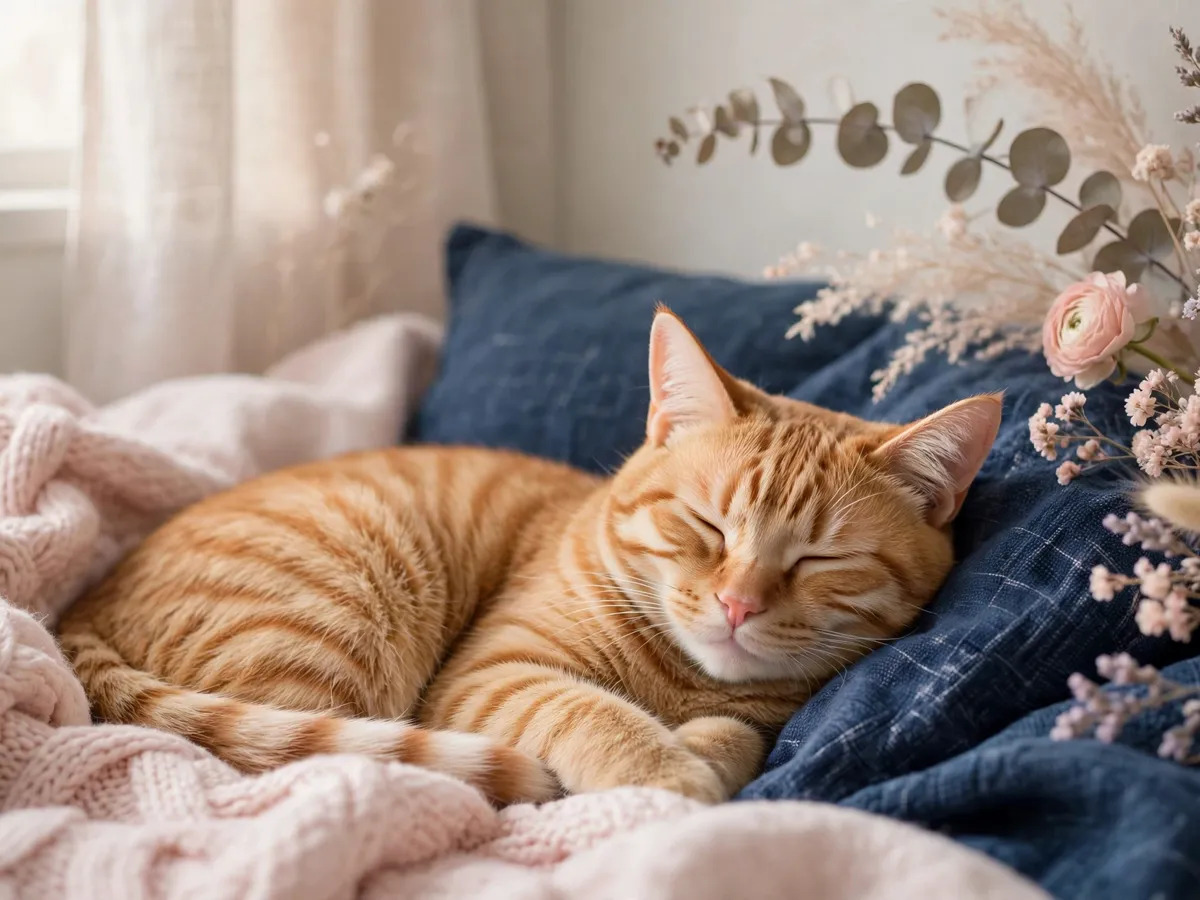
A wall in a cat room has a user before it has a viewer
Every other room is decorated for the eye. A cat room is decorated for a body that climbs it. The cat wakes, stretches against the wall beside the bed, scratches along the base of the wall behind the sofa, runs the length of the room to the window, and launches from a spot near the floor to the sill above. Those four movements draw a map on the wall, and the map is where the wallpaper will live or fail.
Most people pick the wall by standing in the doorway and choosing the surface that faces them. That is the right instinct for a room nobody climbs and the wrong one here, because the wall facing the doorway usually carries the sofa, and the sofa back is exactly where the scratch line runs. The cat does not care which wall photographs best. It uses the wall on the route between the litter corner, the window, and the sleeping spot.
So watch first. Where does the cat stretch? Which baseboard carries the marks? From which spot does the cat launch toward the sill? Those marks are the traffic lane drawn in pencil, and the panel belongs on it. Put the pattern where the claws already are, and the wall stops being the room's accident and starts being its plan.
Reading the traffic lane before you order
Three lanes show up in almost every cat room, and each asks something different of the wall. The first is the scratch line: the strip beside a post, a sofa arm, or a door frame, where the cat stretches upward and the claws come in at the height of a full body extension. This lane is vertical, narrow, and located precisely where the shoulders reach. A panel here takes the most abuse in the house.
The second is the jump run: the wall between a launching spot and a landing shelf. The launch marks the lower part with a push-off and the landing marks the upper part with a grab, which leaves two damage zones with a clean band between them. The third is the corner stretch, where the cat leans its whole weight against the wall beside the post and drags. A post set into a corner turns two walls into one lane.
Once the lane is drawn, the panel choice follows it rather than the reverse. The sibling page on the peel and stick dog wallpaper picks its wall by the sightline from the door and the height of a dog's head against the sofa, which is a lower and wider lane than a cat's. The two pages share the hanging method and split on the picking, because a dog leans and a cat climbs. In a shared room, cover the cat lane and leave the dog lane plain.
The low panel and the field above eye height
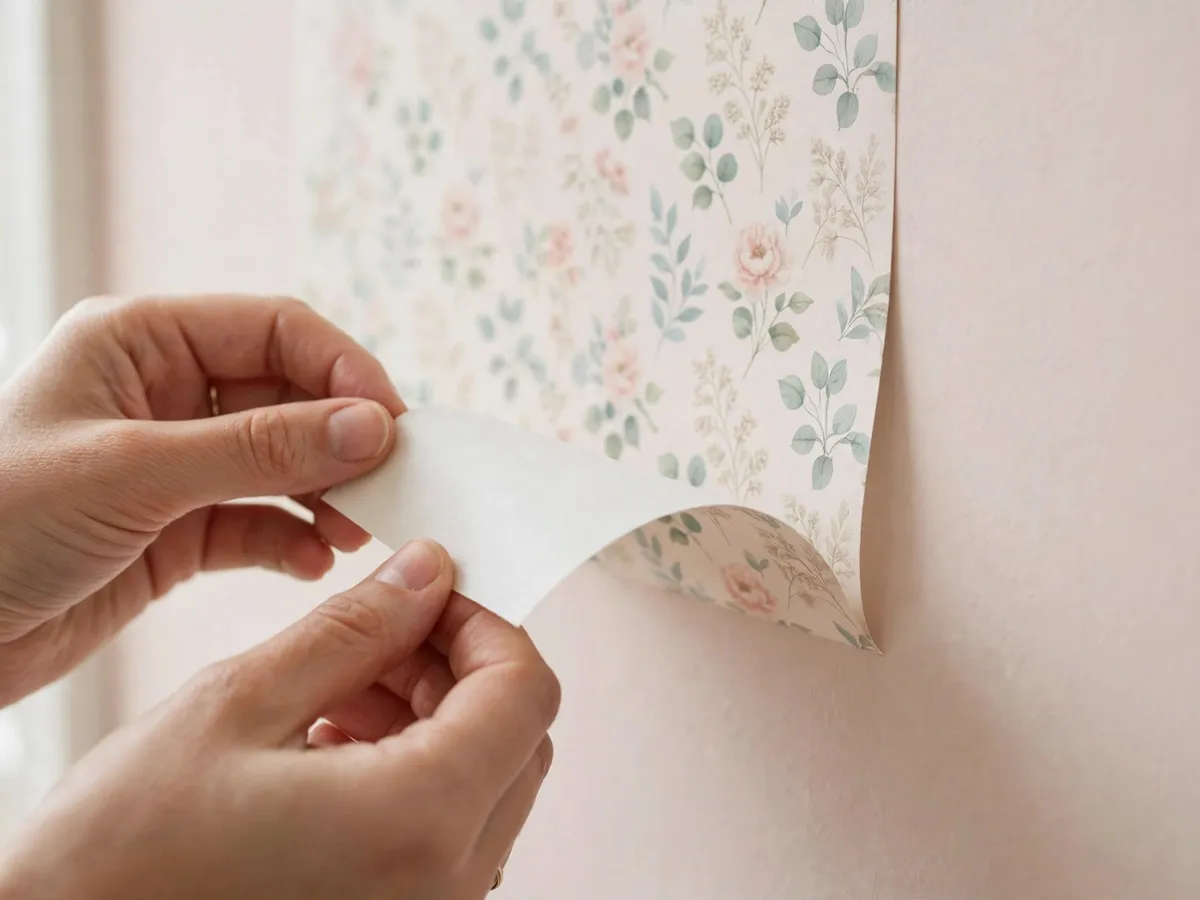
A cat room wall splits into two zones at roughly the height where the cat's shoulders reach in a full stretch, and that split is the whole design decision. Below the line the wall is a working surface: claws, launch pushes, the tail end of a jump. Above it the wall is only a background. So the pattern goes low and the smooth field goes high. A busy, small-scale print on the lower panel scatters light across many edges, and a claw mark disappears into the noise.
This is the reverse of how most people decorate. The instinct is to put the interesting pattern at human eye height and run a plain band down low. In a cat room that places the pattern exactly where the claws land and leaves the bottom bare. Read the wall at the height of a stretching cat instead of a standing person, and the pick becomes obvious.
Scale matters more than color in the low zone. A large motif, a single broad leaf or a wide stripe, gives a claw mark a clean field to sit on, and the mark reads louder. A small, dense motif gives the mark nothing flat to be seen against. In a blush or cream room, a low panel in a soft gray-and-pink print carries the palette of the rest of the room while hiding far more.
Hanging a panel the cat will lean on
The hanging rules for a cat wall are the ordinary peel and stick rules with one addition: seat the edges harder, because a cat will test them. Wash the wall, let it dry fully, and smooth off any flakes. Then run the first panel plumb from a penciled level line, and press every edge - top, bottom, and both seams - with a flat squeegee rather than a fingertip. An edge that is only finger-pressed is a tab a curious cat can find with a claw.
Work from the bottom of the low panel upward, so the lower edge is the one you can press hardest against the baseboard line. That is the edge a cat reaches first, since the stretch starts from the floor. Where the panel meets a corner or a door casing, cut the paper slightly long, trim it with a fresh blade against a metal edge, and seat the trimmed line down. A torn edge in a corner is the most common place a cat starts a peel.
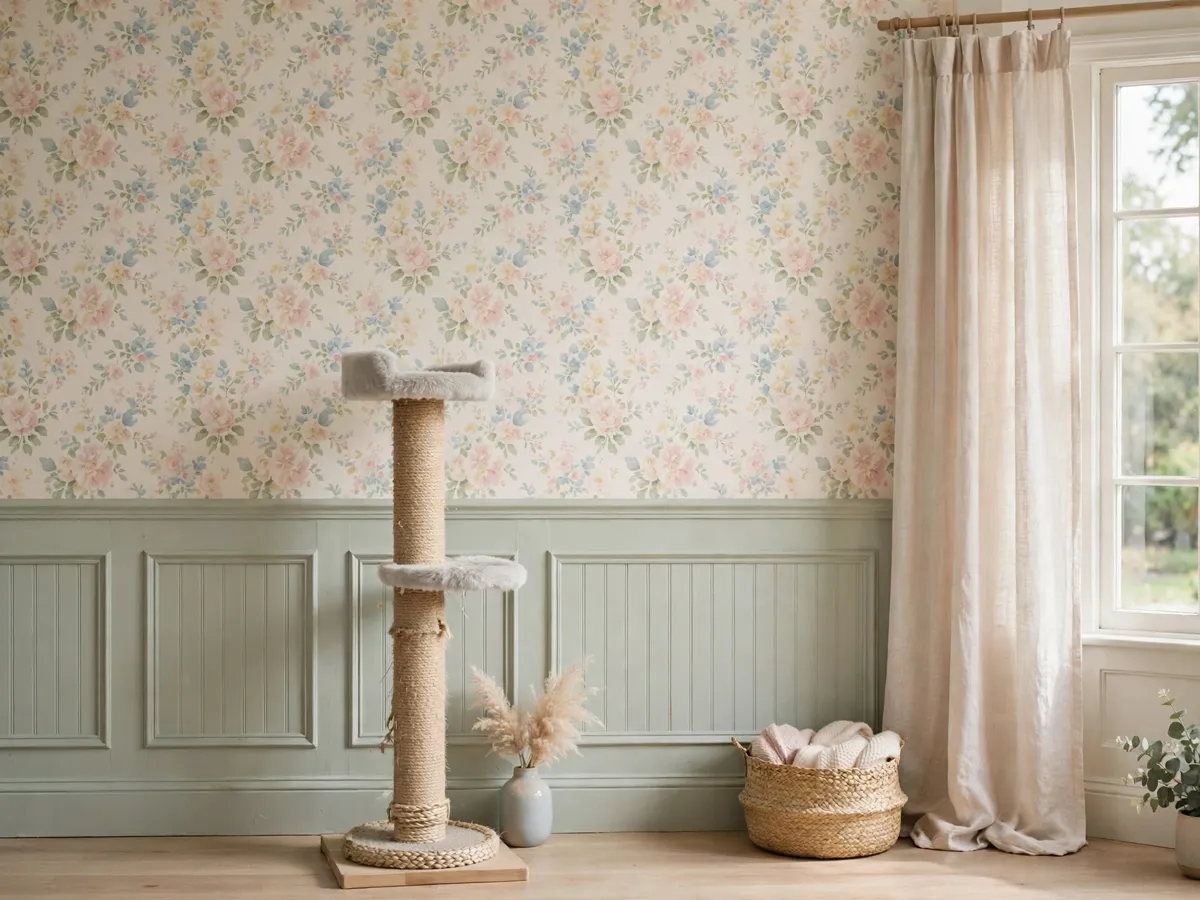
Hang around the post, not behind it. A scratching post set flush against a wallpapered wall presses its own edge into the panel all day, and the paper takes the post's movement instead of the cat's. Pull the post clear of the wall so the stretch happens on the panel and not on a seam. Keep the curtain hem off the new paper so the swing does not work an edge loose, and leave the wall behind the post visible rather than hidden.
The warm lift: getting the wall back at the end of a lease
A cat wall is a rental decision, and the exit is planned before the first panel goes up. Panels come down in long strips when they are warmed and pulled slowly, and they come down in fragments when they are pulled cold. Hold a hair dryer on a low setting at one corner until the paper is warm to the touch, lift that corner with a fingernail or a flat trim tool, and aim the pull back along the seam rather than out away from the wall.
Work in short sections, warming ahead of the pull instead of dragging a cold panel behind a warm corner. A panel that comes off in one piece was warm the entire way down. Any residue that stays wipes off with a damp cloth, and a spot that resists the cloth gets more warmth and a second pass. The field above eye height lifts fastest because it never took a claw, and the lane panel takes longest because its edges were seated hardest on the way up.
Photograph the wall before the lift, because the room is worth remembering. Do not promise the paint underneath will look untouched either: a mature, washed wall gives up a panel far more cleanly than a freshly painted one, and the only honest plan is to warm, pull slow, and stop when the resistance changes. If the next room needs a smaller commitment than a panel, the printable cat wall art route covers the framed version of the same idea.
Cat wallpaper questions
Which wall should get the cat wallpaper?
The one the cat already claims: behind the post, the scratch line, or the jump run to the sill. Wallpaper chosen for the room view and wallpaper chosen for the traffic lane are two different purchases.
Will claws ruin a peel and stick panel?
A printed panel takes marks where a plain wall would too, so pick a busy pattern for the low half and keep the smooth field above eye height. Felt and cork strips on the post itself do more than any wall covering.
Does it come off a rented wall?
Lift a corner with a hair dryer warm rather than cold, and pull slow along the seam rather than straight out. Peeling cold is what takes paint with it, whatever the packet says.
Save the cat wall ideas on Pinterest
Pin the traffic-lane method before the next panel order, or send the low-panel trick to a friend whose cat has claimed the sofa wall. The Pet Art & Wallpaper collection holds the phone wallpaper packs, the watercolor printables, and the dog wall page that shares this one's hanging method.
For informational purposes only.