 PawStyle Daily
Pet Coloring Pages & Art Prints
Husky Dog Coloring Pages: Puppies, Blue Eyes, Winter
A husky is the breed that was built to be colored in. The face is a mask with a sharp edge, the coat is a deep field of fur that fills in layers, and the eye is a blue that wants a light hand. The pack in this page leans on all three: round faced puppy pages for the small colorists, mask pages for the ones learning edge control, coat fills for a slow afternoon, and winter scenes that hand the husky back the snow it was drawn for.
By PawStyle Daily · Updated 23 November 2026
Good to know: the pack tiers by page | the mask wants a crisp edge, the eye a light hand | winter pages open the palette | print the round faces for small kids.
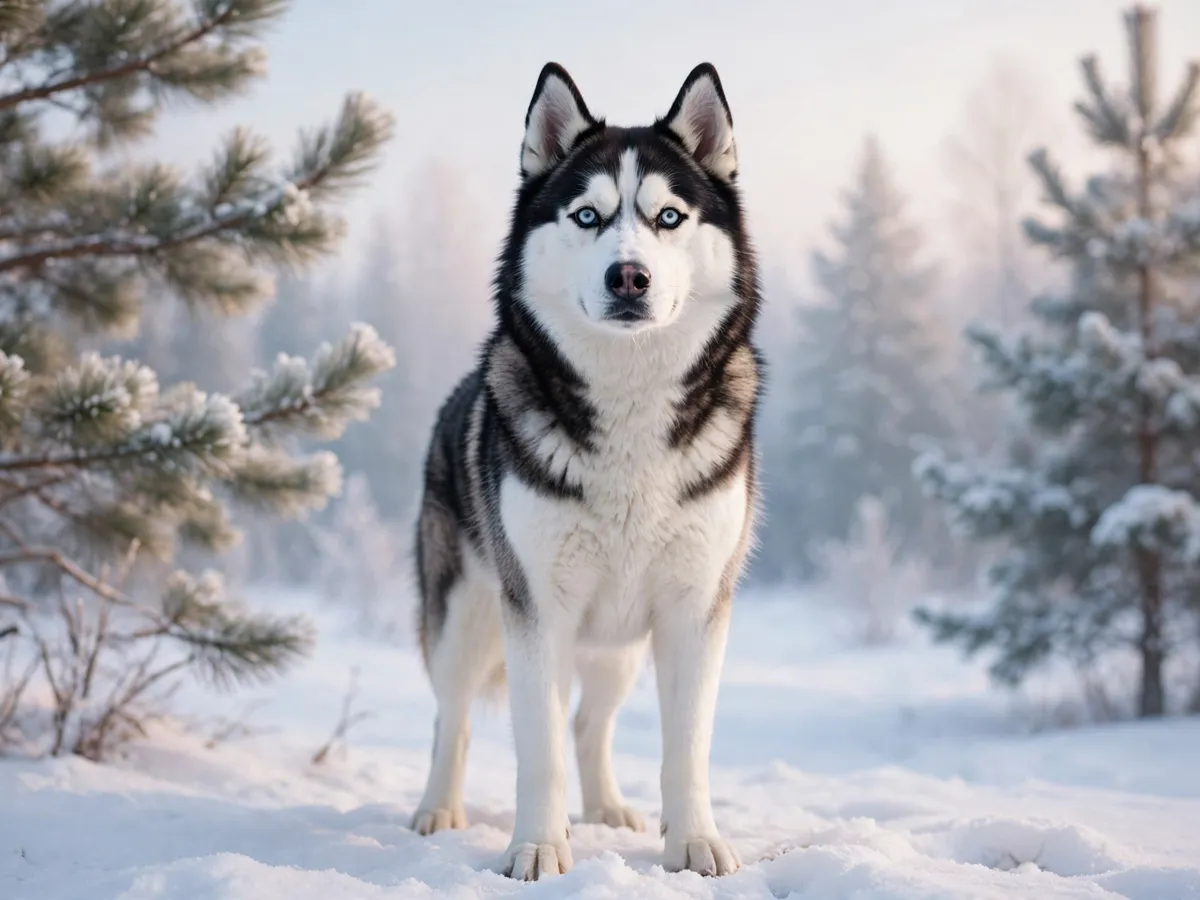
The Breed That Was Built to Be Colored In
Most dog breeds give a coloring page an outline and a hope. The husky gives it a curriculum. Where a beagle is a smooth body with three spots, a husky is a mask, a mane and a mission: the face carries a pattern that has to meet at a clean edge, the body carries a double coat that fills the way fur fills, and the whole dog carries a story about snow that the winter pages can pick up and run with. A general dog page is an animal. A husky page is a drawing with a technique list attached.
That is the honest difference between a breed page and a general one, and it is why the pack exists. The cute dog coloring pack covers every dog at every level, the easy outlines, the cozy scenes, the mandalas. This page is for the household that already knows its dog: the mask, the eyes, the coat, and the snow. For a screen instead of a page, the husky wallpaper for the phone sets the same breed as a lock screen.
Husky Puppy Poses: The Round Face Pages
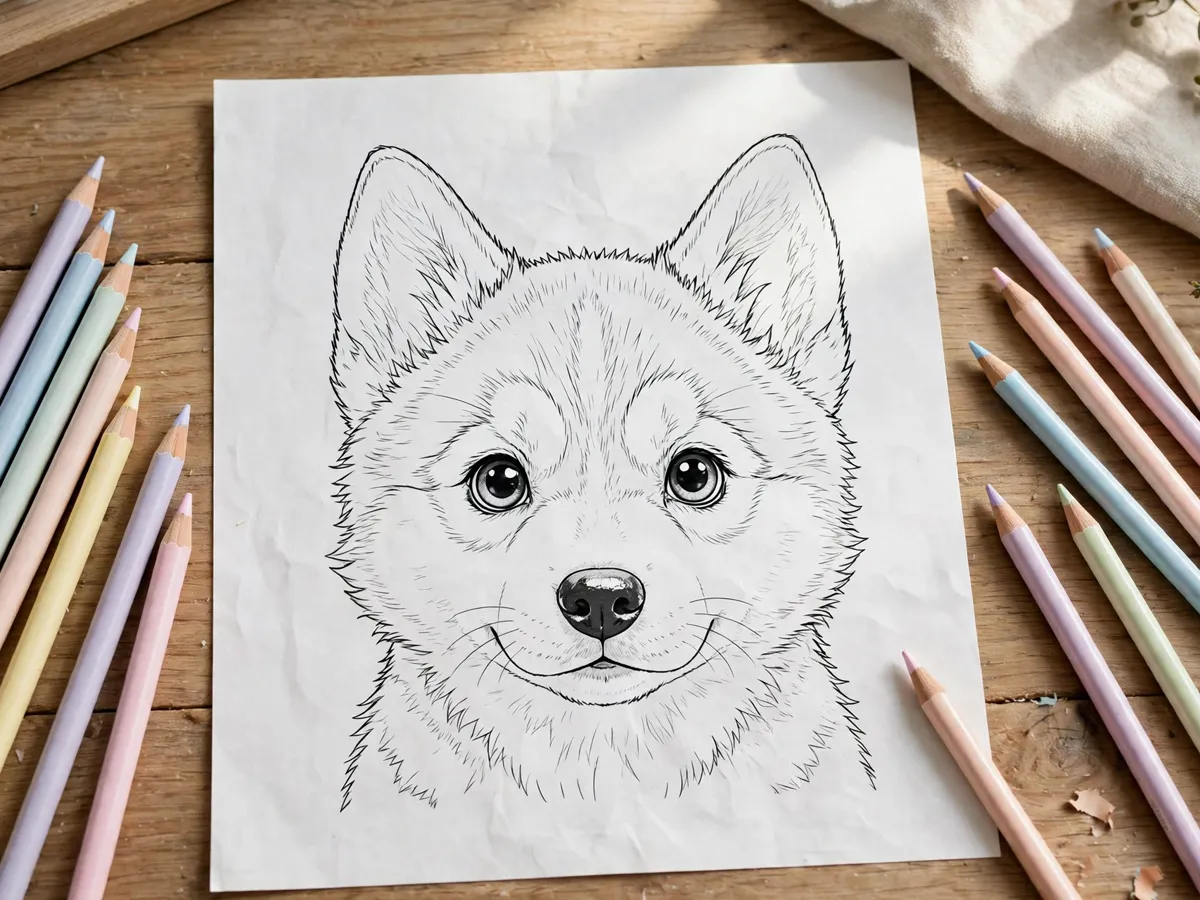
The puppy pages are the front door of the pack, and they earn the job by shape rather than by cuteness alone. A husky puppy head is close to a circle, the ears are two rounded triangles that stand apart, and the eyes sit wide and low, so the whole face assembles from four or five bold shapes a marker can stay inside. The mask is still there, drawn wide and simple, which lets the smallest colorists meet the breed feature that carries the rest of the pack without needing the fine edge the adult face asks for.
The poses run the puppy classics: head tilted at the camera, head down between the paws, the sitting stack with the chest out, and the famous flat sprawl on a rug. Each one keeps the outline generous and the gaps open, because a puppy page that turns fussy stops being a puppy page. The tail is where the little flourish lives, a swooping feather the young colorist can take a run at with one color and finish proud of.
Print these pages for the youngest hands in the house, and expect them to come back finished fast. That is the design, not a failure of the page: a round face page is a one evening page, and the pride it hands back is the thing that brings the same kid to the mask pages a year later with a steadier grip.
The Mask and the Blue Eyes
The mask is the husky signature and the technical heart of the pack. On a real husky the mask is a sharp border where two coat colors meet, the dark cap and the cream face, often with a third tone running down the bridge of the nose. On the page that border becomes an exercise the mask pages are built around: two colors that meet at one clean edge without blending into each other. The line on the page is where the colorist stops the first pencil and starts the second, and a mask that comes out crisp reads as a husky from across the room.
The eyes get their own treatment. Husky blue is a pale color, and on white paper a heavy hand turns it into a smudge that swallows the pupil. The mask pages leave the eyes a touch larger than life for exactly this reason: a bigger shape gives the light hand somewhere to live, and a layer of pale blue over a softer base reads as the eye rather than as a mistake the eraser has to visit. The trick the older colorists land eventually is that the eye is mostly white paper with a little color at the edges, and that is a lesson the mask pages teach without ever saying it.
A good mask page leaves the rest of the head quiet so the edge of the mask is the loudest thing on the paper. The ears get a plain fill, the chest a simple cream, and every mark the eye lands on leads back to the border between the cap and the face. That is the tier where edge control becomes the skill, and the pages are the practice reps.
Thick Double Coat: Fills for Slow Hands
The coat is the husky page for a long evening. The double coat fills in layers, guard hairs over undercoat, dark over pale, and a line drawing that respects that structure gives the colorist strokes to follow: long marks that run the direction the fur runs, layered over a base fill rather than one flat slab of gray. Filled that way, the body comes out looking like fur. Filled flat, the same page comes out looking like a balloon, and the difference is entirely in the patience.
The coat palette is narrow, which is part of the charm. Black and white, gray and cream, red and copper, and almost nothing else on the body. The narrowness is what makes the layering visible: two grays over one cream read as depth in a way that six colors on a cartoon dog never manage. The older colorist who works the coat page slowly, one section at a time, chest then shoulder then mane, is doing the closest thing to real colored pencil work in the whole dog coloring world.
These are the pages to save for the kid who likes the slow work, and the ones the adults quietly keep for themselves. A coat fill page fills an afternoon, survives a frame, and still reads as a husky from the far side of the room, which is the test every page in the pack has to pass somewhere.
Winter Scenes: Snow, Sleds, and Pines
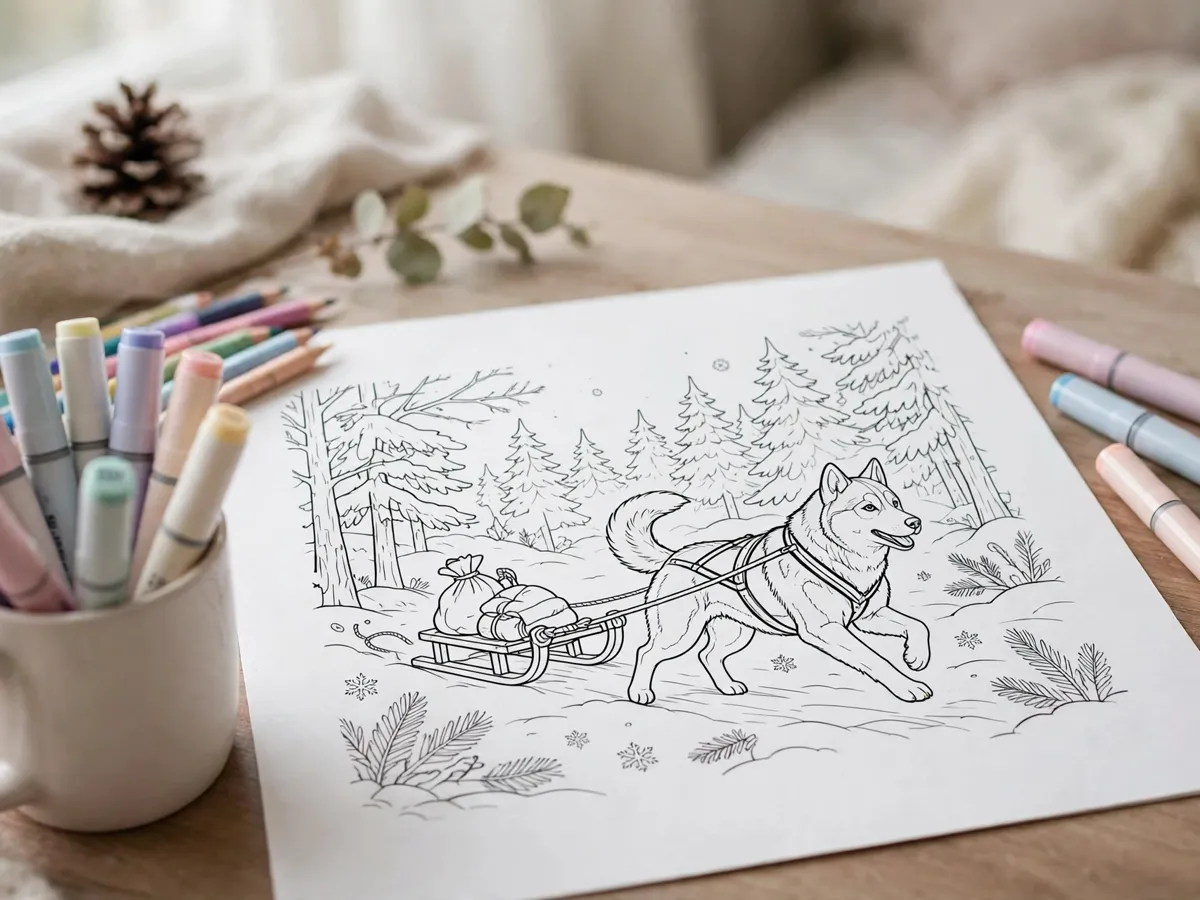
The winter pages give the husky the world it came from. Snow, pines, a small sled with a rope, a cabin at the tree line, and the husky in the middle of it doing the job the breed still carries in its posture. The scene pages are the pack at its most open: where the mask page narrows the palette, the winter page widens it, snow blues and pine greens and warm window light, and the mood does the work the mask page does with discipline.
Snow is the quiet lesson of the scene pages. The instinct is to leave it white, and plenty of the page stays exactly that, but a pale blue wash laid around the husky and under the sled is what makes the white read as snow instead of as paper. The pines take the deep greens, the cabin takes a warm brown or a red, and the sky above the tree line takes whatever mood the colorist is in, which is the one place in the whole pack where a purple husky evening is fully allowed.
For the household that wants its winter mood on a wall, the finished scene pages frame well once the coat is filled and the snow has its blue. For a different breed entirely, the dachshund coloring pages run the same printable treatment for the long low dog.
Printing the Pack for the Right Paper
The paper decides half the outcome before a pencil touches the page. Plain printer paper takes the puppy faces and any page destined for crayons or a quick marker pass, and it is the right call for the pages that come home from school in a backpack. The coat fills and the mask pages want the heavier stock, card stock that takes a little pressure without buckling and lets the layers build instead of shining through to the desk.
Print at full scale, actual size, with the fit-to-page setting off, and run one test page before the rest of the pack. The line weight on a husky page is drawn to survive a home printer, a single uniform stroke, no gray shadows, so the mask edge prints sharp and the coat strokes stay separate. A page that comes out faint is a printer running low rather than a drawing problem, and it is worth fixing before the good paper goes in.
Keep the prints flat in a folder rather than loose in a drawer. The coat pages take more than one sitting, and a page with a crease across the shoulder is a page the fill never recovers on. The folder is also how a pack stays a pack: the puppy faces at the front, the masks and coats behind them, the winter scenes at the back for the long afternoons.
Husky coloring page questions
What makes husky coloring pages different from general dog coloring pages?
The husky carries three features a general dog page does not: the face mask with its sharp edge, the double coat that fills in layers, and the blue eye that wants a light hand. Those give the page its difficulty and its fun, and the pack leans on them: mask pages, coat fills, and winter scenes. A general page starts from any dog, a breed page starts here.
What colors does a husky coloring page actually use?
The husky palette runs black and white, gray and cream, red and copper, with the blue eye color as the one accent. The mask is the part that wants the crisp line: two colors meeting at an edge, not blending. Winter scenes open the palette up with snow blues and pine greens, which is where the pack lets the colored pencils do the mood the breed was built for.
Are these husky pages good for younger kids or only older colorists?
The pack tiers by page: the puppy face pages with the big eyes and the simple outline fit younger hands, while the coat fills and the winter scenes hold an older colorist for an afternoon. Print the round face pages for the small kids, save the coat pages for the ones who like the slow work, and the mask pages sit in the middle where edge control is the skill.
Save the Husky Coloring Pack
Pin the pack for the first snow day, the first long weekend, the first kid who asks for the dog with the blue eyes. The mask, the coat and the winter scenes keep, and the pack prints the same every time.