 PawStyle Daily
Pet Art & Wallpaper
Cat Coloring Pages for Adults: Florals, Mandalas and Zentangle
An adult cat coloring page is a different object from the kids version, even when the subject is the same tabby. The sections are small, the borders are fine, and the page asks for a sharpened pencil rather than a crayon. This is the tier where a cat portrait turns into an hour of quiet work: a floral collar built from petals, a mandala medallion behind the ears, a zentangle tail that fills one pattern at a time. This page walks the three drawing styles, the fill order that keeps a dense page moving, and the paper and pencil read that keeps the lines crisp to the last corner.
By PawStyle Daily · Updated 24 November 2026
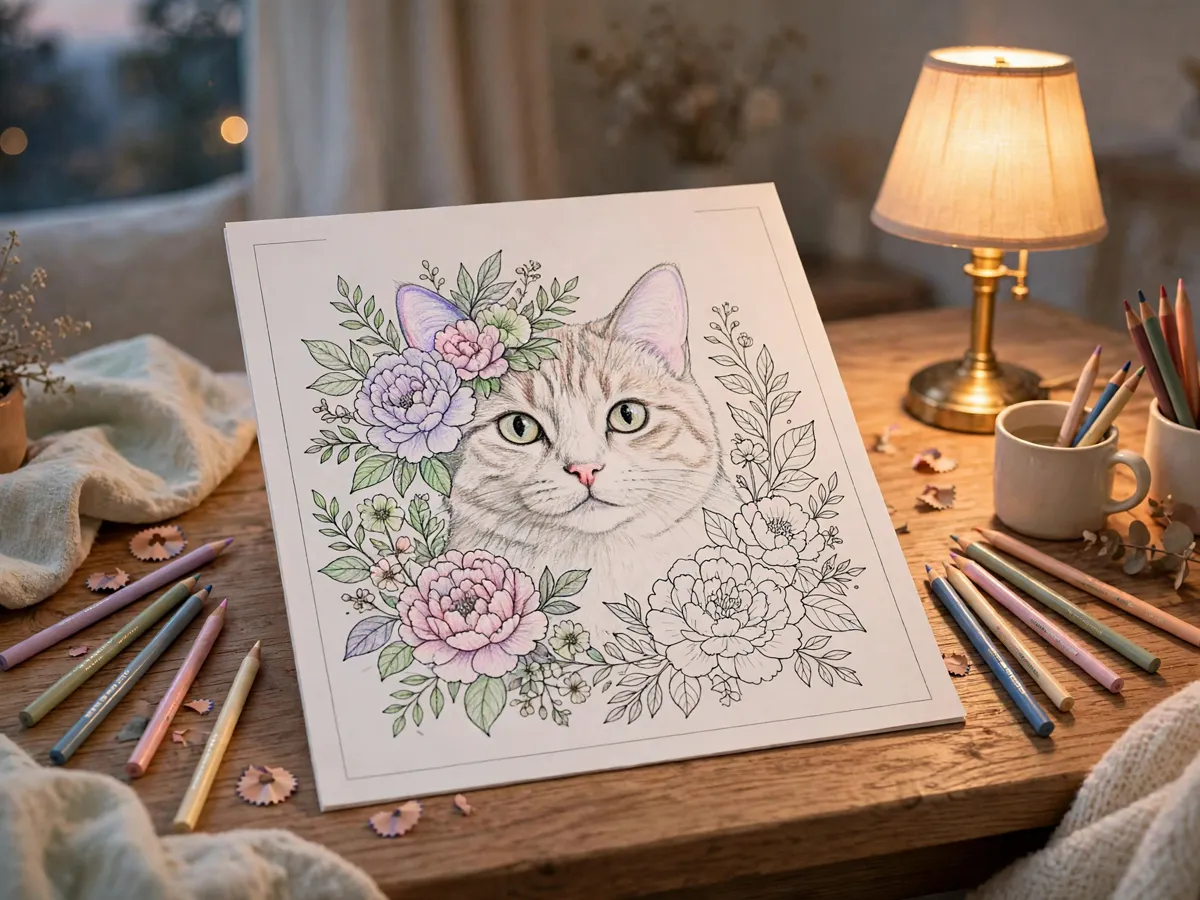
The Coloring Page That Slows the Evening Down
The adult tier earns its name through density, not difficulty. A page of this kind holds a cat drawn in dozens of small sections, each one a shape a pencil tip covers in a few strokes. There is nothing to solve and nothing to win. The work is repetition with a visible finish line, which is exactly the shape an evening wants after a loud day: hands busy, mind on the next shape rather than the next worry.
The page rewards patience over skill. A first attempt at a medallion looks different from the fifth, and nobody can tell which was which once the sheet is done. That forgiving gradient is the whole appeal for a grown up picking the hobby back up after years away, and it is why the cat is such a strong subject: familiar outline, endless interior.
This page also draws the line between the tiers, because the word adult gets used loosely online and the coloring itself changes with it. A sheet labeled for grown ups that holds six big shapes is a kids sheet with a marketing hat on. What follows below is the real thing: section sizes that ask for a pencil, line weights that hold detail at arm length, and styles that take an evening rather than a coffee break. Pick by the evening you actually have, and let the sheet meet you there.
Why Adults Color Cats at All
Coloring slid into adult life because it occupies the hands without demanding the full attention a book or a screen does. The cat sits at the center of that use case. The outline is known before the first stroke, so there is no blank page to face, and the interior is a field of small decisions that stay pleasant: warm petals or cool ones, one pattern or two. The activity runs at exactly the pace of a conversation, a podcast or nothing at all.
The cat also carries the room with it. A finished sheet on the fridge is a small mark of an evening spent well, and a stack of them by the armchair is a week of them. For a household that already shares the sofa with a real cat, the drawn one is the calm twin: the same silhouette, none of the 3am zoomies.
The Floral Cat Portrait Set
The floral set is the entry point of the adult tier. A cat portrait is drawn clean, then its collar, ears and background break into petal shapes: roses behind the whiskers, leaves along the jaw, a ring of small blooms under the chin. The sections are larger than the mandala pages, the borders stay readable at arm length, and the palette is whatever the season suggests. A spring sheet takes lilac and blush; an autumn one takes rust and ochre.
The portrait reads best when the cat stays one color family and the blooms take a second one. Two families, plus a neutral for the eyes, is a full palette that still looks deliberate. Start at the ears and work down, so a hand resting on the page never sits on finished work. The cozy corner of the tier, with its beginner mandalas and softer line weight, lives on the cozy cute cat coloring set page, and it is the right first stop for a colorist who wants the mood before the density.
Dense Medallion Mandalas and the Fill Order
The mandala pages are where the tier earns the word adult. Here the cat is the medallion: a round face at the center, rings of pattern radiating out through the ears, each ring divided into near-identical cells. A single medallion can hold more small sections than the rest of the page combined, and the difference between a pleasant hour and a stalled one is the order the cells are filled.
The fill order that works: finish one ring before starting the next, and within a ring work the same cell position all the way around before moving one position over. The repetition keeps the hand steady and the pattern even, and it turns a dense page into a rhythm rather than a maze. Keep two pencils in play for any one ring, a light and a dark of the same family, so a cell can alternate without a hunt through the tin.
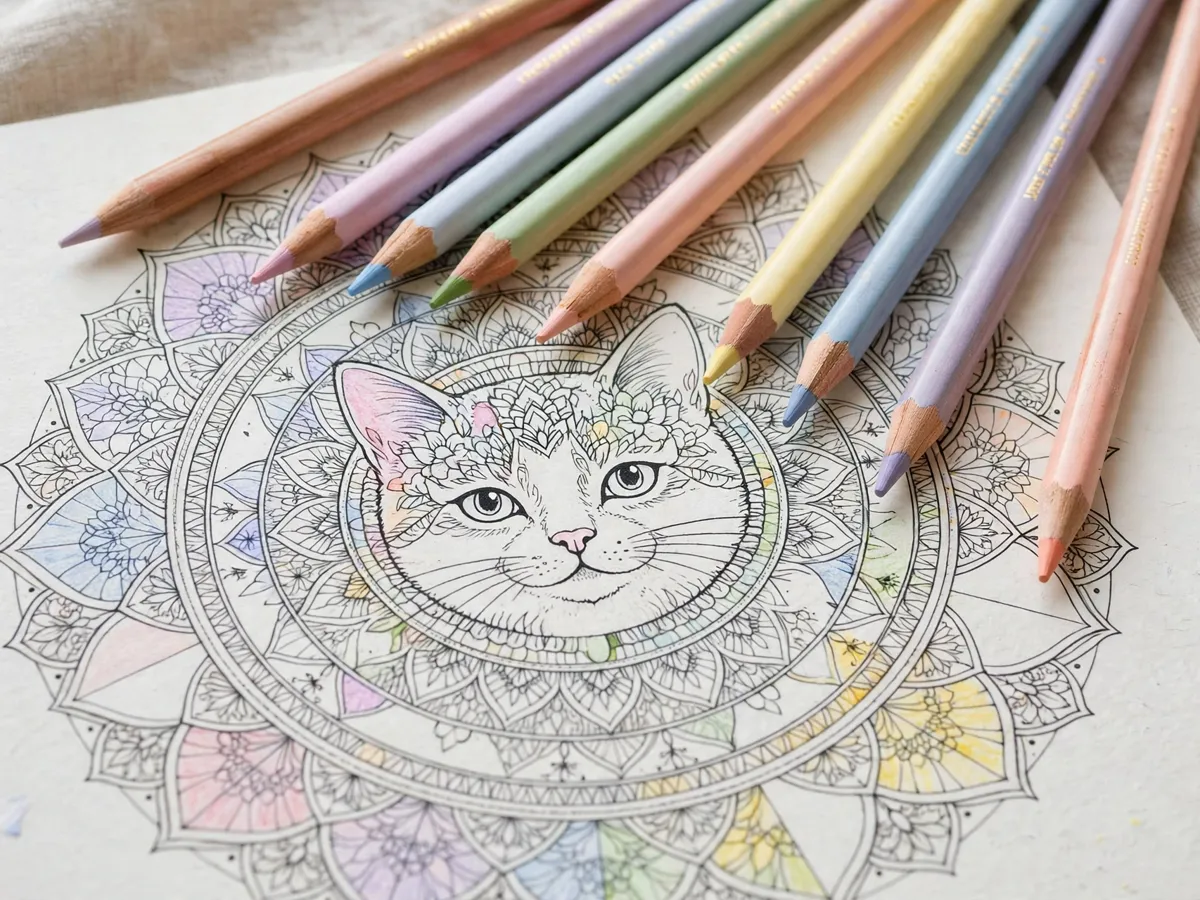
A medallion page also teaches the pencil hand faster than any other style, because the same cell shape repeats dozens of times in one ring. The tenth circle fills with a steadier stroke than the first, the pressure evens out, and the color stops patching. Keep the sheet flat on the desk rather than propped, rotate the paper instead of the wrist when a ring asks for an awkward angle, and rest the hand on a scrap sheet so the finished cells stay clean.
Expect a medallion to outlast a sitting, and plan for it. A half-done ring is not an abandoned page; it is a bookmark. The fill order makes the state obvious at a glance, so the next sitting starts in seconds instead of a hunt for where the pattern left off.
Zentangle Tails and Fine Line Fills
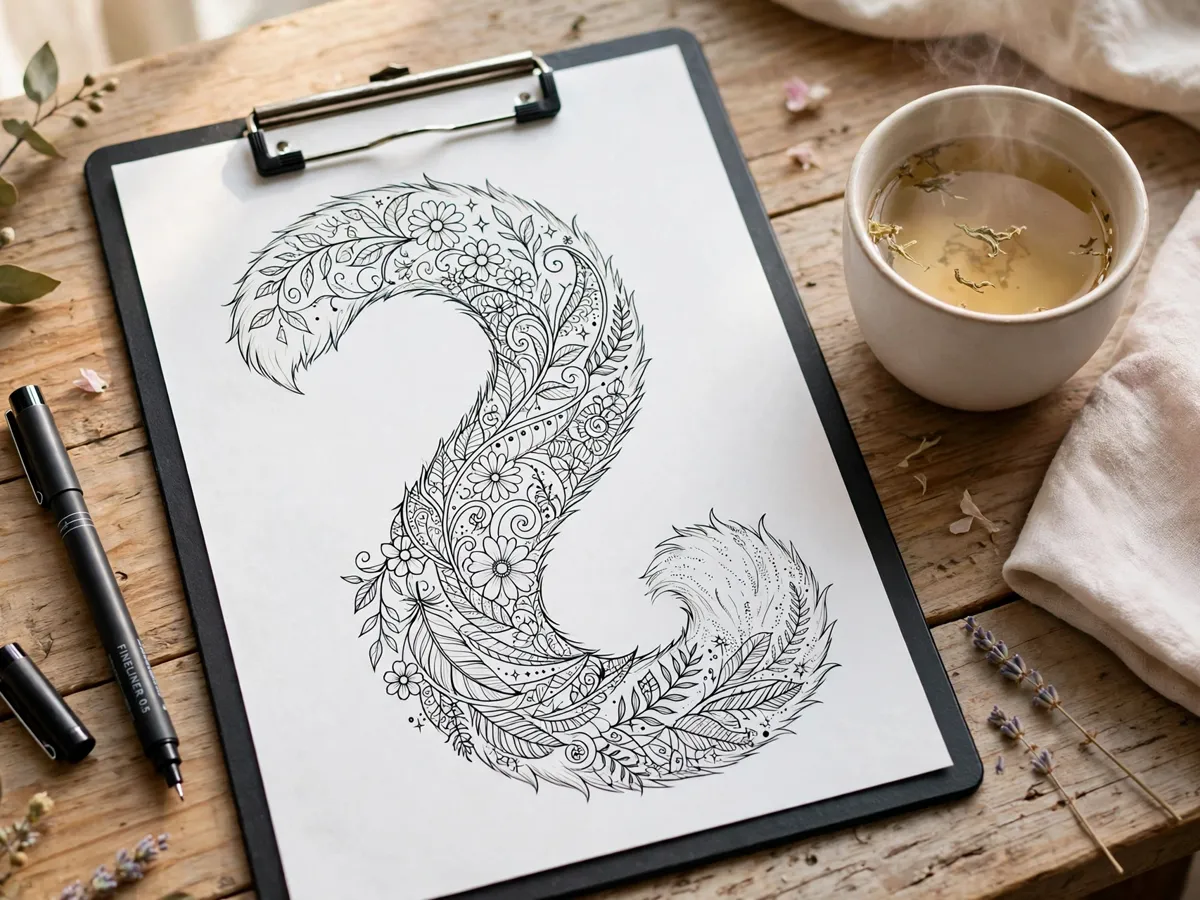
The zentangle pages trade the medallion for a long tail. The body of the cat is drawn in outline only, and the tail, the back and sometimes the whole silhouette are divided into bands, each band holding one pattern: tight scales, flowing lines, dots inside circles, small checks. Fine line work is the medium here, a pen with a consistent nib rather than a pencil, because the patterns are drawn stroke by stroke instead of filled.
The zentangle style suits a colorist who wants to make marks rather than fill areas, and it pairs well with a single accent color: everything ink in one pen, the eyes alone in pencil. A clipboard, a pen and a cup of tea is the whole setup, which is why this section of the tier travels better than any other. The rest of the color range has its own homes, from the black cat coloring pack for the solid-dark rendering to the husky coloring pages for dog people when the household colors across species.
Paper, Pencils and the Printing Read
The paper decides how the page behaves. Plain bright white printer paper is fine for pencil work and it is what most households already own, but the pages of this tier reward a heavier sheet: fewer ripples from pressure, less shadow of the desk underneath, a finish that survives handling. For pen work, a smoother card stock keeps the ink line crisp and stops it feathering into the paper fibers.
Print at the size the page states and leave the fit setting alone. A scaled-up line drawing thickens the fine borders until they crowd the small cells; a scaled-down one thins them until the gray shows through. Sharpened pencils with a fine core, a fineliner for the smallest borders, and a sand pad to bring the point back mid page are the whole toolkit. Nothing in the kit is precious, and the practice that comes from finishing one sheet is worth more than any of it.
Storage of finished sheets is worth a thought too. A flat folder keeps them, and a sheet that took an evening deserves better than the bottom of a drawer. The folder also doubles as the palette record: flip back through finished pages before starting a new one and the color families that worked are already on file, which saves the first twenty minutes of a fresh sheet from being a test run.
Adult cat coloring questions
What makes a cat coloring page an adult page rather than a kids page?
Line weight and section size. A kids page holds big open shapes a chunky crayon can fill, while an adult page packs a cat portrait with small sections, fine borders and layered patterns that ask for a sharpened pencil and a slower hand. The cat is the subject either way. The difference is how much of the page your eye has to travel to finish one shape.
Which pencils or pens work best for dense mandala sections?
Sharpened colored pencils with a fine core, plus a fineliner pen for the smallest borders, work best on dense sections, because a blunt tip fills past the line and muddies a small area. Test one medallion first before committing the whole page, and keep a scraper or sand pad on the desk to bring the point back mid page. A cheap sharpener on a good pencil still beats an expensive pencil kept dull.
How do I print adult coloring pages without the lines turning gray?
Print at the page's stated print size rather than scaling it up or down, because a resized line drawing thins or thickens every line and turns crisp black lines gray. Use plain bright white paper of a decent weight for pencils, and a smoother card stock if the page will take fineliner ink. Check the preview dialog for the fit setting before the print button.
Save the Adult Cat Coloring Pack
Pin this pack for the next quiet evening, and start with the floral set before the medallions. The Pet Art collection holds the cozy sets and the wallpaper packs for the rest of the shelf.