 PawStyle Daily
Homemade Dog Treats & Meal Planning
Funny Dog Muzzles and When a Muzzle Makes Sense
A muzzle with paw print stickers gets a different reaction on the street than a plain black one, and the reaction is the point. The funny muzzle is the redesign that turned a serious tool into something people smile at, and it opened a door the plain version never could: conversations instead of dirty looks. This page walks the real reasons a friendly dog wears one, the basket style that lets a dog drink and pant the whole time it is on, the fit that keeps it kind, and the stress signals that tell a household the pace of training needs to slow down.
By PawStyle Daily · Updated 19 November 2026
Good to know: basket style with wide gaps · treats run the training · two fingers under the neck strap · the signals set the pace.
Why the funny design is not a gimmick
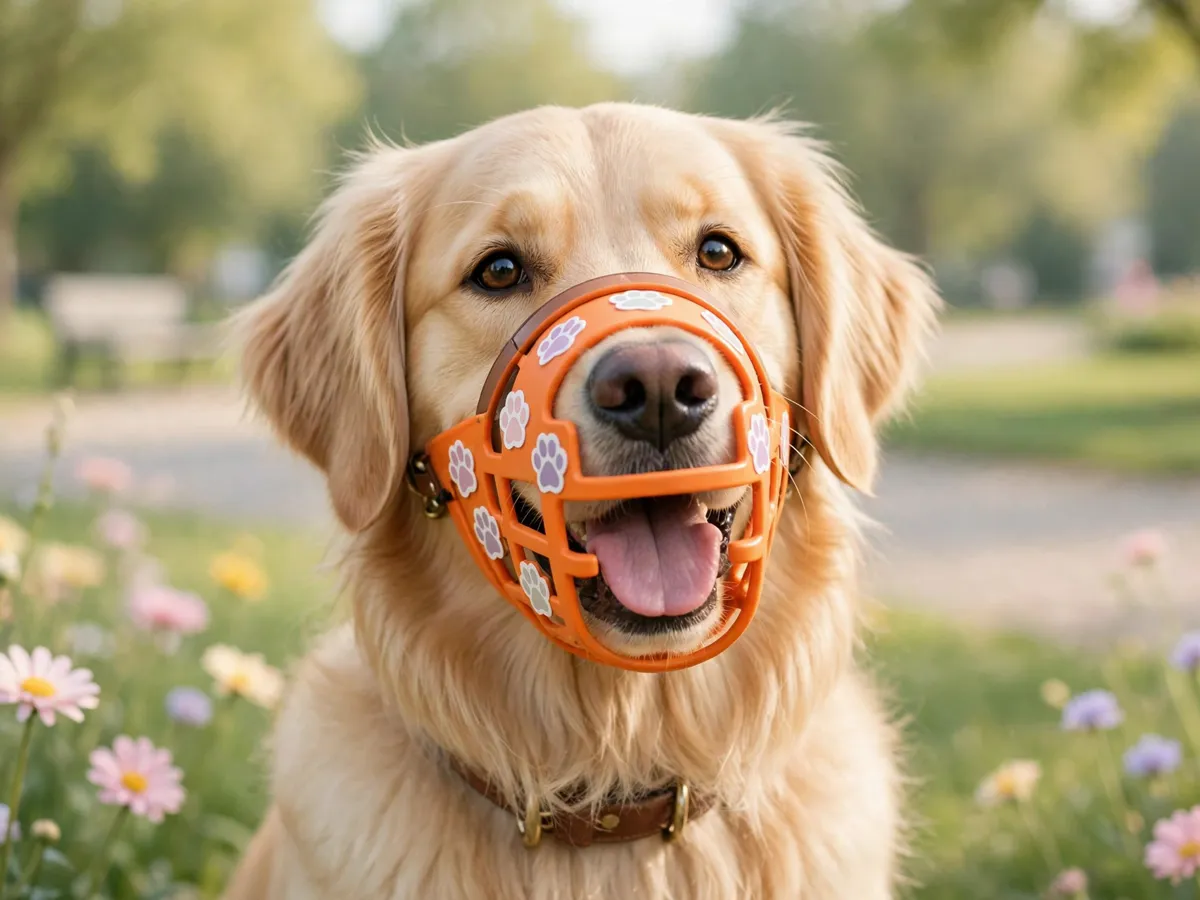
The muzzle has an image problem, and the decorated designs are the fix. A bright orange basket covered in paw prints reads as gear a happy dog wears, and a plain black cone reads as a warning. Strangers react to the design before they react to the dog: the decorated basket earns smiles and questions, and the questions are the openings where a handler explains what the tool actually does. The redesign matters because the tool matters - a muzzle on a walk is a normal piece of equipment, and the design is the piece that makes the whole neighborhood treat it that way.
This page sits in the treats section on purpose. A muzzle is introduced the way any new gear is introduced: treats first, straps second, short wears third, and the treat is the engine of every step. The recipes a household already runs - the no peanut butter treat recipes for jar-free kitchens, the air fryer dog treats for fast batches - are the same rewards that carry muzzle training from the first sniff to the first full walk. The gear page and the kitchen page are one system.
The walk order runs: the reasons a friendly dog wears one, the two styles and the gap that matters, the fit test, and the stress signals that set the pace. Nothing here replaces a veterinarian, and nothing here pushes a muzzle on a dog whose household does not need one.
The real reasons a friendly dog wears one
The vet visit is the first reason, and it is the reason most dogs meet a muzzle at all. A painful exam makes any dog snappish, and clinics hand one over for exams that touch sore spots so the handling stays careful on both ends. City rules are the second: some cities and some transit systems require a muzzle in public for dogs on their lists, and the requirement lands on friendly dogs as easily as anyone else. The third is the first meeting - a dog with no history around small dogs or cats can be introduced through a basket, so the meeting never depends on a perfect first impression.
The muzzle is a tool for moments, not a verdict about a dog. The households that get the most from one are the households that introduce it before the day they need it, because gear learned under calm conditions is gear the dog already wears when the stressful day arrives. The introduction runs on treats and short sessions, and a dog that learned the basket as a treat dispenser wears it the way it wears a collar - without a second thought.
The design is the piece that changes the walk itself. A dog in a sticker-covered basket collects compliments; the same dog in a plain cone collects space. Kids ask to look at the paw prints, neighbors wave instead of crossing the street, and the handler walks the block without narrating the gear to every passerby. The funny design is not decoration on top of the tool - it is the piece that makes the tool social.
The two styles and the gap that matters
The basket style is the working tool. Rigid sides, wide gaps, a tongue that can slip out for air, water that can get in, treats that can pass through, and airflow the whole time the basket is on. The fabric style - the closed sleeve that holds the mouth shut - is a different tool for a different job: a few minutes at the clinic, under hands, and off again. A fabric muzzle has no place on a walk, because the walk is exactly where a dog needs everything the fabric blocks.
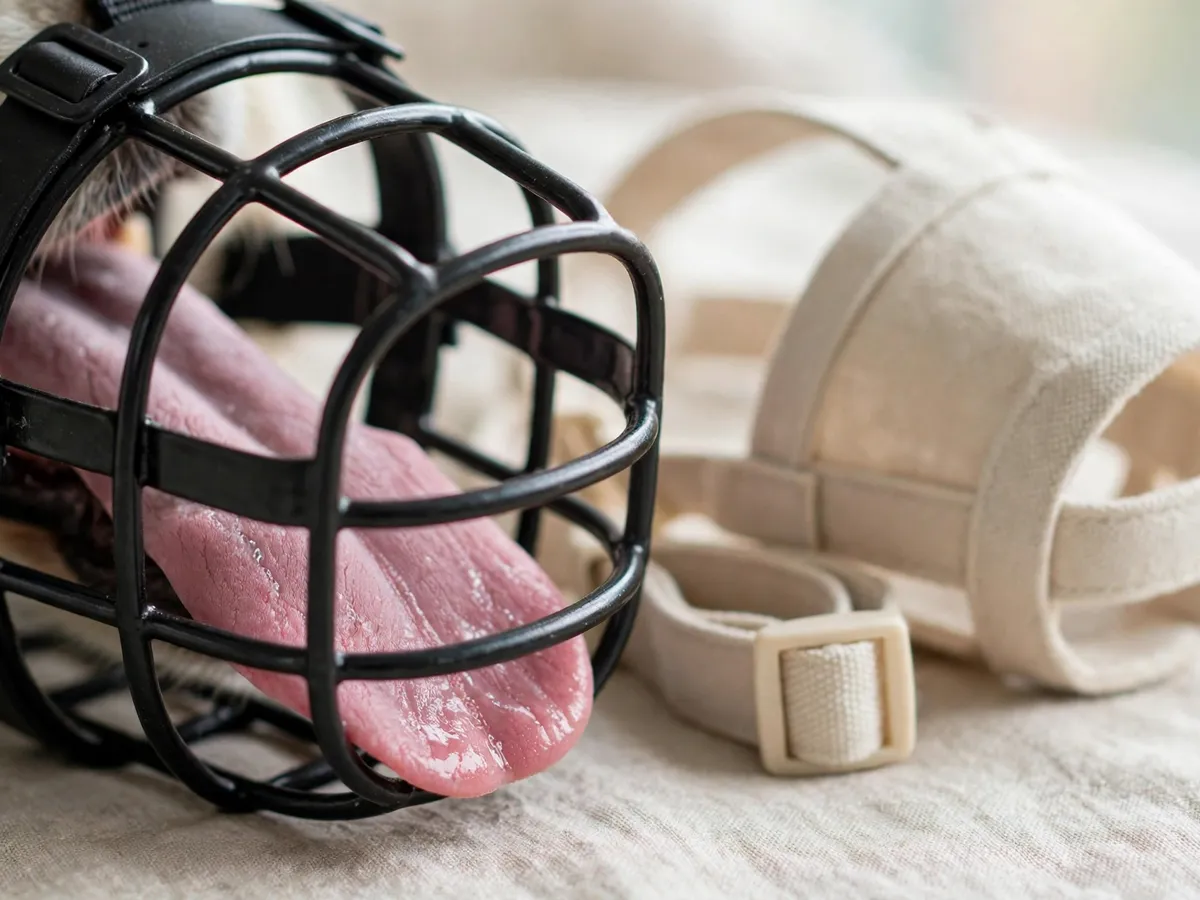
The gaps are the feature, not a flaw. Panting is how a dog moves heat out of its body, and a muzzle a dog cannot pant in is a muzzle that traps heat on a warm day - the reason the closed styles carry a time limit and the basket styles do not. The gaps double as the training channel: treats pass through, water is offered through them on breaks, and a dog can take a reward without the gear coming off. A training session that stops for every gear change loses the dog's attention, and the gaps are what keep the session continuous.
The funny designs live on the basket style because the basket has surfaces to decorate: paint, stickers, prints, seasonal colors. The design choice is free as long as the rules hold - gaps stay open, straps stay soft, and nothing decorates over a ventilation hole. A basket that passes those three checks can look like anything the household wants, and the wanting is the piece that makes the gear fun to put on.
The fit that keeps it kind
The strap fit runs on a simple test: snug enough to stay on, loose enough that two fingers slide flat under the neck strap. The basket itself wants depth - the nose reaches the front without pressing against it, and the mouth opens and closes inside the basket without touching the sides. A basket that presses the nose or pins the mouth turns every pant into work, and the dog tells the household within a minute of wearing it.
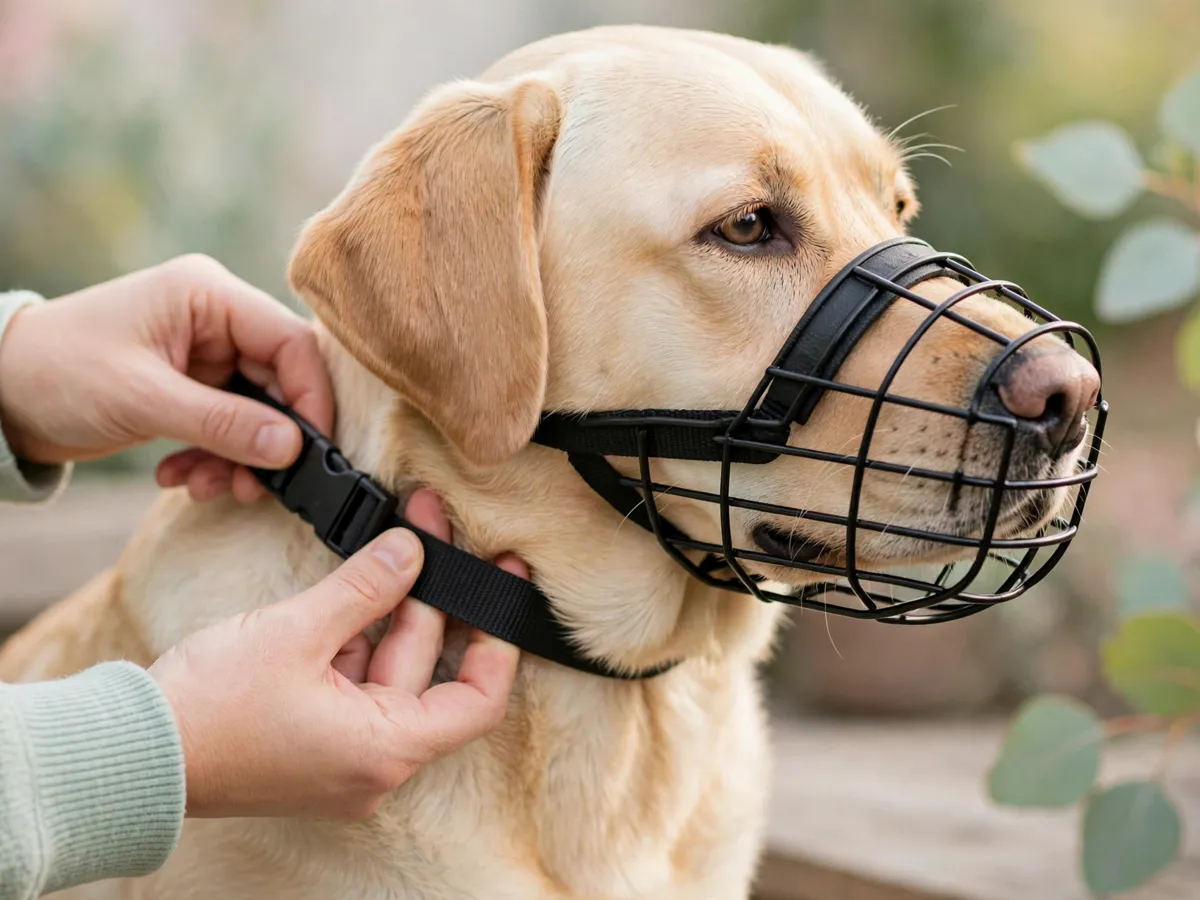
The introduction runs in three steps, and the treats lead every one. Step one is the muzzle as furniture: it sits on the floor near the food bowl, treats get tossed through the gaps, and the dog learns the basket pays. Step two is the nose going in on its own - no straps yet - and the treat arriving the instant the nose lands. Step three is the straps: on for a few seconds, treat, off, and the seconds stretch across days until the dog wears the basket through a whole meal or a whole game.
The rewards are the kitchen's contribution. Soft, small, fast treats keep the session moving - the recipes already on the site cover the batch, and a week of 10-minute sessions does more than one long one. The session ends while the dog still wants more, because the wanting is what brings the dog back to the basket tomorrow. A household that ends every session early gets a dog that asks for the gear, and the asking is the finish line.
The stress signals that set the pace
A dog enjoying the session takes treats, softens its body, and stays near the gear. A dog over the pace shows it: lip licks, a head turned away, a paw dragging at the strap, a freeze, a full head shake to throw the basket off. The signals are a conversation, and the household that reads them adjusts the same day - back to the last step the dog enjoyed, sessions shortened, treat value raised until the basket pays well again.
The signals are not a failure of the dog or the gear. They are the paceometer, and every dog runs at a different speed. A confident dog moves through all three steps in a week; a wary dog takes a month on step two and is doing it exactly right. The calendar is nobody's business but the dog's, and the household that follows the signals instead of the calendar ends up with gear the dog genuinely accepts.
The same signals travel across training types, which is why this section matters beyond muzzles. Crate training runs on the same settle skills, and a dog over the pace in a crate shows the identical list: drool, noise, escape attempts, a body that will not rest. A distressed dog that salivates, vocalizes persistently, tries to escape or will not settle should be checked by a veterinarian before crate training continues. The line puts the veterinarian first, and the training waits until the check is done.
The household that keeps sessions short and treats flowing rarely meets the signals at all. The gear - the basket, the crate, the harness - becomes furniture the dog lives with instead of a fight the dog endures, and the walks run on the relaxed body the training built. The funny design on the basket is the last piece of that picture: gear the dog wears easily is gear worth making easy to love, and the paw prints do their part every time a stranger smiles instead of staring.
Questions about dog muzzles
Why would a friendly dog wear a muzzle?
Vet visits, city rules and first meetings with small dogs are the common reasons. A basket muzzle lets the dog pant, drink and take treats the whole time.
What style should I pick?
A basket style with wide gaps. The closed fabric styles block panting, which makes them a short-use tool only.
How do I introduce one without stress?
Treats first, straps second, short wears third. A dog that salivates, vocalizes or tries to rub it off is telling you the pace is too fast.
Save these on Pinterest
Pin the muzzle guide for the next gear order, or send it to a friend whose dog has a vet visit coming up. The Dog Food collection holds the treat recipes that run the training, the binder guides, and the kitchen pages that pair with this one, so the whole system lives in one place.
For informational purposes, consult your vet.