 PawStyle Daily
Pet Holiday & Party
Christmas Pet Photo Ideas and Poses
The holiday photo is the one you keep all year, and the good news is that it does not need a studio. A window, a blanket pile, a treat, and a pet that is comfortable are the whole setup. Below is the sequence we run before the shutter: where to stand for the light, how to pile the blanket so the pet stays put, the treat trick that earns eye contact, the costume rules that keep the dog happy, and the prop and candle safety that keeps the shoot from going wrong.
By PawStyle Daily · Updated 19 November 2026
Good to know: window light · blanket pile pose · treat for eye contact · costume comfort first · for informational purposes, consult your vet.
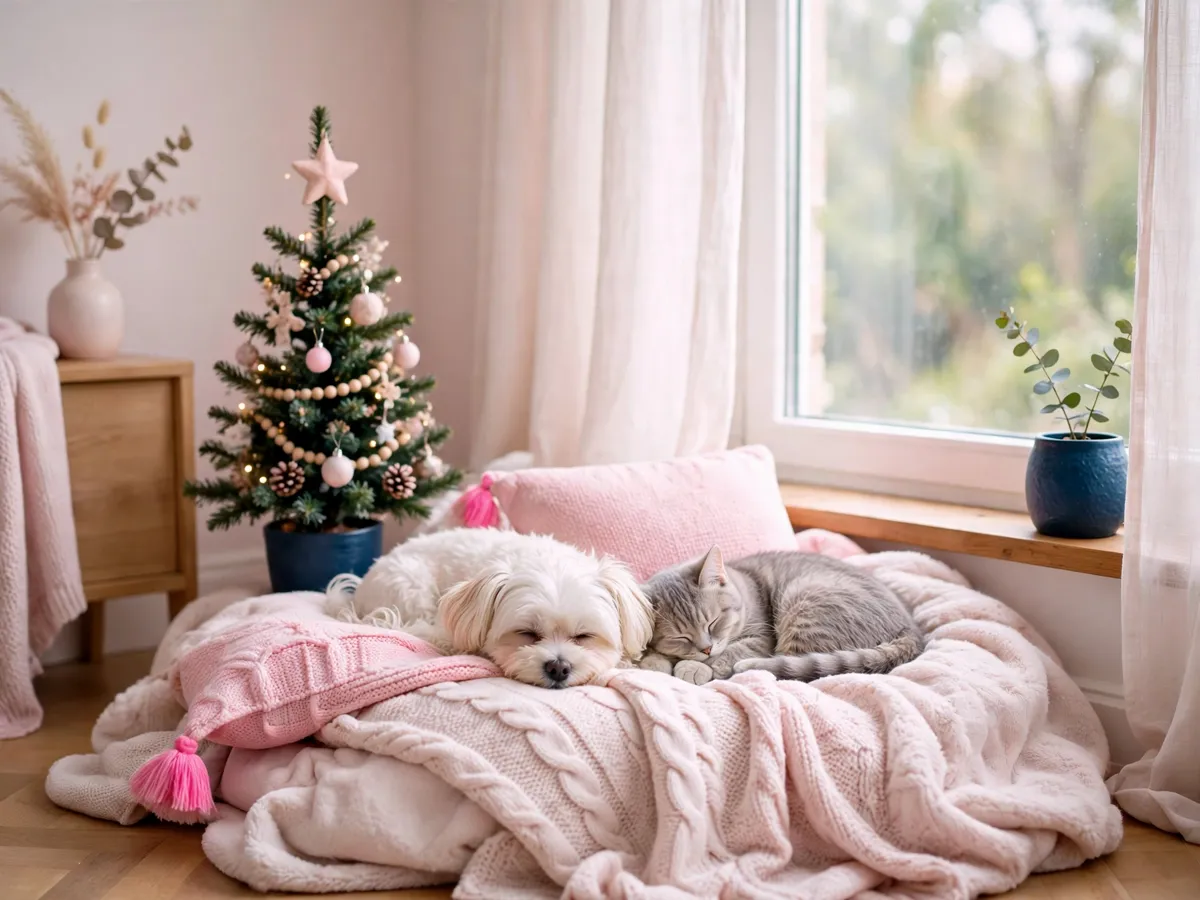
The setup that actually works
A holiday photo falls apart for two reasons: the light is wrong, or the pet is uncomfortable. Fix both before the camera comes out and the rest is easy. The light lives at the window. The comfort lives in the blanket pile and the costume choice. Everything else is a prop and a treat.
This page is about the photo, but the same room has its own rules once the shoot is over. The Christmas pet safety checklist covers the tree, the plants, the food and the candles for the rest of December.
The window: soft side light, no flash
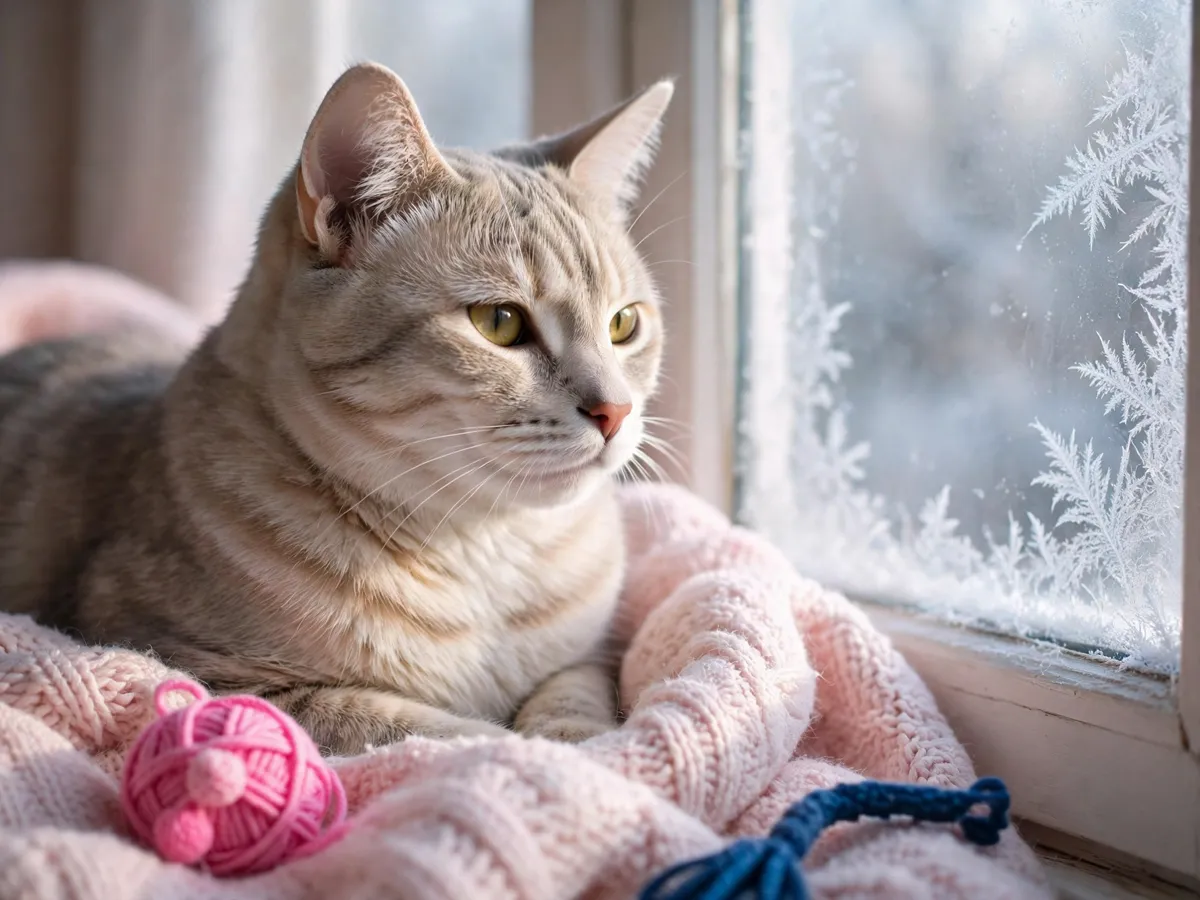
A window with soft side light is the single best light source for a pet photo, and it is free. Position the pet at a right angle to the glass, so the light falls across the face from one side and the shadow sits on the other. The frost or condensation on a December window is a natural diffuser, and the result is fur that reads as soft instead of harsh.
Skip the flash. A flash flattens the fur, creates the green-eye effect on dogs and cats, and turns a cozy scene into a mugshot. If the window light is low, move the pet closer to the glass, wait for a break in the clouds, or move the shoot to the brightest hour of the day. The phone in your pocket handles window light well; it does not handle flash on an animal.
The background matters as much as the light. A plain wall, a neutral blanket, or a blurred tree behind the pet keeps the eye on the face. A busy background competes with the subject, and on a phone screen the subject loses.
The blanket pile pose
A blanket pile is the pose that keeps a pet in one place, because the pet chooses to stay. A small dog or a cat sinks into a soft stack and settles, and the camera has a few minutes to work before anyone moves. Build the pile on the floor beside the tree or the window, set the pet on top, and let them find the comfortable spot before you lift the phone.
The pile also solves the height problem. A pet on the floor is too low for a standing adult to photograph well. A pet on a blanket pile is at sitting height, which is the angle that flatters a small dog or a cat and keeps the face in frame without shooting down the nose. Get down to the pet's eye level or slightly above, and the photo reads as a portrait instead of a look-down.
Two pets in one frame is a blanket-pile job, not a hold-and-hope job. Set the pile, set both pets on it, and give them a minute. The photo that works is the one where they settle next to each other on their own terms, not the one where a human arranges them and backs away fast.
Treats for eye contact
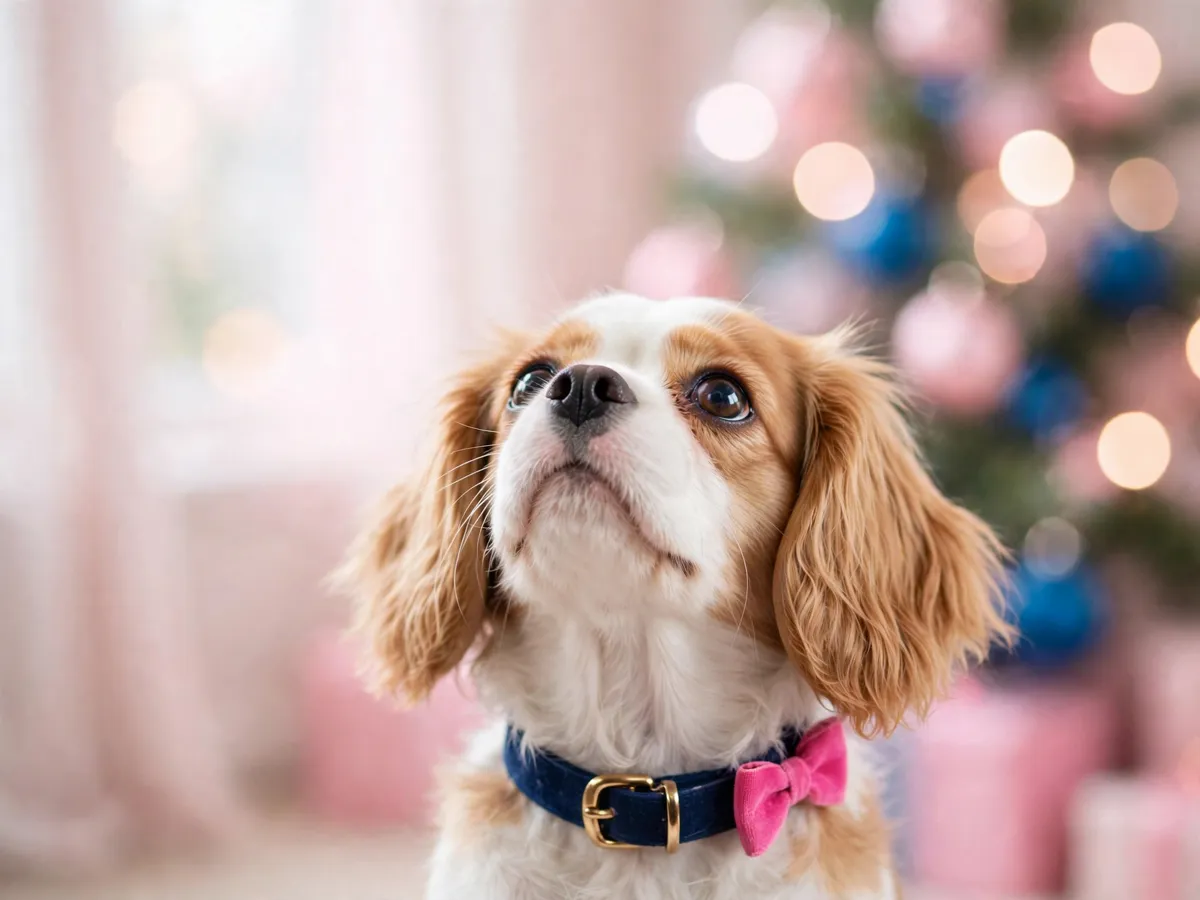
Eye contact is the difference between a snapshot and a portrait, and the treat is the tool that earns it. Hold a small treat right above the lens, so the pet looks at the treat and the camera at the same time. The eyes land on the lens, the ears come forward, and the photo has the connection that a "look at me" voice never produces.
Training treats stay tiny, and the same habit applies to a photo session: a pea-size piece repeated five times is the budget, and the pet stays eager without the bowl running over. A pouch by the tree means the treat is there when the moment arrives, and the moment is usually short.
The treat above the lens is the move for a single pet. For two pets, a treat in each hand, held just outside the frame on either side, pulls both pairs of eyes toward the centre. It takes two tries and the pile does the rest.
Costume comfort rules
For some pets a costume causes stress, so only dress up a dog that enjoys it.
The test is simple. Hold the costume up. If the pet walks toward you, try it on. If the pet leaves the room, the costume stays in the box and the photo uses a prop instead. A dog or a cat in their own coat, next to a Santa hat on the arm of the sofa, is a holiday photo. A pet in a costume they hate is not a photo, it is a complaint the pet cannot file.
An ill-fitting costume can get twisted on objects or on the pet and cause injury, so try it on before the day.
Try the costume on the dog in the morning, walk around the living room, and watch for the signs that say stop: the frozen stance, the tail tucked, the head low. Any of those and the costume comes off and the shoot goes on without it. A costume that fits is loose enough for a finger under the strap, short enough that it does not drag, and free of small parts a pet can pull off and swallow.
The photo session is short. One costume, one location, five minutes. The pet gets the treat and the blanket back, and the costume goes back in the box until next year. For the stocking and gift side of the season, the christmas dog costume ideas page has the picks that fit small dogs.
Props, plants and the reachable shelf
A prop does the work of a costume without the fit problem. A Santa hat on the sofa arm, a string of unlit lights draped on the blanket, a small wrapped box beside the pet: each one says December without going on the pet's body. The rule is that every prop is pet-safe, meaning nothing small enough to swallow, nothing sharp, and nothing the pet can pull into a tangle.
Mistletoe and holly can cause gastrointestinal upset and cardiovascular problems if a pet eats them.
That sentence is the reason the kissing bough hangs in a doorway the pet cannot reach and the holly stays faux during a shoot. A real sprig on a low table is a photo waiting to go wrong, because the same curiosity that makes a pet look at the camera makes them taste the greenery. Keep the real plants high or out of the room, and the faux versions do the same job on camera.
The candle rule
Keep wrapped food and candy off the floor, and never leave candles unattended.
A lit candle and a swishing tail share one room for a few weeks a year, and a photo session is the moment the tail is moving the most. The candle rule for a shoot is the same as the rule for the season: candles inside a lantern, on a back shelf, or replaced by the LED ones. The glow stays, the flame goes, and the pet is safe to turn and settle without a hazard behind them.
The wrapped food and candy rule matters for the shoot too. A gift basket under the tree smells exactly as interesting as it tastes, and a pet that finds it mid-photo is a pet that stops posing. Keep the food-grade presents on a table or a shelf, and the floor stays clear for the blanket pile and the pet. For the full room plan when guests arrive, the hosting holiday guests with pets page covers the door, the food and the quiet room.
Christmas pet photo questions
Should I use flash for pet photos?
Skip the flash. A window with soft side light is kinder on pet eyes and avoids the green-eye effect that flash creates on dogs and cats.
What if my pet will not wear a costume?
Skip the costume. Some pets find fabric stressful, and a photo of your dog or cat in their own coat next to a prop works just as well.
Are mistletoe and holly safe near pets?
Keep them out of reach. Mistletoe and holly can cause stomach upset and heart problems if a pet eats them.
Save these on Pinterest
Pin the window-light setup and the blanket-pile pose for the December shoot. The Pet Holiday collection holds the safety checklist, the gift guide and the costume picks for the rest of the season.
Window light, blanket pile, treat for eye contact, costume comfort first. For informational purposes, consult your vet.