 PawStyle Daily
Pet Holiday & Party
Cat Christmas Tree Ornaments: Pet-Safe Picks and Display Tips
The Christmas tree is the tallest toy you will ever bring into a house with a cat. Every branch is a ladder, every ornament is a batting target, and the whole arrangement sits in the room where the cat already claims the sofa. This page walks through the ornaments that belong on a pet-aware tree, the materials to leave in the box, the branch-by-branch display plan, and the room that gives a nervous cat a way out of the holiday entirely.
By PawStyle Daily · Updated 19 November 2026
Good to know: wooden and felt ornaments on the lower branches, glass and tinsel out of reach, and a retreat room for the nervous cat. For informational purposes, consult your vet.
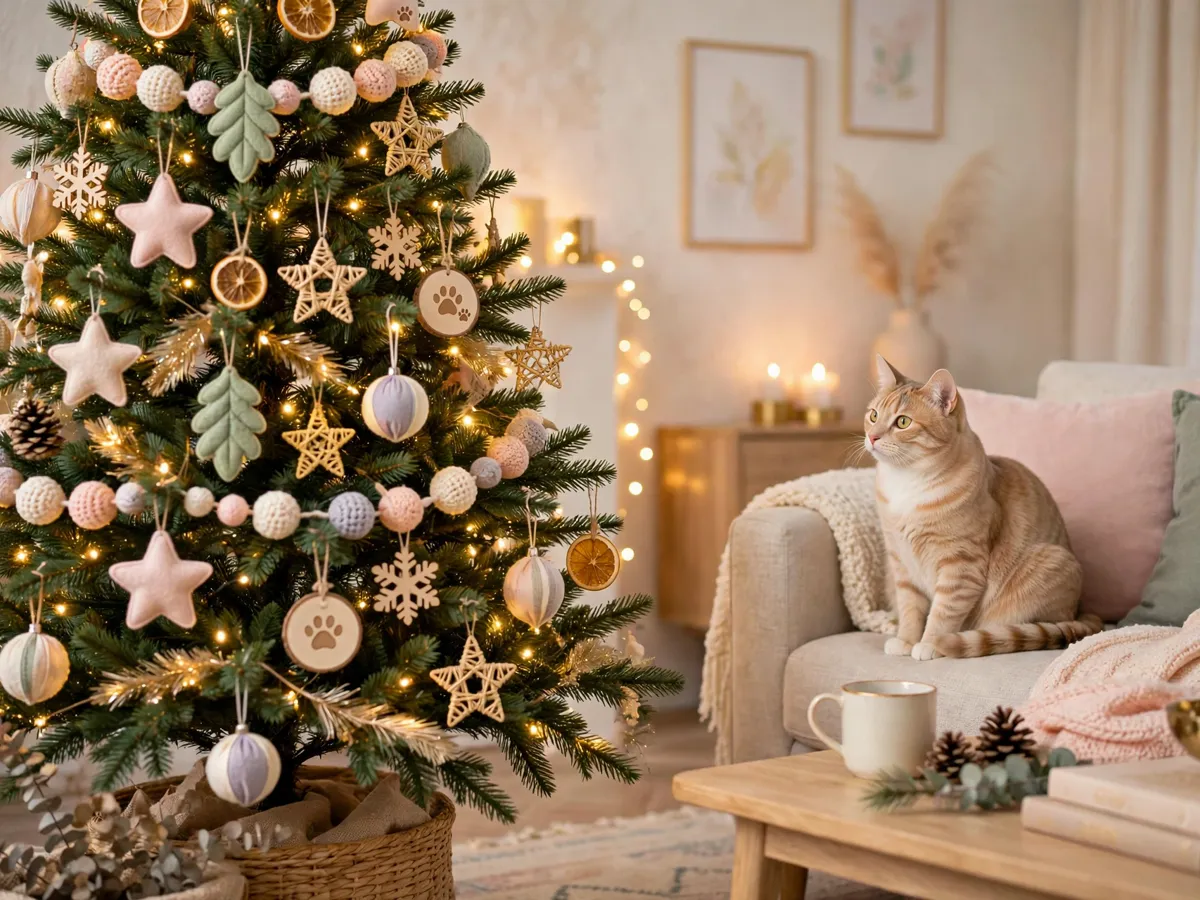
Why a cat Christmas tree needs its own ornament plan
A standard ornament box is a mix of glass balls, thin hooks, tinsel garlands and keepsake pieces that mean something to the household. None of those four are cat-friendly at batting height. The cat does not know which ornament is a family heirloom and which is a dollar-store ball: both are equally interesting when they hang at tail level. The plan on this page sorts the ornament box by risk, places each piece at the height that matches its risk level, and gives the cat a reason to stay on the sofa instead of the tree.
The approach works for kittens and adult cats alike. A kitten climbs higher and swats harder, but the branch-level logic is the same: fragile up high, soft and sturdy down low, and a tree base the cat cannot use as a launchpad. If you are also stocking up for the season, the Christmas stocking and gift ideas page covers the gift side of the holiday room.
Materials to leave in the box
Glass is the headline material to skip on a cat tree. A glass ball breaks on impact, and the shards on a hardwood floor cut a paw before anyone notices. A cat that bites a broken shard can swallow the glass, and the same curiosity that made the swat makes the follow-up bite. The swap is straightforward: wood, felt and fabric ornaments absorb a hit, bounce or drop without shattering, and a felted paw-print design looks as intentional on a pet-aware tree as a glass ball ever did.
Tinsel and angel hair belong to the same risk family as glass. Long, thin, glittery strands are the exact shape a cat bats and bites, and a swallowed strand is a same-day vet call. Thin wire hooks are the third skip: a hook that pops off the branch becomes a paw-level hazard. Ribbon loops and wide fabric ties hold the ornament on the branch without adding a metal piece to the floor.
For the full rundown on what tinsel and garlands can do in a cat household, the cat Christmas decor hazards page walks through each material in detail.
Pet-safe ornament picks that still look like Christmas
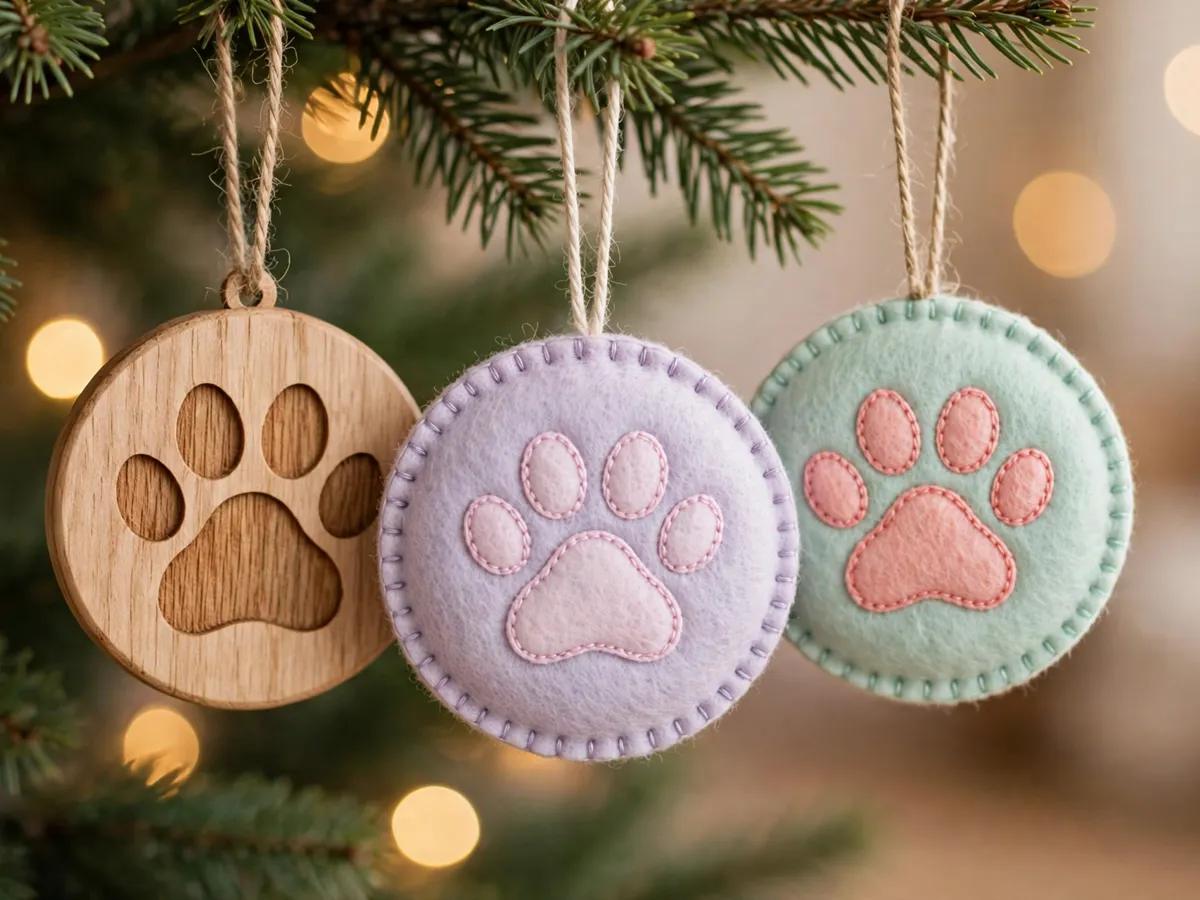
The pet-aware ornament box has four categories that cover the whole tree. Felt ornaments are the workhorse: flat, soft, light enough to hang on any branch, and available in paw prints, bone shapes, little sweaters and breed faces. Wooden ornaments add weight and a natural texture that reads well against the green, and a wooden paw print lasts for years. Fabric ornaments, from quilted stars to stuffed mini-stockings, give the tree a handmade warmth that glass cannot match.
The fourth category is the keepsake zone. The glass and ceramic pieces that mean something to the household still go on the tree, just on the upper third where a tail cannot reach. The branch-by-branch plan in the next section handles exactly where each category lands. The goal is a tree that looks fully decorated from the sofa, with the lower branches carrying the sturdy pieces and the upper branches carrying the fragile ones.
For some pets a costume causes stress, so only dress up a dog that enjoys it. That same attention to the pet's comfort is the reason the ornament plan exists in the first place: the holiday room should work for the household and the pets who live in it, not just for the photo.
The branch-by-branch display plan
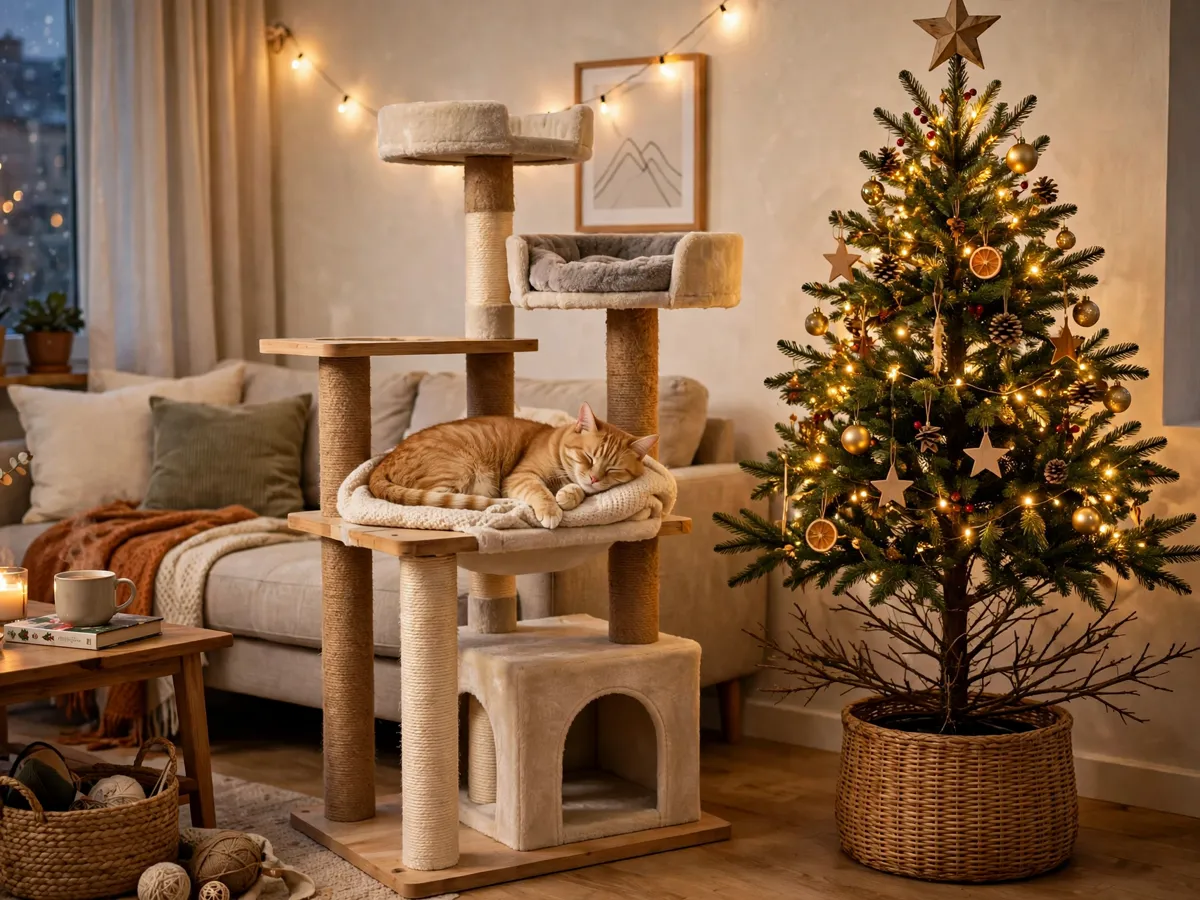
The display plan is three zones, bottom to top. The bottom third of the tree is bare or carries only felt and fabric ornaments that survive a direct swat. The middle third carries the wooden pieces, the stuffed mini-stockings and any ribbon garland. The top third is where the glass, ceramic and keepsake ornaments live, far enough above a leaping cat that the branch does not move when the cat lands on the lower ones.
The bare lower branches are the part most people resist, because a half-empty tree looks unfinished from the decorating afternoon. The trick is the skirt and the base: a wide tree skirt in a solid color, a few wrapped boxes that are not food, and a low barrier like a decorative fence. The cat sees a base that is not a launchpad, and the eye sees a finished base. A nearby cat tree or window perch gives the climber a seat that is not the Christmas tree, which is the single most effective redirect in the room.
The calm room: a retreat for the nervous cat
Not every cat wants to be in the holiday room. The tree changes the smell of the room, the visitors change the sound, and the whole rearrangement can make a shy cat want to leave. The calm room is a bedroom or a quiet study with the cat's bed, a water bowl, a litter box and the door closed during the loudest parts of the season. The cat chooses the calm room over the holiday room, and the door stays open on quiet days so the cat can wander back when the room feels normal again.
Loud music and fireworks can scare pets, so leave them a safe room to retreat to. The calm room is that room. On Christmas Eve and New Year's Eve, when the house is at its loudest, the door closes and the cat stays in the quiet room with everything the cat needs. The holiday room is for the household and the bold cat; the calm room is for the cat who needs the holiday to be quieter than the living room allows.
The two-room approach also works for the dog who finds the tree overwhelming. A dog crate or bed in the calm room, a chew toy, and the same closed door on the loud nights gives every pet in the house a way to step out of the holiday without leaving the home.
Cat Christmas tree ornament questions
Are glass ornaments bad for cats?
Glass breaks and a curious cat can cut a paw or swallow a shard. Wooden, felt and fabric ornaments are the pet-aware swap.
Should I decorate the lower branches?
Leaving the lower branches bare is the simplest way to keep a cat away from the tree. The ornaments go where the cat cannot reach.
What if my cat is scared of the tree?
A separate room with the cat's bed, water and a quiet door gives the cat a retreat. Loud music and visitors make the tree harder to handle.
Save this ornament plan
Pin it for the decorating afternoon and keep the branch-by-branch plan on the fridge all December. The Pet Holiday collection holds the rest of the season, including the safety checklist for the tree, the plants and the food table.