 PawStyle Daily
Pet Coloring Pages & Art Prints
Pet Portrait Tattoo Ideas: Style, Placement, Photos
A pet portrait tattoo is the keepsake that never leaves the room you walk into, whatever is going through your phone and however the years rearrange the house. This page walks the pieces people choose most: fine line, realism, and the framed and locket designs that turn one face into something wearable. Then the part your artist will thank you for, which is not the design at all — it is the photo you walk in with, and it is easier to choose than you think.
By PawStyle Daily · Updated 18 November 2026
Styling and placement talk only · Bring the artist the photo, let the book decide the fit · One face, endless ways to keep it close.
Why portrait tattoos became keepsakes
There are many ways to hold a pet close, and jewelry, frames and phone wallpapers each get partway there. A portrait tattoo goes further than all of them, because it moves with you. The pet is not coming back, and that is exactly the weight this piece carries: the portrait does not leave, so the glance you would have thrown at an empty corner of the sofa lands on the arm reaching for the mug.
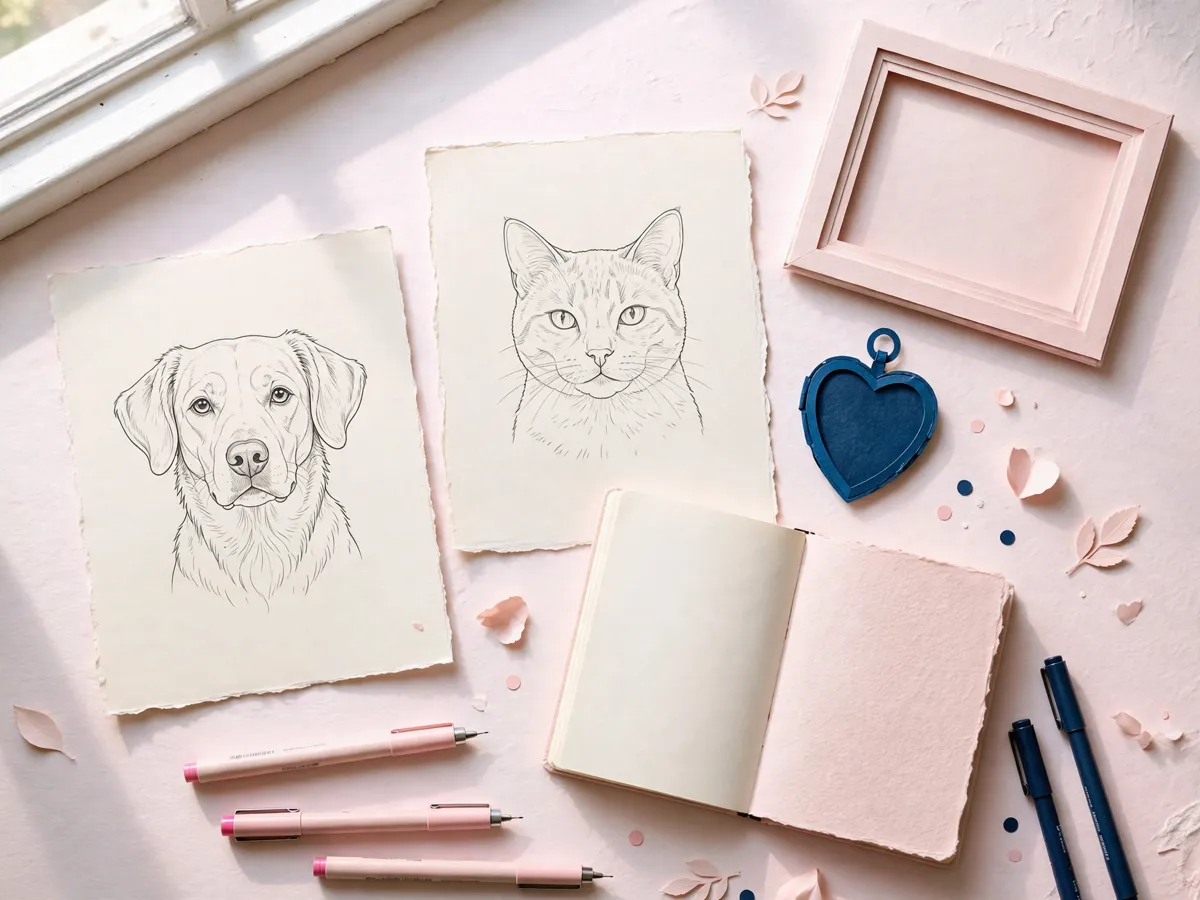
Nobody gets one of these to mark a trend. The pieces people choose are quiet and unhurried — a paw in a locket, a nose print in a frame, a face on an arm — and each one carries the same feeling a framed photo carries, except the frame never leaves the wall when you do. If the keepsake you are picturing travels with you, this page is the menu to pick from.
Fine line portraits
Fine line work draws the whole face in delicate outlines, usually at a small scale where a handful of clean strokes stand in for the nose print and the curl of the ear. It suits a wrist, a collarbone or the inner arm, and it photographs quietly rather than loudly, which is why so many first keepsakes are drawn this way.
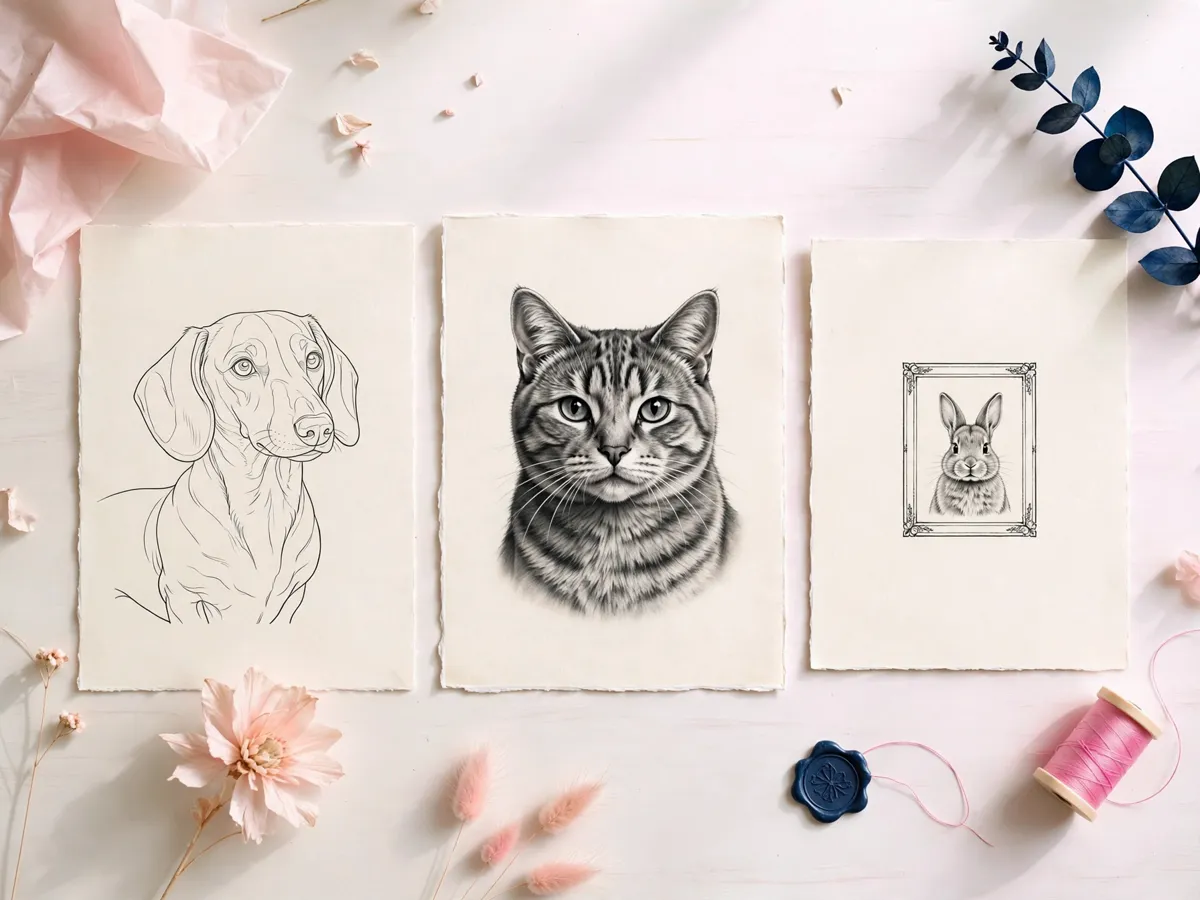
The honest styling trade is worth saying out loud in words: fine lines soften over time, so the piece reads gently rather than sharply as the years pass. That is a styling conversation to have with your artist, not a flaw to hide — some people choose fine line for exactly this reason, because the look ages the way a favorite drawing on the fridge does.
Realism and black-and-grey
Realism carries the likeness through shading instead of outline: the fur, the eye shaped to shine, the patch over the nose all come from light meeting dark. From a good reference photo, shading does most of the work a photograph did, and the portrait reads as the pet rather than as a symbol of the pet. Black-and-grey is the classic home for this, because the palette holds soft edges without any color getting in the way.
The contrast between the two families is purely aesthetic and worth weighing where the piece will live. Realism wants scale and gentle contrast on the skin so the details stay legible; fine line wants simplicity, because detail drawn small turns to suggestion. Neither is the truer portrait — one is a painting of the pet, the other is a signature of the pet.
For soft portraits on the wall rather than on you, the watercolor prints and frames guide pairs with the same reference photo.
Frame, locket and mini placements
The framed portrait is the original: the face drawn inside a rectangle, sometimes with the name curved beneath it like a label under a gallery print. It suits an upper arm, a shoulder blade or a thigh, wherever the frame can sit level. Once the frame opens onto the face, the composition reads as a portrait even before the details arrive.
The locket version is the smallest of the family: a paw print, a silhouette or an initial held inside a heart or an oval, small enough for a wrist or an ankle. It does the job jewelry does, except permanently. Between frame and locket sits the mini portrait — one clean profile in fine line, sized for the inner arm or the back of the shoulder, and quiet enough to wear to work.
As for where on the body: the wrist, the collarbone and the inner arm are the classic spots a portrait wears well, because each is a place you see yourself when you reach for it. Placement on the neck, the ribs or anywhere your clothes cover can stay yours alone.
Choosing the photo your artist will thank you for
The photo decides the portrait before the artist lifts a pen, so this is the one choice worth slow attention.
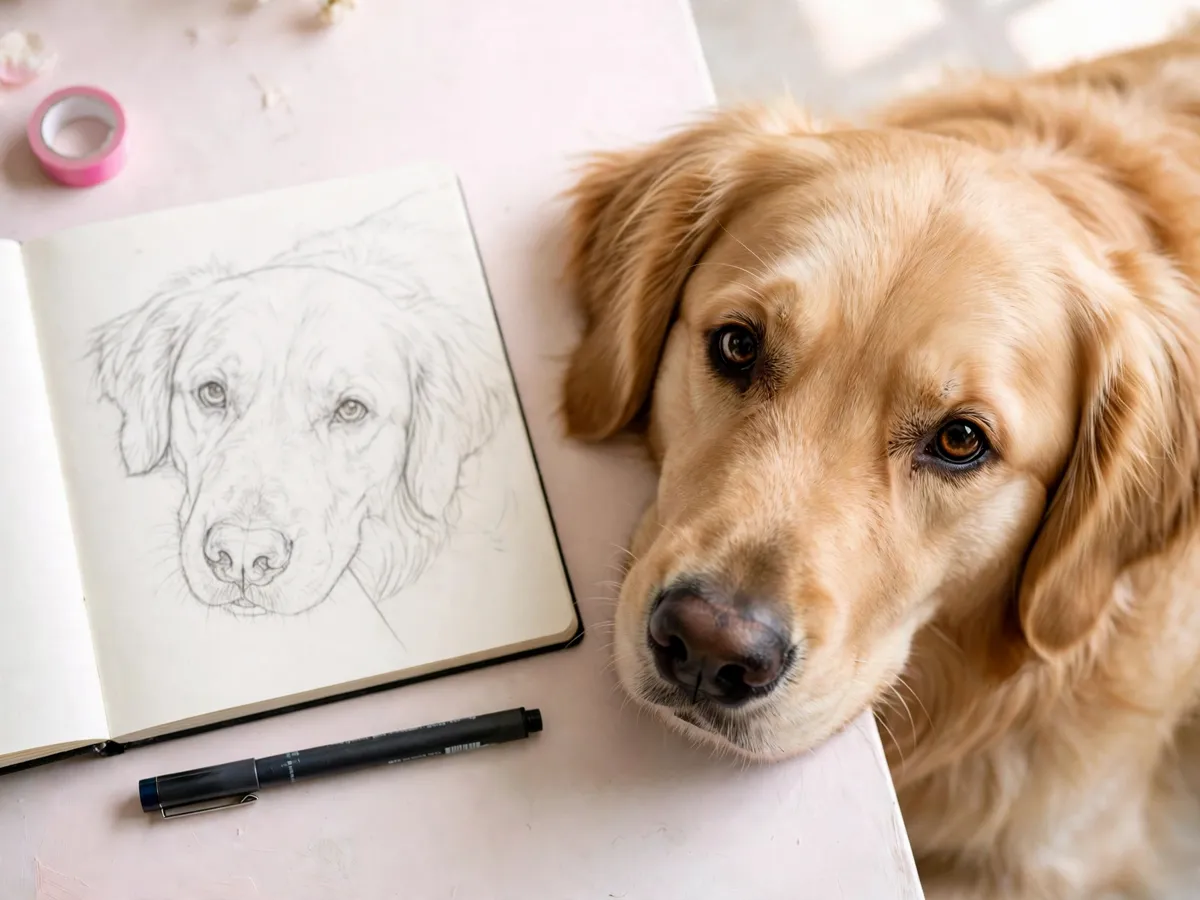
- Sharp eyes. The eyes carry the whole likeness, so a photo where the eyes are clear and open gives the artist the one feature a portrait cannot reinvent. A soft or squinting eye in the photo becomes a soft face in the drawing.
- Natural light. Daylight keeps the coat's natural tone true, where a flash or a dark room flattens it into one gray mass. Shoot near a window the same way you would for a printable portrait.
- Both eyes visible. A three-quarter angle where the face is square reads truer than a side profile, because the expression lives between the two eyes. One visible eye asks the artist to invent its twin.
- Ears in frame. The ears finish the shape of a face the way the roof finishes a house, so a photo cropped above them costs the likeness its most individual lines. A folded ear, a bent ear, the flop of the ear carried sideways — these are the details people ask for by name.
Send the original file rather than a screenshot or a chat attachment, because those strip the detail the drawing needs. One photo beats five, and one favorite beats every almost-good one.
What to bring to the consultation
A consultation is a conversation about fit, and it goes well when you bring three things and no more. Reference photos — the one that matters plus one backup angle. Style vocabulary, named plainly: fine line, black-and-grey, micro-realism. And a sentence about where the piece will live and why.
The artist's book decides the fit, and it tells you more than any caption under a single image ever could. Flip through the past portraits and look for faces drawn at your pet's coat type and pose — a maker whose book is full of soft black-and-grey dogs and a maker whose book is all crisp feline outlines are two different hands, and the one you want is the hand that has already solved the portrait you are picturing.
Bring the questions and leave the rest to the book: what travels well on flat space, what the maker of portraits asks for in a photo, how the mini portraits photograph at small scale.
Placement notes that respect the face
A portrait is a drawing, and drawings follow the space they are given. Flat areas hold detail better, because the lines stay straight and the shading sits where the artist put it. Curves distort, which is honest art-space talk: a portrait drawn across a rounded shoulder travels with the shoulder, and a nose print laid over a bony ridge reads softer than it did on the stencil. Ask the artist to show you portraits from the book that live on the same kind of surface you are considering, and the spot will pick itself.
The face itself decides the scale more than the spot does. A nose print at wrist size is a suggestion; a nose print with room to hold the eyes is a portrait. Drawn small, the details crowd each other, so the eyes get the space they need before everything else gets anything.
Other ways to keep them close
A portrait tattoo is one room in a larger house, and the rest of the collection holds gentler keepsakes. The custom pet portrait guide covers the ear-and-paw check and the print sizes for a framed portrait, and the holiday pet portrait ideas dress the same face for the season. The memorial stories pillar holds the journal and the keepsake pages, written at your own pace, for the mornings a portrait is not the gift you need.
Portrait tattoo questions
Fine line or realism for a first portrait tattoo?
Both styles make a lovely first portrait, and they speak in different ways. Fine line is quiet and small, a few clean strokes that read from across a room. Realism is fuller and more detailed, closer to the photo you fell in love with. A simple way to choose: pick the style that matches the other things you wear or keep, rather than picking by fashion. If your jewelry and your art lean simple, fine line will feel like you. If your walls are covered in prints, realism will sit right at home on your pet.
Does the tattoo have to be exact to the photo?
It does not, and most portraits are not. A portrait is an interpretation, not a photocopy: the artist draws the face and the expression, and leaves out the busy background. Many people prefer the portrait this way, because the drawing feels like the pet's spirit rather than one specific Tuesday. If you do want an exact match, say so plainly in the brief, and bring the sharpest photo you own so the artist has the detail to work from.
Can I bring two pets into one design?
You can, and it makes a sweet composition. The usual approach is one pet facing slightly in, the other facing slightly out, with the eyes as the meeting point even when the pets never shared a frame in real life. Tell the artist who is who and which one came first in your heart's story, and let them arrange the balance. Two faces in one small piece needs a slightly larger scale than one face alone, so the detail survives.
What if my pet's fur makes a portrait hard?
Fur that blurs, curls or blends can actually be a gift to a portrait artist, because black-and-grey shading handles soft edges beautifully. A wispy coat drawn in soft shadows often looks more alive than a hard outline would. The one fur that asks for thought is a coat that is one single dark tone, since a flat dark block reads as a shape rather than a face — mentioning the shade in plain words when you brief the artist gives them room to plan the contrast.
Is there a size minimum for the detail to survive?
There is a trade more than a rule: the smaller the piece, the simpler the lines need to be. A tiny wrist portrait suits fine line and a clear profile; a fuller realism piece wants more space so the shading has room to breathe. Rather than aiming for the smallest possible size, bring the photo to the artist and let the detail you care about decide the scale. The eyes decide whether a portrait reads, so the piece needs to be big enough for the eyes to hold it.
Keep the portrait close
Print-at-home portrait frames and paper
Matte print paper that flatters a soft watercolor portrait, white mats for the wall, and small frames that hold a nose print print at desk size — the print-at-home kit in one list.
See the portrait kit →As an Amazon Associate we earn from qualifying purchases.
Save these on Pinterest
Pin the style you are weighing, so the consultation conversation starts with the design already named. The Pet Art collection holds the wallpaper, coloring and print pages too.